A butterfly the colour of a stained-glass window drifts down from a hibiscus branch, hovers for a second, then settles on my daughter’s outstretched finger like it has all the time in the world. She freezes, eyes enormous, holding her breath the way you do when something fragile and wild decides to trust you. We are five minutes into the Butterfly Farm and she has already declared this the best day of the entire trip. That is the thing about planning things to do in Aruba with kids: the moments that stick are rarely the ones you spent the most money on. They are the small, slightly magical ones that the island seems to hand out for free.
I have brought my own kids to Aruba more than once, at the toddler-meltdown stage and again when they were old enough to argue about snorkel masks, and I have spent a lot of car rides quizzing local guides about where they take their own families. What follows is the guide I wish someone had handed me: organised by the kind of day you want, honest about what is worth it and what is a tourist trap, and specific about ages, costs and drive times. Aruba is small, calm, safe and sunny almost every single day, which makes it one of the easiest Caribbean islands to travel with children. You just need to know where to point the rental car.
The short answer: what are the best things to do in Aruba with kids?
The best things to do in Aruba with kids combine calm beaches with hands-on animal encounters. Top picks: swim at Baby Beach or Palm Beach, meet butterflies and ostriches at the Butterfly Farm and Ostrich Farm, feed donkeys at the Donkey Sanctuary, ride the free trolley in Oranjestad, and snorkel from a catamaran. Most attractions are family-priced and a short drive apart.
Aruba packs a startling amount into roughly 70 square miles. You can have breakfast on Palm Beach, pet a rescued donkey by mid-morning, watch butterflies emerge from their chrysalises before lunch, and still be back on the sand for the afternoon. Below is the at-a-glance version, then the detailed, opinionated tour.
At-a-glance: the best Aruba activities for kids
Here is how the most popular family outings stack up. Prices are approximate, in US dollars, and change with the season, so treat them as a planning guide rather than gospel.
| Activity | Best ages | Approx cost | Indoor / outdoor | Area |
|---|---|---|---|---|
| Butterfly Farm | 2-10 | ~$16 adult / ~$8 child, free returns | Outdoor (shaded) | Palm Beach |
| Aruba Ostrich Farm | 4+ | ~$15 adult / ~$8 child | Outdoor | North / Matividiri |
| Donkey Sanctuary | All ages | Free (donations welcome) | Outdoor | Bringamosa (interior) |
| Philip’s Animal Garden | 3+ | ~$10 adult / ~$7 child | Outdoor | Noord |
| Baby Beach swimming | 0-8 especially | Free | Outdoor | San Nicolas (south) |
| Palm Beach swimming | All ages | Free | Outdoor | Palm Beach |
| Snorkel catamaran sail | 5+ | ~$50-90 adult / less for kids | Outdoor (water) | Departs Palm/Eagle |
| Atlantis Submarine | 4+ | ~$110 adult / ~$60 child | Indoor (submarine) | Departs Oranjestad |
| California Lighthouse | 5+ (stairs) | ~$5-10 to climb | Outdoor | Far north tip |
| Oranjestad trolley | All ages | Free | Outdoor | Oranjestad |
| De Palm Island day pass | 4+ | ~$110+ all-inclusive | Outdoor (water park) | Off southwest coast |
If you only have a few days, my honest shortlist would be: one animal morning, two or three different beaches, one boat trip, and one lazy do-nothing day by the pool. That rhythm keeps everyone happy without burning the kids out. For a wider menu of ideas beyond the family-specific ones, the island’s full roundup of things to do in Aruba is a good companion to this page, and the best things to do in Aruba guide flags the headline experiences worth building a day around.
Animal encounters: where Aruba absolutely shines for kids
If I had to name the single category that makes Aruba special for families, it is the animal experiences. They are small, personal, often run by people who clearly love the creatures, and refreshingly free of the slick, overpriced feeling you get at big theme-park aquariums. Cluster two or three of these into one morning and you have a day the kids will talk about for months.
The Butterfly Farm
This is my top pick for little ones, and it is conveniently close to the Palm Beach and Eagle Beach hotel strip, so you can walk or take a very short drive. You step into a netted tropical garden and hundreds of butterflies are simply everywhere, drifting around your head and landing on bright clothing (wear pink or yellow and you become a landing pad). A guide gives a genuinely charming 15-to-20-minute tour explaining the life cycle, and if you time it right you can watch a butterfly emerge from its chrysalis, wings still crumpled and wet. Tickets run around $16 for adults and roughly half that for children, and the best part is that your ticket includes free return visits for the length of your stay. Go early, around opening at 9am, when the butterflies are most active and the heat is bearable.
Aruba Ostrich Farm
Out on the breezy northern side of the island, the Ostrich Farm is pure comedy for kids aged four and up. A guided tour (roughly 40 minutes, around $15 for adults) walks you through the lives of these enormous prehistoric-looking birds, and the finale is feeding them. Fair warning, and I say this with love: ostriches are bold, fast and utterly shameless about lunging for the food cup, so very small or nervous children can find the experience a bit much. My younger one watched from behind my legs the first time and was elbowing to the front by the second. There is a shaded restaurant on site, which makes it an easy combine-with-lunch stop. It pairs naturally with a drive toward the California Lighthouse and the wilder north.
Donkey Sanctuary Aruba
Tucked into the dusty interior near Bringamosa, the Donkey Sanctuary is free to visit (they survive on donations and the little shop, so do buy a bag of food pellets and a fridge magnet) and it is one of the most genuinely heart-warming stops on the island. Aruba’s wild donkeys have a hard time of it on the roads, and this volunteer-run refuge takes in the injured and orphaned. Kids can walk right up, feed them, brush them and have their pockets thoroughly investigated by a velvet nose. It is calm, low-key and unposed, the antithesis of a slick attraction. Allow an hour. It is a bumpy drive off the main roads, so a car or a tour is needed to reach it.
Philip’s Animal Garden
In Noord, not far from the high-rise hotels, Philip’s Animal Garden is a non-profit rescue housing more than 50 species, from kangaroos and monkeys to tortoises and exotic birds, many of them rescued or rehomed. For around $10 a head you can wander the enclosures, and the paid interactive feeding tours, where kids hand-feed some of the friendlier residents, are the thing to book if you want the wow factor. It is more zoo-like than the sanctuary, so manage expectations, but for animal-mad children it is a reliable hit and it is blessedly close to where most families are staying.
Aruba Aloe Factory and Museum
Not an animal stop, but it slots in here as another short, educational, air-conditioned-ish outing: the Aruba Aloe factory offers free guided tours roughly every 15 minutes showing how the island’s famous aloe is grown and turned into the lotions you will see in every shop. It is short (about 20 minutes), genuinely interesting for older kids, and the gift shop makes for an easy souvenir. A good back-pocket option for a hot afternoon.
Beaches and water play: calm, shallow and made for small humans
Aruba’s western and southern coasts are blessed with some of the calmest water in the Caribbean, which is exactly what you want when you are supervising a toddler with a bucket. The trade winds keep things cool and the surf, on the leeward side, is gentle. Here are the beaches I send families to, and why.
Baby Beach
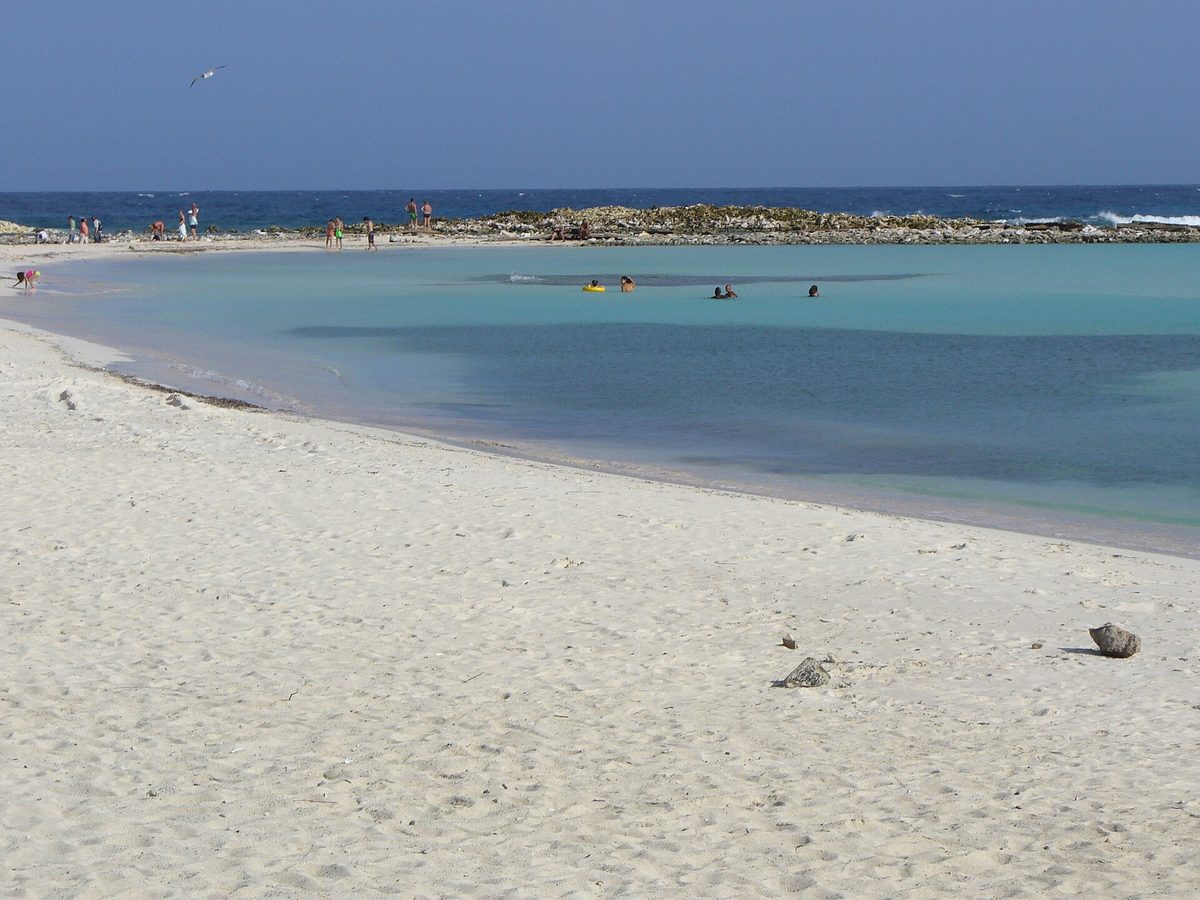
The name says it all. Down on the southern tip near San Nicolas, Baby Beach is a wide, shallow, half-moon lagoon where the water stays ankle-to-knee deep a long way out and the whole bay is sheltered from open ocean by a rocky ring. For families with babies and young children it is the single safest swimming spot on the island, and the snorkelling along the inner edge of the lagoon is surprisingly good for absolute beginners. The catch: it is about a 45-minute drive from the Palm Beach hotels, so make a day of it. There is a snack bar and chair rentals, but bring sunscreen and water because the shade is limited. Stay inside the lagoon; the gap in the reef has currents.
Palm Beach
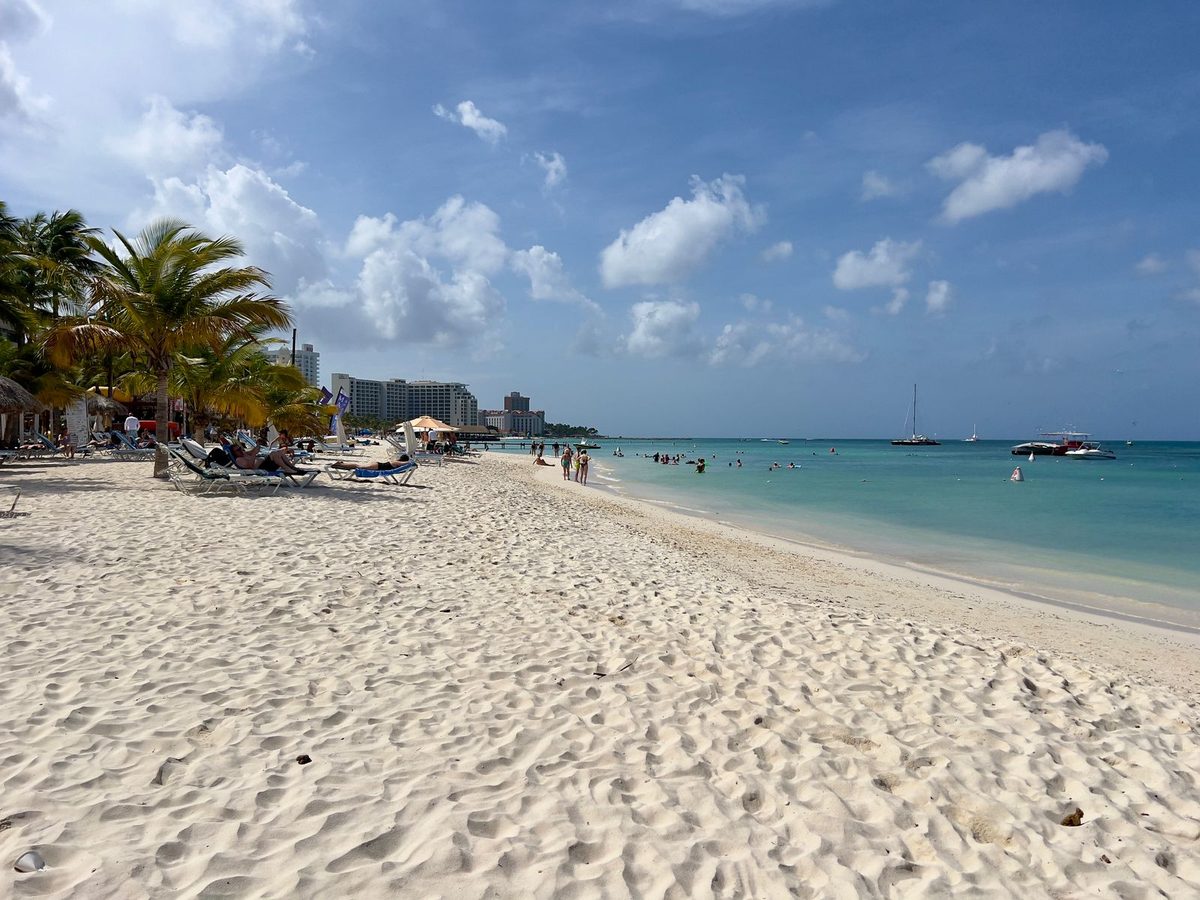
This is the lively, postcard-perfect strip in front of the high-rise resorts: two miles of soft white sand, swaying palms, calm clear water, and every amenity you could want within steps. Parasailing boats and banana rides launch from here, there are loungers and palapas, restaurants and ice cream right behind the beach, and the water is calm enough for confident paddlers. It is busier and more developed than the quieter beaches, but for families that want everything close, including a bathroom and a frozen drink, it is hard to beat. The boardwalk behind it is perfect for an after-dinner stroll while the kids burn off the last of their energy.
Eagle Beach
Just south of Palm Beach, Eagle Beach is wider, less built-up and, in my opinion, even prettier, with those famous wind-bent fofoti trees and acres of space for kids to run. The water is calm and shallow at the shoreline, ideal for little ones, and because it never feels crowded you can stake out a patch without elbowing anyone. Many snorkel and sail trips depart from this stretch. If you want the beauty of Palm Beach with a calmer, more spacious vibe, this is the one.
Arashi Beach and Mangel Halto
For slightly more adventurous families, two more to know. Arashi Beach, up near the lighthouse, has gentle water, good shore snorkelling and excellent sunsets, with a casual beach bar for snacks. Mangel Halto, on the southeast coast, is a quieter, locals-favourite cove fringed by mangroves with calm, clear shallows and protected pockets that are wonderful for teaching kids to snorkel away from any crowds. Neither has big facilities, so pack accordingly. For the full rundown of every shore, our guide to Aruba’s beaches breaks down which ones suit which kind of day.
Snorkelling and boat trips
A catamaran snorkel sail is, for my money, the best half-day splurge you can do with kids who can swim. Operators like De Palm Tours and Red Sail run morning and afternoon trips (roughly $50 to $90 for adults, less for children) that typically stop at two or three calm sites, including the wreck of the Antilla, with crew who are great with nervous first-timers, plus a free bar and music on the way home. Boats usually depart from the Palm Beach and Eagle Beach piers. If you have a child who is hesitant in the water, choose a trip that stops somewhere shallow and shaded so they can build up confidence at their own pace. You will find more options in our roundup of Aruba water sports and boat tours and the family-friendly Aruba excursions guide.
Atlantis Submarine and glass-bottom boats
For the days when someone in your party will not put their face in the water, the Atlantis Submarine is the clever workaround: a real, air-conditioned submarine that dives to around 130 feet past reefs and shipwrecks, with a window for every two passengers. It is not cheap (around $110 for adults, roughly $60 for children) and it does mean an hour or so of sitting still, but kids genuinely love watching the fish glide past, and it is a brilliant rainy-or-rough-day card to play. Glass-bottom boats and the semi-submarine options near Oranjestad are gentler, cheaper alternatives that achieve much the same thrill of seeing the reef without getting wet.
De Palm Island
If your kids are old enough to handle a full-on water-park day (roughly four and up), De Palm Island is the closest thing Aruba has to a theme park: a short ferry ride to a small private island with a water park, slides, zip lines, banana boats, snorkelling among friendly parrotfish, and an all-inclusive food-and-drinks wristband for around $110 and up. It is a lot of stimulation in one place and it can get crowded, so the local trick is to go on a day when no cruise ships are in port. For a certain age of child it is the highlight of the trip; for toddlers it can be overwhelming, so judge your own crew.
Outdoor and nature: Arikok, the lighthouse and the wild north
Aruba is not all manicured resort beaches. Cross to the windward side and the island turns into a rugged, cactus-studded desert of crashing surf and strange rock formations. With kids, you do not need to tackle the hardest trails to enjoy it; you just need a plan and plenty of water.
Arikok National Park with kids
Arikok covers nearly 20 percent of the island and is its wild heart: caves, sand dunes, lizards, and dramatic coastline. With children, the most family-friendly entry point is the visitor centre, where you pay a modest park fee (around $11 per adult, children typically free) and can pick up an easy, well-marked walk. The caves at Fontein and Quadirikiri are a hit with kids who like the idea of bats and old Arawak drawings, and they involve only short walks. The famous Natural Pool (Conchi) is gorgeous but honestly only suits families with kids around eight and up, because reaching it means either a rugged guided hike or a bone-rattling 4×4 ride. If you have younger children, stick to the caves and the visitor-centre trails and save the Natural Pool for another trip. Our full Arikok National Park guide covers the routes and what to pack in detail.
California Lighthouse
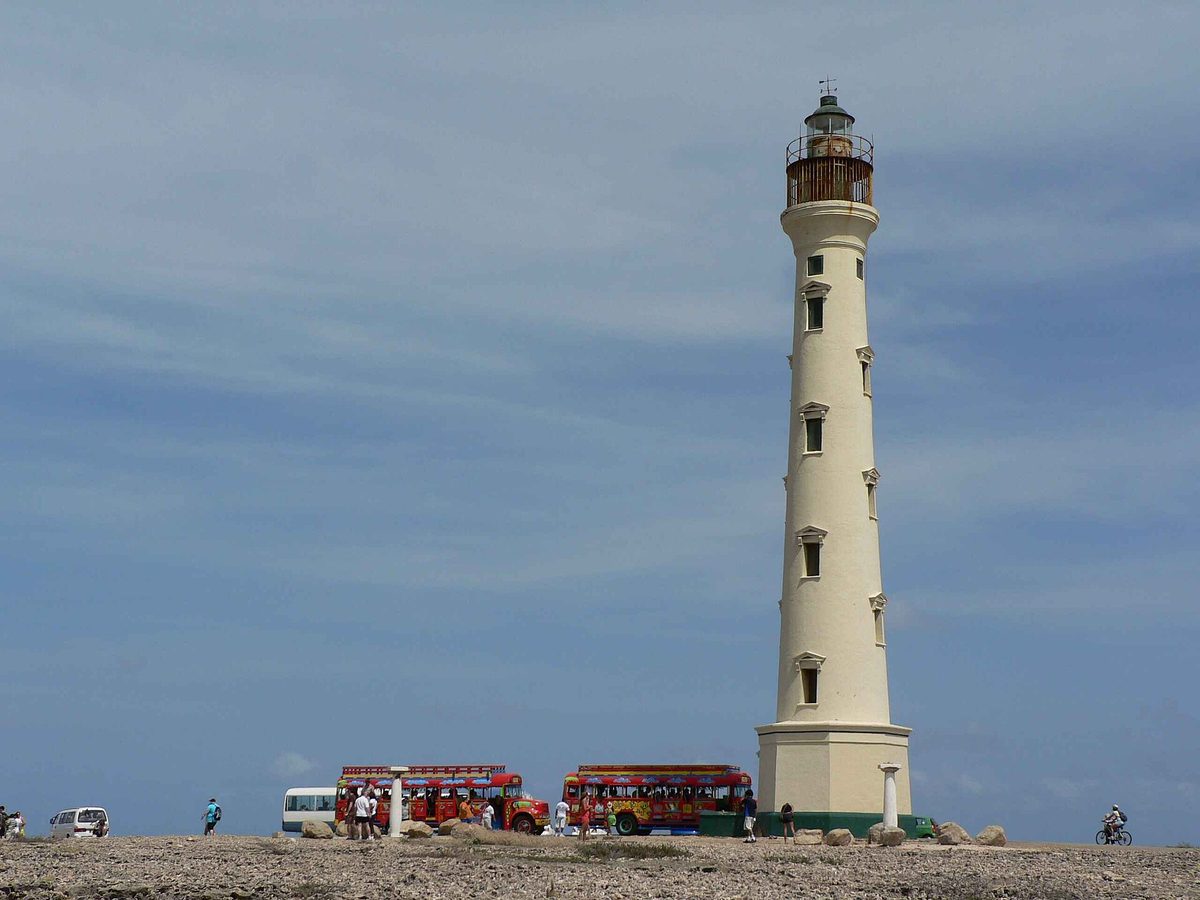
At the island’s far northern tip, the cream-coloured California Lighthouse is a classic family photo stop, surrounded by rolling dunes and those candy-coloured open-air tour buses you will see everywhere. For a few dollars, older kids (and brave adults) can climb the tight spiral staircase for sweeping views over the whole island and the sea; little ones are happier running around the base and the nearby rocks. There is a restaurant right there for a drink with a view. It pairs perfectly with Arashi Beach just below. The California Lighthouse guide has the climbing details and opening times.
Natural Bridge area and the rugged coast
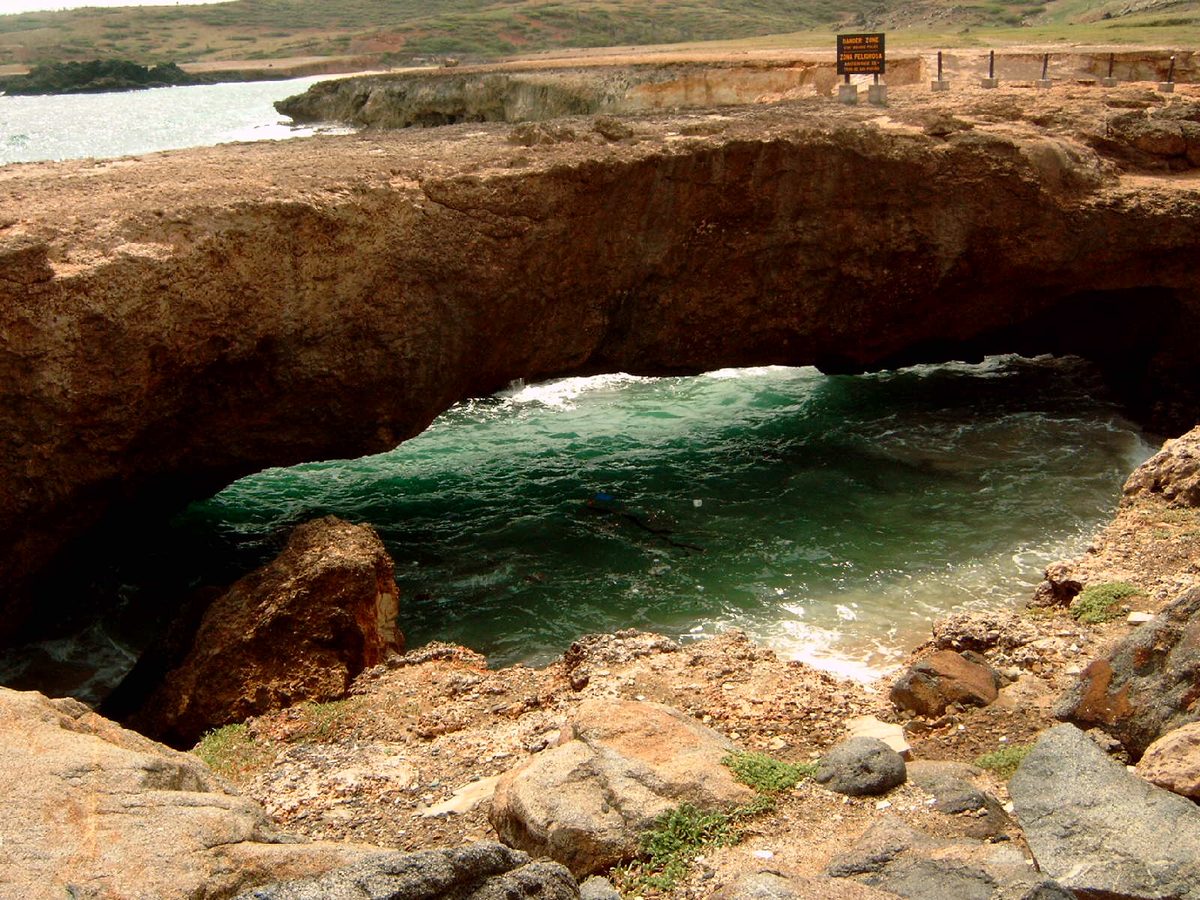
Along the north shore, the limestone coast has been carved by the waves into natural bridges and blowholes. The original, largest Natural Bridge collapsed years ago, but the smaller Baby Bridge nearby and the wild, foaming surf are still a thrill, and kids love watching the spray explode against the rocks (hold little hands tightly here, the rocks are uneven and the water is powerful). Combine it with the nearby Bushiribana gold mill ruins, which double as a fun place for kids to clamber and play castle. See our Natural Bridge guide before you go, since access changes.
Casibari and Ayo rock formations
Smack in the middle of the island, these giant, mysterious boulder piles are an under-rated kid magnet. There are easy paths and steps threading up and between the rocks at Casibari, with a few low scrambles that make children feel like proper explorers, and the views from the top are lovely. It is free, quick, and a good leg-stretch between other stops. Watch for the little whiptail lizards (the locals call them cododo) sunning themselves on the warm stone.
Town days and rainy-day backups in Oranjestad
Aruba gets very little rain, but the sun can be relentless and toddlers need naps, so it helps to have a few shorter, shadier, town-based outings up your sleeve. The capital, Oranjestad, is compact, walkable and surprisingly fun for a couple of hours.
The free Oranjestad trolley
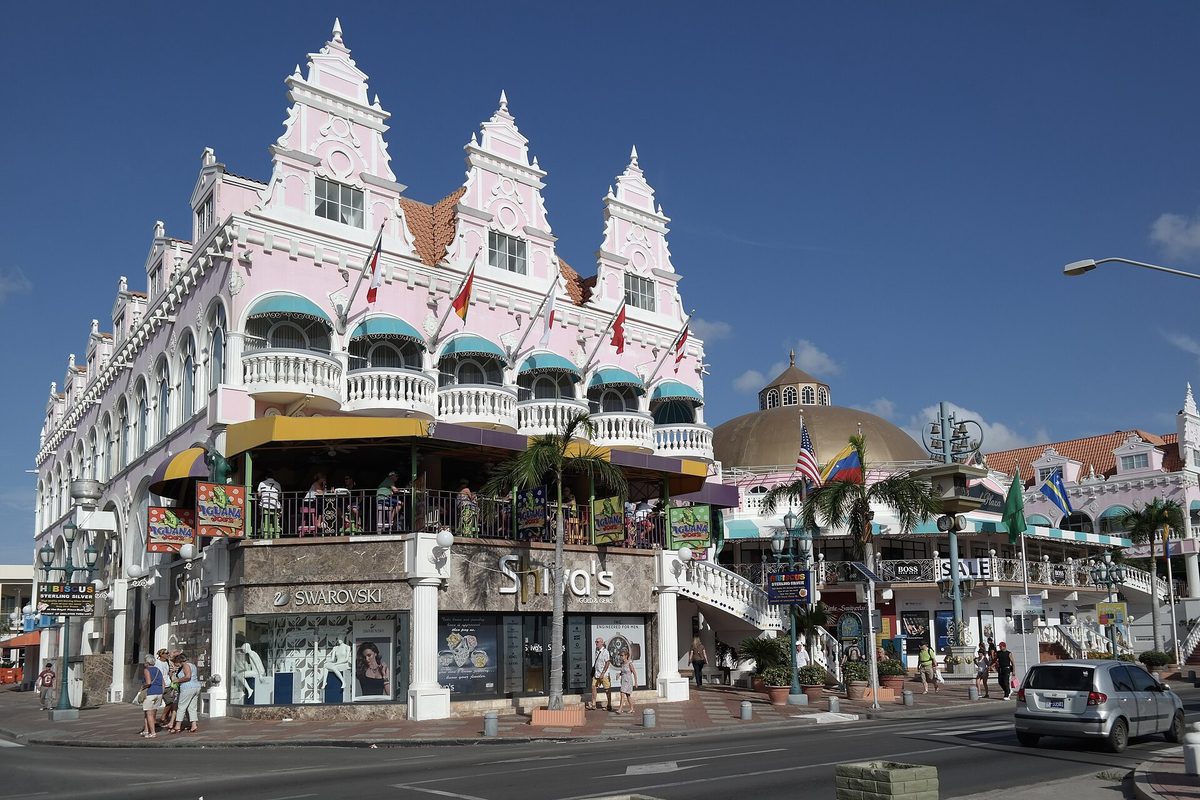
The Caribbean’s only electric streetcar trundles a loop through downtown Oranjestad, and it is completely free. Kids love the novelty of climbing aboard the open-sided double-decker, and it is a gentle, air-cooled way to see the colourful Dutch colonial buildings without anyone melting down from the walk. Hop on and off near the cruise terminal and the main shopping streets. It is a small thing, but small free things are exactly what saves a hot afternoon with children.
Shopping streets, plazas and ice cream
The pastel-painted plazas like Renaissance Marketplace and Royal Plaza have shaded walkways, fountains, gelato and easygoing cafes, plus the odd street performer. It is a low-stress place to let kids wander, grab a cold treat, and pick up a souvenir while you browse. The waterfront Linear Park path is stroller-friendly and good for watching the boats.
Mini-golf, bowling, arcades and splash parks
When you need to burn energy under a roof or after dark, Aruba delivers: there is a bowling alley at the Eagle Bowling Palace, arcades and game rooms dotted around the Palm Beach malls (handy for that post-dinner hour), and a small splash park near Surfside Beach by the airport that is perfect for letting younger kids run wild in the water for an hour. None of these are destination attractions, but they are exactly the pressure-release valves that make a longer family trip work.
Bon Bini Festival
If you are in town on a Tuesday evening, the weekly Bon Bini Festival at Fort Zoutman is a friendly, family-welcoming street party with costumed dancers, live music, local food and craft stalls. It is an easy, colourful introduction to Aruban culture, it does not run late, and the kids can dance off their dinner.
Planning things to do in Aruba with kids by age group
The right itinerary depends enormously on how old your children are. Here is how I would weight a trip for each stage, because what delights a four-year-old can bore a fourteen-year-old rigid, and vice versa.
Babies and toddlers (0-3)
Keep it simple and water-led. Base yourself near Palm Beach or Eagle Beach for the calm shallows and easy amenities, do short morning outings to the Butterfly Farm and the Donkey Sanctuary, and build the day around naps and shade. Skip the long drive to Baby Beach unless you are happy to make it the whole day, and give the Atlantis Submarine and De Palm Island a miss until they are older. Honestly, a baby’s perfect Aruba day is a shady palapa, warm ankle-deep water and a bucket.
Young kids (4-7)
This is the sweet spot for Aruba. They are old enough for the Ostrich Farm, Philip’s Animal Garden, easy cave walks in Arikok and a gentle snorkel from a boat, but still young enough to be enchanted by butterflies and donkeys. Mix two or three animal stops, plenty of beach time, and one boat trip. The free trolley and the splash park fill the in-between hours nicely.
Tweens (8-12)
Now you can get adventurous. This is the age to do the Natural Pool hike or 4×4 trip, a proper snorkel sail to the Antilla wreck, the full De Palm Island water-park day, climbing the California Lighthouse, and clambering around the rock formations and ruins. Tweens love the sense of expedition, so lean into the wild northern coast and Arikok.
Teenagers (13+)
Teens want a bit of independence and adrenaline. Think stand-up paddleboarding and kayaking on the calm bays, kitesurfing lessons at Boca Grandi (Aruba’s trade winds are legendary), a sunset catamaran cruise, the Atlantis Submarine for the novelty, and time to roam the Palm Beach boardwalk and malls on their own. The safety and walkability of the resort areas make Aruba a great place to give older kids a little leash. For broader trip-planning, our Aruba itinerary guide maps out sample day-by-day plans you can adapt.
Practical tips for visiting Aruba with kids
A few hard-won pointers that will make the trip smoother.
- Respect the sun. Aruba sits close to the equator and the constant breeze hides how strong the sun is, so kids burn fast. Reef-safe sunscreen, hats, rash guards and a shaded midday break are non-negotiable. Reapply more often than you think.
- Plan around naps and heat. Do outings in the morning, retreat to shade or the pool over the hottest midday hours, and head back out late afternoon. This single habit prevents most meltdowns.
- Hydrate constantly. Tap water in Aruba is desalinated and perfectly safe to drink, so refill bottles freely and keep them with you everywhere.
- Rent a car for flexibility, or don’t. A car makes the animal stops, Baby Beach and Arikok far easier and lets you set your own nap-friendly pace. If you would rather not drive, De Palm Tours and similar operators run transport to most attractions. See our getting around Aruba guide.
- Book the big-ticket items ahead. The Atlantis Submarine, De Palm Island and popular catamaran sails do sell out in high season, so reserve those before you arrive. Most beaches, the Donkey Sanctuary and the trolley need no booking at all.
- Mind the budget. Aruba is not a cheap island, but the best kids’ activities (beaches, the trolley, the Donkey Sanctuary, the Aloe tour, rock formations) are free or close to it. Our Aruba vacation cost breakdown helps you plan, and there are plenty of free things to do in Aruba to balance the splurges.
- Time your trip. Aruba is sunny and dry year-round and sits outside the hurricane belt, but for the best balance of weather, crowds and price, see our guide to the best time to visit Aruba.
For everything else, from packing to etiquette, our general Aruba travel tips are worth a read before you fly. And if you want the bigger picture of why this island is so good for families, start with our pillar guide to visiting Aruba with kids.
Frequently asked questions about things to do in Aruba with kids
Is Aruba good for toddlers and babies?
Yes. Aruba is one of the easiest Caribbean islands for very young children thanks to its calm, shallow leeward beaches, safe desalinated tap water, short drive times and low crime. Base yourself near Palm or Eagle Beach for the gentlest water and easy amenities, keep outings short and shaded, and build the day around naps. Baby Beach has the calmest water of all.
What is the best beach in Aruba for young kids?
Baby Beach on the southern tip is the safest for babies and toddlers, with a sheltered, shallow lagoon you can wade across. For families staying near the resorts, Eagle Beach and Palm Beach offer calm, shallow shorelines plus restrooms, food and chair rentals right behind the sand, which makes them the most convenient all-rounders for a day with children.
How many days do you need in Aruba with kids?
Five to seven days is the sweet spot. That gives you time for two or three different beaches, one animal morning, a boat trip, a visit to Arikok or the lighthouse, and at least one slow do-nothing pool day. Anything shorter and you will feel rushed; the island rewards a relaxed pace, especially when small children set the schedule.
Do you need a car in Aruba with children?
Not strictly, but it helps. A rental car makes the animal sanctuaries, Baby Beach and Arikok National Park far easier and lets you keep a nap-friendly pace. If you prefer not to drive, tour operators provide transport to all the major attractions, and the resort strip is walkable, so plenty of families manage happily with the occasional taxi or excursion bus.
What are the best free things to do in Aruba with kids?
Plenty. The beaches are all free and public, the Oranjestad trolley costs nothing, the Donkey Sanctuary runs on donations, the Aruba Aloe factory tour is free, and clambering around the Casibari rock formations and the northern coast costs nothing either. Stack a few of these and you can fill whole days of family fun without spending much at all.
Are there indoor activities in Aruba for a rainy day?
Aruba rarely sees rain, but for hot afternoons or the odd shower there are indoor options: the Atlantis Submarine, bowling at Eagle Bowling Palace, arcades and game rooms in the Palm Beach malls, the air-conditioned shops and gelato spots of Oranjestad, and the short Aruba Aloe museum tour. None are huge, but together they cover the in-between hours nicely.
By the ArubaTourism.org team — Last updated October 2026
Photo credits
- Baby Beach Aruba — Dje9537459 (Public domain) via Wikimedia Commons
- Palm Beach Aruba — Kwihi / CC BY 4.0 via Wikimedia Commons
- California Lighthouse, Aruba — David Stanley / CC BY 2.0 via Wikimedia Commons
- Aruba natural bridge / northern coast — We El (Public domain) via Wikimedia Commons
- Oranjestad, Aruba — Choinowski / CC BY-SA 4.0 via Wikimedia Commons