Let me kill the scary word right up front: “season.” It makes people picture a fortnight of grey skies and washed-out beach days, and so every year travelers quietly cross off the back half of the calendar for fear of getting rained on. Here is the truth that the phrase hides. The Aruba rainy season is one of the driest “wet seasons” you will find anywhere in the Caribbean. This is a semi-arid island, sitting on the southern fringe of the tropics, that pulls in only about 18 to 20 inches of rain across an entire year. The cacti and divi-divi trees are the giveaway. When it does rain here, it is usually a short burst overnight or a passing shower that is gone before your towel dries.
So when is it, really? Aruba’s wetter stretch runs roughly from October into January, peaking in November, but “wetter” is relative on an island this dry. Even the rainiest month averages only around 3 inches over about 10 days, and most of that falls in brief showers, often at night. Days stay overwhelmingly sunny. You can absolutely have a beach holiday in the rainy season and barely notice it.
I want to give you the real numbers, show you what a “rainy day” here actually looks like hour to hour, explain why this island is so bone-dry in the first place, and help you decide whether the wetter months are worth booking (spoiler: often yes, for the prices and the calm). I will also untangle the thing that confuses everyone, which is how rainy season relates to hurricane season, because they overlap but are not the same animal. Let me walk you through it.
The short answer: when the Aruba rainy season is, and how mild it really is
Aruba’s rainy season runs from about October through December and often into January, with November the wettest month. But “rainy” is generous: total annual rainfall is only around 18 to 20 inches (roughly 450 to 500 mm), showers are usually brief and often overnight, and the island stays sunny most days. It rarely ruins a beach trip. Always check the live forecast before you pack.
If you remember nothing else, remember that the rain here arrives in commas, not paragraphs. It punctuates a sunny day. It does not replace it. For the full month-by-month picture across the calendar, our companion guide to Aruba weather by month breaks down temperatures, wind, and rain side by side, and this article sits inside our larger pillar on the best time to visit Aruba if you are still weighing exactly when to go.
At a glance: Aruba rainfall by month
Here is the whole year on one screen so you can see how concentrated (and how small) the wet stretch really is. Figures are rounded long-term averages for the Oranjestad area; treat them as a guide, not a promise, and check a current forecast close to your trip.
| Month | Avg rainfall | Rainy days (approx.) | What to expect |
|---|---|---|---|
| January | ~1.8 in / 45 mm | ~11 | Tail end of the wet stretch; brief showers, still very sunny and busy |
| February | ~0.8 in / 20 mm | ~4 | Drying out fast; reliably sunny |
| March | ~0.4 in / 10 mm | ~2 | One of the driest months of the year |
| April | ~0.4 in / 10 mm | ~2 | Bone-dry, breezy, classic Aruba beach weather |
| May | ~0.6 in / 15 mm | ~2 | Dry and windy; great value before summer |
| June | ~0.6 in / 15 mm | ~3 | Hot, dry, strong trade winds |
| July | ~1.2 in / 30 mm | ~4 | Occasional short shower; windiest, sunniest stretch |
| August | ~0.8 in / 20 mm | ~3 | Hot and mostly dry; the odd passing cloud |
| September | ~1.8 in / 45 mm | ~3 | Humidity creeps up; rain still light and infrequent |
| October | ~3.0 in / 75 mm | ~7 | Wet season begins; more cloud, short downpours, often overnight |
| November | ~3.3 in / 85 mm | ~10 | Wettest month, yet still mostly sunny between showers |
| December | ~3.1 in / 80 mm | ~11 | Wet but festive; brief showers, warm sea, peak holiday crowds |
Look at the right-hand column of that table for a second. Even in the three wettest months, you are looking at about 3 inches of rain spread across 7 to 11 days. For comparison, plenty of cities in the United States and Europe see that much rain in a single stormy week. Aruba’s “worst” is a lot of other places’ “lovely.”
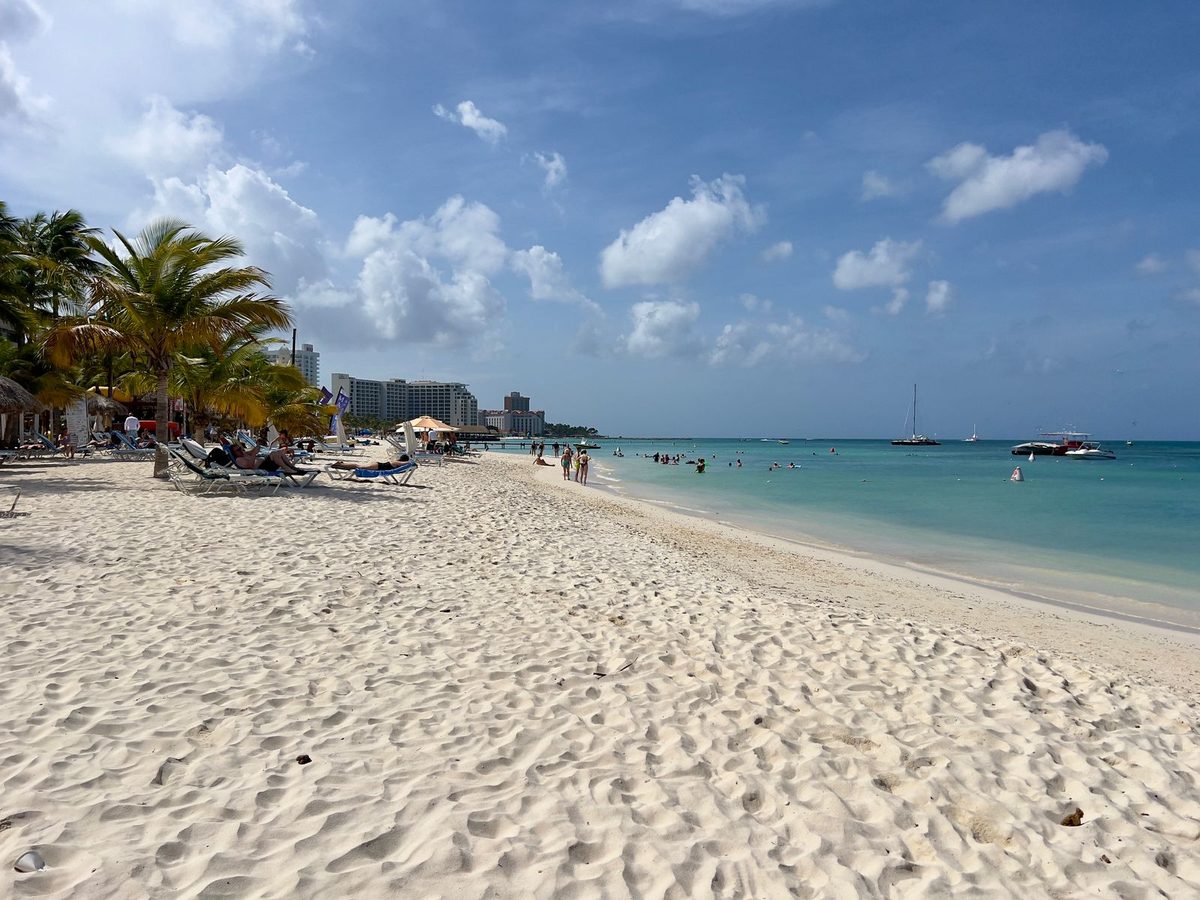
When is the rainy season in Aruba?
The wetter part of Aruba’s year is tied to a shift in the winds. For most of the year, from roughly February through August, steady south-easterly trade winds blow in dry air off South America, and the island bakes under near-constant sun. Around October, the pattern eases into north-easterly trade winds that are a touch less relentless and can carry the occasional rain-bearing cloud across the island. That window, October to December, sometimes stretching into the first half of January and rarely into February, is what locals and meteorologists loosely call the rainy season.
Why November tends to be the peak
If you graph Aruba’s rainfall, you get a low, flat line for most of the year and then a gentle bump in the last quarter. November usually sits at the top of that bump, averaging around 3.3 inches over about 10 days. December and October flank it closely. By the time you get to late January the line is already sloping back down toward the dry-season floor.
I say “tends to” deliberately. Aruba is small and weather is weather. Some Novembers are drier than the average October; some random week in September throws a passing system at the island. The monthly averages are a reliable planning tool, not a guarantee for the seven specific days you happen to be on the sand. This is exactly why I keep nudging you to check the live forecast in the week before you fly.
How the rainy season overlaps the calendar you care about
Here is a useful way to hold it in your head. The dry season, the long sunny stretch, is essentially February through September. The wet stretch is the short tail of the year, October through January, front-loaded into November. If your trip falls in spring or mid-summer, rain is barely a factor worth a sentence. If you are coming for the holidays, you are technically traveling in the rainy season, but as you will see, that rarely translates into a ruined day.
How much it actually rains (the numbers that matter)
Let me put Aruba’s dryness in perspective, because the raw figure surprises people. The island averages somewhere around 18 to 20 inches of rain per year. Some long-term datasets put Oranjestad closer to 450 mm (about 17.7 inches); others land nearer 500 mm. Either way, that is a tiny annual total. London gets roughly 23 to 24 inches. Miami gets over 60. Aruba, a Caribbean island people associate with the tropics, is drier than a lot of temperate cities you would never call “rainy.”
And that rain is not even spread out. Roughly 60 percent of it falls in the October-to-December window. The other nine months share the leftovers, which is why March and April routinely log under half an inch each. So when you read “Aruba has a rainy season,” translate it in your head to “Aruba has a slightly-less-extremely-dry season for about three months.”
Rainy days are not rained-out days
The “rainy days” count in the table can mislead you if you read it like a forecast from a wetter climate. A “rainy day” in the climate record just means measurable rain fell at some point in those 24 hours. In Aruba that often means a ten-minute shower at 3 a.m. that you slept through, or a five-minute sprinkle while you were at lunch. The same calendar day still delivered eight or nine hours of sunshine. Aruba banks well over 3,000 hours of sunshine a year, and that does not stop in November.
What the rain actually looks like, day to day
This is the part the averages cannot capture, so let me describe it plainly. Rain in Aruba is fast, warm, and oddly pleasant. A cloud builds, the light goes soft, there is a warm downpour for a few minutes to maybe half an hour, and then the trade winds shove the cloud off toward the sea and the sun comes back like nothing happened. The pavement is dry again within the hour. Because the showers love the overnight and early-morning hours, plenty of visitors only know it rained because the patio furniture is wet at breakfast.
Brief, warm, and often nocturnal
Three things define an Aruban shower. First, it is brief — these are not multi-hour systems parked over the island, they are passing cells. Second, it is warm — there is no chill to it, so getting caught in one on the beach is more refreshing than miserable, and you are usually dry minutes later. Third, it skews nocturnal — a large share of the rain falls between late evening and dawn, which is about the most considerate scheduling rain could offer a beach vacation.
Sun between the showers
Even on a genuinely “wet” rainy-season day, the pattern is sun, brief shower, sun again. You rarely lose a whole day. The practical move is simply to stay flexible: if a cloud rolls in while you are on one of Aruba’s beaches, grab a covered lunch, browse a shop, and you will likely be back on your towel before you have finished your drink. I have watched people scramble off the sand at the first drop, only to trudge back fifteen minutes later, slightly sheepish, into full sun.
Why Aruba is semi-arid (the reason it barely rains)
Aruba’s dryness is not luck; it is geography. The island sits at about 12 degrees north, just off the coast of Venezuela, on the southern edge of the Caribbean and well south of the main belt where tropical rain systems track. It belongs to the Leeward Antilles, the cluster of islands — Aruba, Bonaire and Curacao, the “ABC” islands — known for an arid climate that sets them apart from the lush, rainy islands further north and east.
Trade winds, latitude, and a flat island
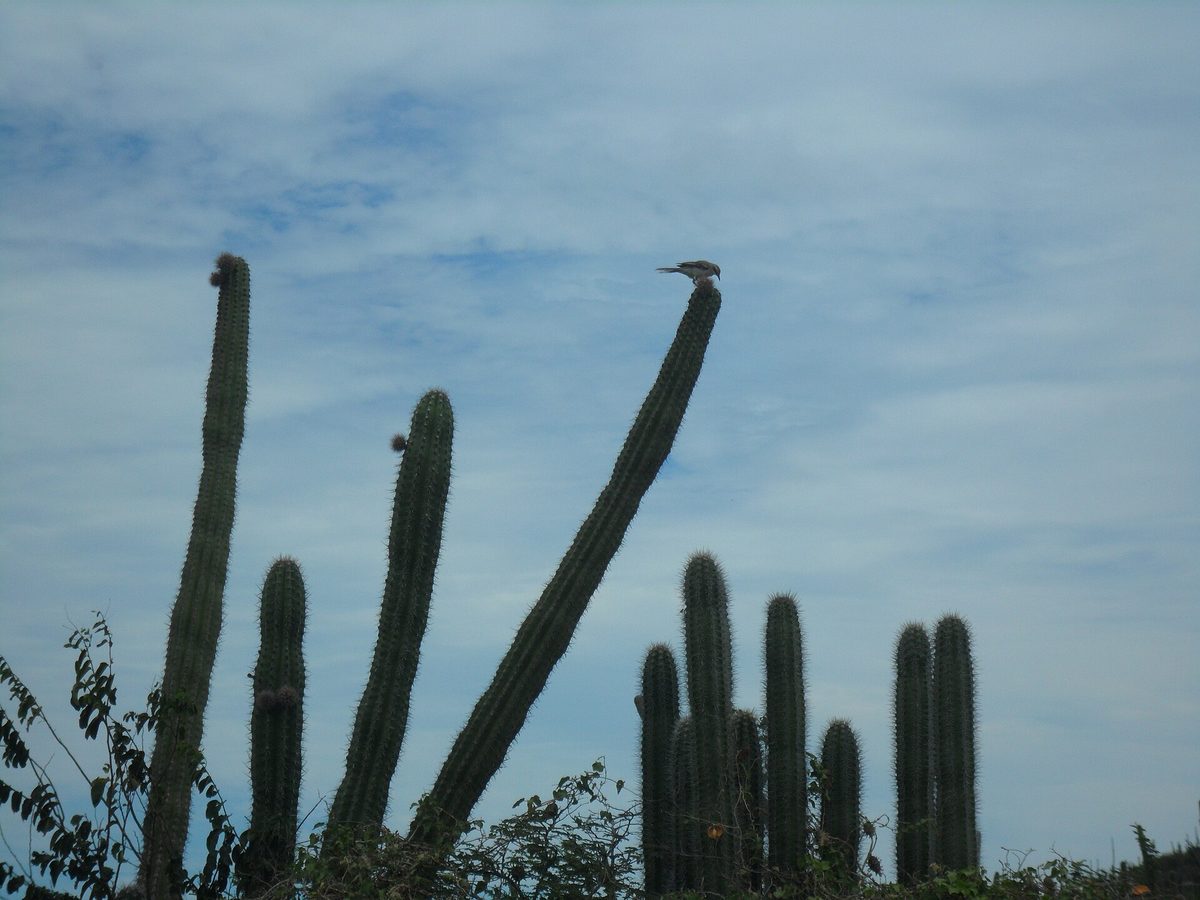
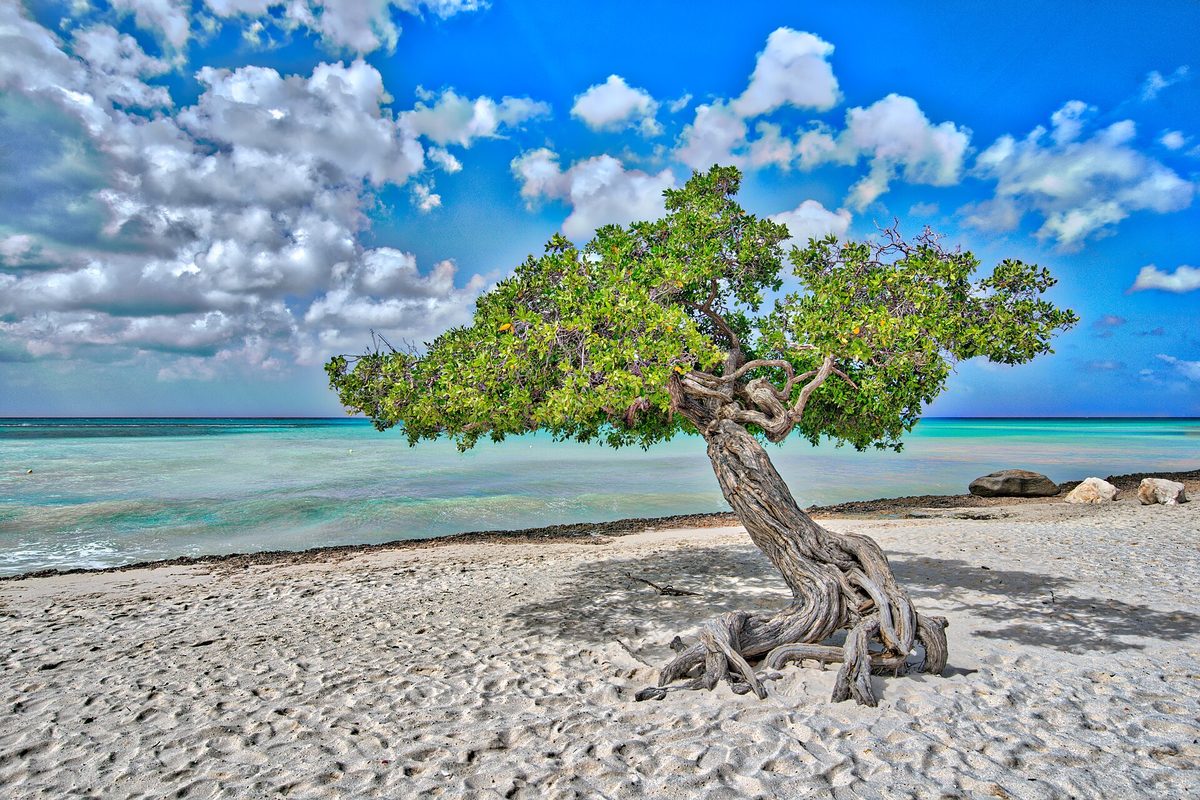
A few forces stack up. The trade winds blow almost constantly, and for much of the year they carry dry air, sweeping clouds along before they can dump much rain. Aruba’s low, flat terrain matters too: tall, mountainous islands force moist air upward to cool and condense into rain, but Aruba has no such heights to wring water out of the sky, so clouds often slide right over. And its southerly latitude keeps it largely out of the path of the systems that soak the rest of the Caribbean. The result is shrub, cactus, aloe, and that famous wind-bent divi-divi tree — a landscape that looks more like a desert coast than a rainforest.
Where the freshwater actually comes from
Here is a detail that drives the point home: Aruba does not rely on rainfall for its drinking water at all. With so little rain and no real rivers, the island desalinates seawater for its freshwater supply. When a place builds its water security around the sea instead of the sky, you know rain was never going to be the headline of your trip.
Is the Aruba rainy season worth visiting? (Value, crowds, and sun)
Honestly, for a lot of travelers, yes. The wetter months come with real upsides, and the downside — a bit more cloud and the odd shower — is mild. Let me lay out the trade-offs candidly so you can judge for your own trip.
The case for going in the wetter months
Two big wins: price and peace. Outside the late-December holiday spike, the shoulder of the rainy season (think October into early December, and again in the back half of January) often brings softer hotel rates and thinner crowds than the packed dry-season peak. You get the same warm sea, the same sunshine most of the day, and more room to breathe on the sand. If you are watching the budget, our guide to the cheapest months to visit Aruba digs into exactly which weeks tend to be kindest to your wallet, and the broader Aruba vacation cost breakdown helps you set a realistic budget.
The honest downsides
It is not all upside. You will see more cloud than in bone-dry April, the odd morning may start grey, and a planned boat trip could occasionally get nudged by a passing squall. Humidity ticks up a little in autumn. None of this is dramatic, but if your idea of a perfect trip is a guarantee of unbroken sun for seven straight days, the driest months will edge out the wettest ones. For most people chasing warmth, value, and a relaxed beach, the rainy season delivers.
December is the exception within the exception
One caveat: December is technically a wet month, but it is also the island’s busiest, priciest stretch thanks to the holidays. So you get rainy-season weather with peak-season crowds and rates — the opposite of the value pitch above. If a festive buzz is what you want, that trade is worth it; our deep dive on Aruba in December covers what to expect. For the value play, aim for the quieter edges of the wet stretch instead.
Rainy season vs hurricane season: same calendar, different thing
This is the single biggest source of confusion, so let me draw a clean line. Rainy season and hurricane season overlap on the calendar but they are not the same thing. Rainy season is simply the wetter stretch of Aruba’s ordinary year — those brief, frequent showers from October into January. Hurricane season is the regional Atlantic window, officially June 1 to November 30, during which tropical storms and hurricanes can form anywhere in the basin. They share the autumn months, which is why people blur them, but one describes everyday drizzle and the other describes rare, large storm systems.
Why hurricanes barely figure here
The reassuring news is that Aruba sits at the far southern edge of the hurricane belt, well south of the corridor where most Atlantic hurricanes travel. Direct hits are genuinely rare — the island can go many years between any serious tropical impact, and most “hurricane season” here passes with nothing more than a distant system occasionally throwing extra clouds or a wetter day Aruba’s way. It is one of the safer Caribbean choices during those months. I would not let the hurricane-season label scare you off Aruba the way I would caution about some islands further north.
That said, “rare” is not “never,” and a passing system can bump up the rain or the surf even if the storm itself stays far offshore. If you are traveling in the overlap window, it is worth understanding the distinction in full — our dedicated guide to Aruba hurricane season explains the real (low) risk, the historical track record, and how to plan around it. Travel insurance is always a sensible call in this window.
What to pack for the Aruba rainy season (and rainy-day things to do)
You do not need to overhaul your packing for the rainy season. The single most useful addition is a lightweight rain jacket or a packable poncho — something you can stuff in a day bag and forget about until a five-minute shower rolls through. Beyond that, the kit is the same as any Aruba trip.
What to throw in the bag
- Packable rain jacket or poncho — compact insurance against a passing shower.
- A dry bag or waterproof phone pouch — handy on boat trips and at the beach if a cloud opens up.
- Quick-dry clothing and an extra swimsuit — warm showers mean you dry fast anyway.
- Reef-safe sunscreen, and lots of it — this is the one people forget. The sun is fierce between showers, so do not let the word “rainy” trick you into leaving it off. For more, see our Aruba travel tips.
- Light layers for breezy evenings — the trade winds can feel cool after dark.
Leave the heavy raincoat, the umbrella you would take to a real downpour, and the rain boots at home. They are overkill for showers that are usually gone before you would finish putting them on.
If it does rain: easy ways to fill an hour
Because showers are short, you rarely need a full rainy-day plan — you need a pleasant way to wait out 20 minutes. But if you get an unusually grey morning, Aruba has plenty to offer under a roof or in light rain.
- Explore Oranjestad — duck into the shops, galleries, and museums, or browse the shopping downtown until the cloud passes.
- Eat well, slowly — a long lunch at one of Aruba’s restaurants is the perfect place to let a shower blow through.
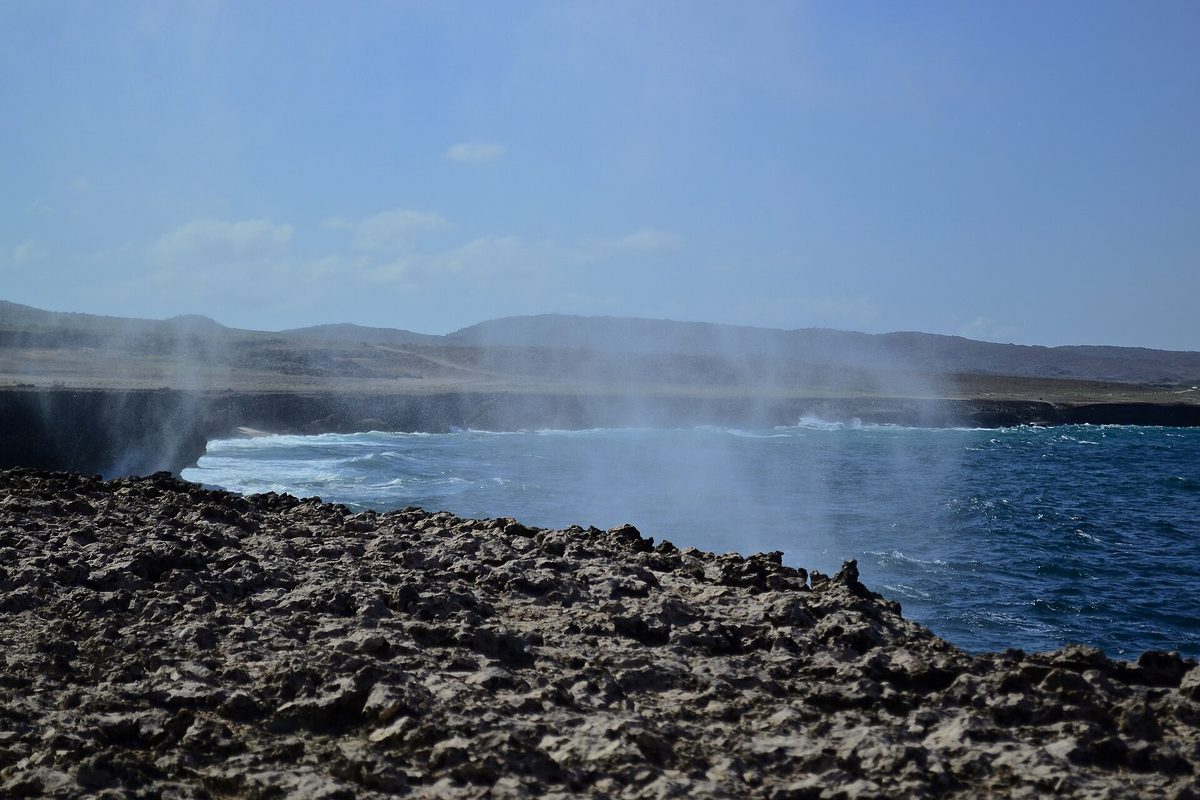
- Visit Arikok’s visitor center — the indoor exhibits at Arikok National Park are a dry, genuinely interesting way to learn the island’s geology and wildlife.
- Tour an aloe factory or a local museum — short, sheltered, and a nice change of pace.
- Lean into the quiet — a passing shower thins the crowds at popular sights, so it can be the best moment to enjoy them.
Best vs wettest months: picking your window
Let me make this concrete. If your top priority is the driest, sunniest, most reliably rain-free weather, aim for late February through May, with March and April the standout driest months of the year. That stretch is also outside the hurricane window, which is why it is the classic “safe bet” for guaranteed sun.
If your priority is value and elbow room, the wettest months still deserve a look — particularly the quieter edges around October to early December and the back half of January, when prices ease and the beaches breathe, and the rain is still mild and mostly nocturnal. The genuine wettest weeks cluster around November; that is when you trade a little more cloud for the lowest crowds of the autumn.
For the full seasonal trade-offs — temperature, wind, crowds and price together — compare Aruba in summer against the island in winter, and let the best time to visit Aruba pillar tie all the timing questions together. Whatever month you choose, you will want to know how to get around once you land — our guide to getting to and around Aruba and our overview of things to do in Aruba will round out the plan, and if you are still deciding on a base, our Aruba neighborhood guide covers the main areas.
Frequently Asked Questions
When is the rainy season in Aruba?
Aruba’s rainy season runs roughly from October through December and often into January, with November the wettest month. Even so, total rainfall stays low and showers are usually brief and overnight. The dry season covers about February through September, with March and April the driest, sunniest months of the whole year.
Does it rain a lot in Aruba?
No. Aruba is semi-arid and gets only around 18 to 20 inches of rain a year, less than many temperate cities. Roughly 60 percent of it falls between October and December. Even in the wettest month, rain comes in short bursts — often at night — and the island still averages well over 3,000 hours of sunshine annually.
When does it rain in Aruba during the day?
Most rain falls overnight or in the early morning, which is why many visitors barely notice it. When a daytime shower does pop up, it is usually brief — a few minutes to maybe half an hour — before the trade winds push the cloud off and the sun returns. Whole rained-out days are rare here.
What is the rainiest month in Aruba?
November is typically the rainiest month, averaging around 3.3 inches over about 10 days, with October and December close behind. It is still mostly sunny between showers. If you specifically want to dodge the wettest stretch, target late February through May, when monthly rainfall often drops below half an inch.
Is Aruba’s rainy season the same as hurricane season?
No. They overlap but differ. Rainy season is Aruba’s normal wetter stretch (October to January) of brief showers. Hurricane season is the Atlantic-wide window of June 1 to November 30 when tropical storms can form. Aruba sits at the southern edge of the hurricane belt, so direct hits are rare, but the two seasons share the autumn months.
Can you still go to the beach in Aruba’s rainy season?
Absolutely. The sea stays warm, days stay mostly sunny, and showers are short enough that you rarely lose beach time. Pack a packable poncho and plenty of reef-safe sunscreen — the sun between showers is strong. Many travelers visit in the wetter months for lower prices and thinner crowds and barely notice the rain.
What should I pack for Aruba in the rainy season?
Pack almost exactly as you would any time: swimwear, light quick-dry clothing, and strong reef-safe sunscreen. Add one thing — a lightweight rain jacket or packable poncho, plus maybe a dry bag for your phone on boat trips. Skip the umbrella, heavy raincoat, and rain boots; they are overkill for Aruba’s brief, warm showers.
Final thoughts: don’t let the word “season” fool you
If the phrase “rainy season” was the only thing standing between you and a great-value Aruba trip, I hope this has cleared it away. The reality on the ground is a sunny, breezy, semi-arid island where the rain shows up briefly, warmly, and mostly while you are asleep. The wetter months can be a smart, affordable, uncrowded time to come — as long as you pack a poncho, keep slathering on sunscreen, and check the live forecast before you fly. Go enjoy it; the sand will be drier than you think.
By the ArubaTourism.org team — Last updated June 2026.
Photo credits
All photos are used under their respective Creative Commons licenses via Wikimedia Commons. Thank you to the photographers.
- Palm Beach Aruba — Photo: Kwihi / CC BY 4.0 via Wikimedia Commons
- Bird Cactus Scrub Landscape Santa Cruz Aruba — Photo: EgorovaSvetlana / CC BY-SA 4.0 via Wikimedia Commons
- Arikok National Park, limestone wave-cut terrace- Aruba — Photo: Misty Johnson / CC BY 2.0 via Wikimedia Commons
- Aruba Divi Tree — Photo: sbmeaper1 (CC0) via Wikimedia Commons