Here is the one thing I wish someone had told me sooner: the single biggest factor in whether a beach day with kids goes wonderfully or falls apart isn’t the resort, the sand, or the snorkel gear. It’s which coast you point the car toward. Aruba has two completely opposite shorelines, and this one decision drives almost everything, which is why nearly all the best beaches in Aruba for kids sit on the same calm, leeward shore. The leeward side (the west and southwest) is sheltered from the trade winds, so the water is famously flat, warm, and shallow, the kind of sea where a four-year-old can wade out a long way and still touch the bottom. The windward side (the north and east) faces the open Atlantic head-on, with pounding surf, rip currents, and beaches that are beautiful but genuinely dangerous to swim.
Once you internalize that, picking the right spot becomes pretty straightforward, because the family-friendly ones all sit on that calm leeward coast. We’ve now done several trips with our two (one cautious paddler, one who sprints into every wave he sees), and we’ve tested most of these beaches at different tides, different times of day, and different crowd levels. This guide is the honest version — where the water is actually shallow, where there’s real shade, where parking is a nightmare, and which famous “beach” you should photograph but absolutely keep your kids out of the water.
The short answer: the best beaches in Aruba for kids
For the calmest, shallowest, safest water, Baby Beach near San Nicolas is unbeatable for toddlers and first-time snorkelers — a protected lagoon with barely a ripple. For convenience, amenities, and walkable food, Palm Beach is the family workhorse. For wide-open space and room to run, Eagle Beach wins. Add Arashi for quiet snorkeling and you’ve covered every age.
Aruba family beaches at a glance
Here’s the quick comparison I wish I’d had on day one. Ratings are from our own visits — “calm/shallow” is what matters most with little kids.
| Beach | Calm & shallow | Shade | Facilities | Snorkeling | Crowds | Best for |
|---|---|---|---|---|---|---|
| Baby Beach | Excellent (lagoon) | Some (huts) | Good | Great (gentle) | Low–moderate | Toddlers, first snorkel |
| Palm Beach | Very good | Palapas + palms | Excellent | Fair | High | Amenities, watersports |
| Eagle Beach | Good (light waves) | Divi trees only | Good | Limited | Moderate | Space, sandcastles |
| Arashi Beach | Very good | Palapas | Basic | Great | Low–moderate | Quiet snorkel days |
| Boca Catalina | Very good | Little | Minimal | Excellent | Low | Snorkel cove, older kids |
| Manchebo / Druif | Good | Some | Good (resorts) | Limited | Low | Quiet, gentle slope |
| Mangel Halto | Calm but drops off | Huts | Basic | Excellent | Low | Older kids, mangroves |
| Renaissance Island | Excellent (private) | Palapas | Excellent | Good | Controlled | Flamingos, day-pass treat |
If you’re still mapping out the wider trip, our complete guide to visiting Aruba with kids ties all of this together — beaches, resorts, food, and how to actually structure your days. And if you just want to geek out on sand and water, the broader Aruba beaches guide covers every stretch on the island, kid-friendly or not.
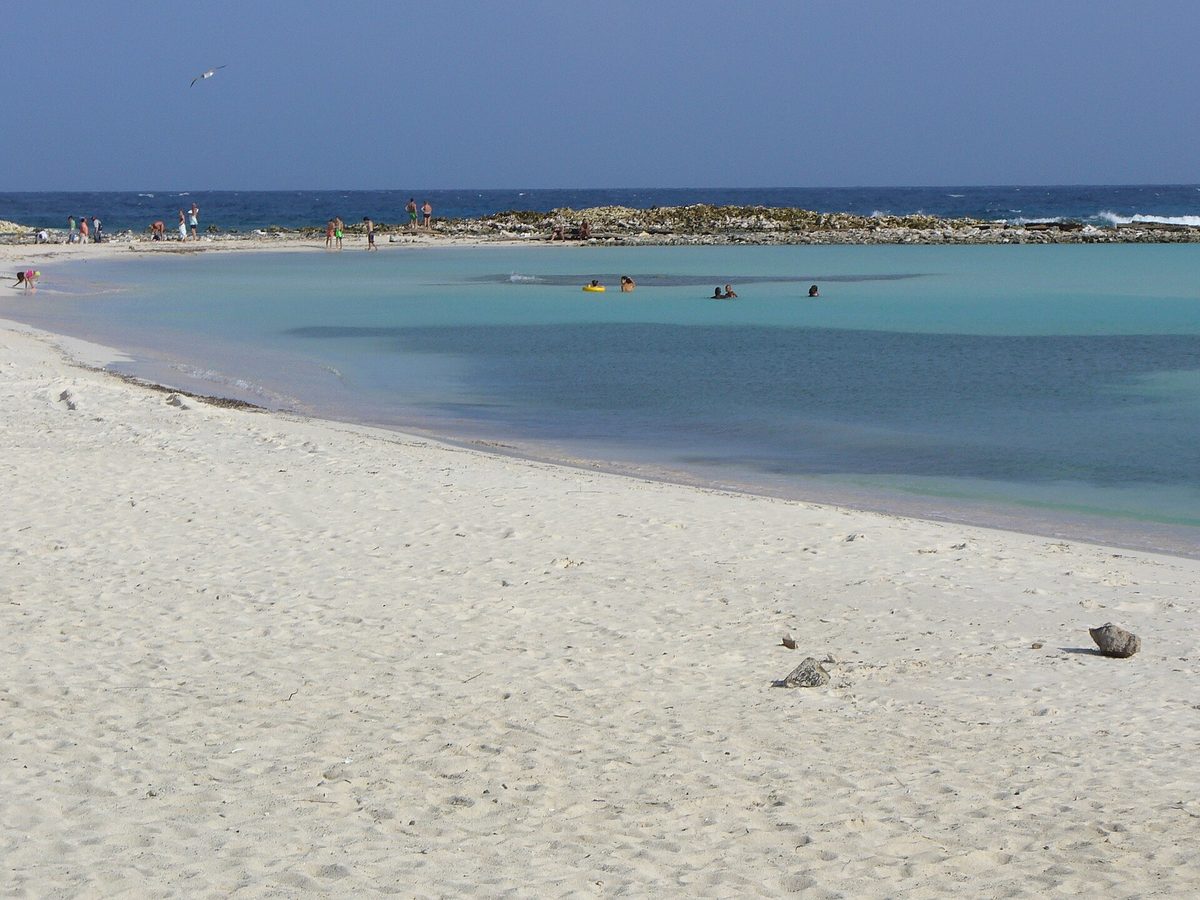
Baby Beach: the gold standard for little kids
If you have a toddler, a nervous swimmer, or a baby who’s never seen the ocean, start here. Baby Beach (officially Klein Lagoen) sits down at the island’s southeastern tip near San Nicolas, and it earned its name honestly: it’s a shallow, sheltered, man-altered lagoon enclosed by a reef and breakwater, so the open Atlantic never reaches it. The result is a half-moon of pale sand wrapped around water that is genuinely calm — not “calm for the Caribbean,” but flat, clear, and warm, with a level that stays roughly knee-to-waist high across most of the inside of the cove.
What that means in practice: our youngest could wade out a startling distance and still stand with her shoulders above the surface, and there are no surprise drop-offs or rocks underfoot near shore. The bottom slopes so gently that you can sit ten yards out in a few inches of water and just let a one-year-old splash. It’s the only beach where I genuinely relaxed instead of hovering at arm’s length.
Water, snorkeling and what to watch for
Toward the mouth of the lagoon, where it opens to the sea, the water deepens significantly and there’s a marked snorkel zone — keep kids inside the buoys, because currents pick up past the inlet. Inside that line, though, the snorkeling is some of the most kid-appropriate on the island: gentle water and easy-to-spot parrotfish, blowfish, the occasional squid, and small reef fish make it a perfect first mask-and-fins experience. We let our six-year-old “discover” his first fish here and he talked about it for the rest of the trip.
Shade, facilities and the drive
There are complimentary palapa-style huts scattered along the sand for shade, plus beach chairs, windscreens, and snorkel gear for rent, restrooms, and a dive shop. For food, there’s a refreshment stand and Big Mama’s Grill up on the bluff doing burgers, BBQ, and seafood platters with a sweeping view. The one real catch is distance: Baby Beach is about a 45-minute drive from the Palm Beach hotel strip, so treat it as a full-day expedition, not a quick morning. Bring more water and sunscreen than you think you need — that southern end is hot and exposed. Renting a car for the day makes this painless; see our notes on getting to and around Aruba if you haven’t sorted transport yet.
Palm Beach: the easy, everything-in-one choice
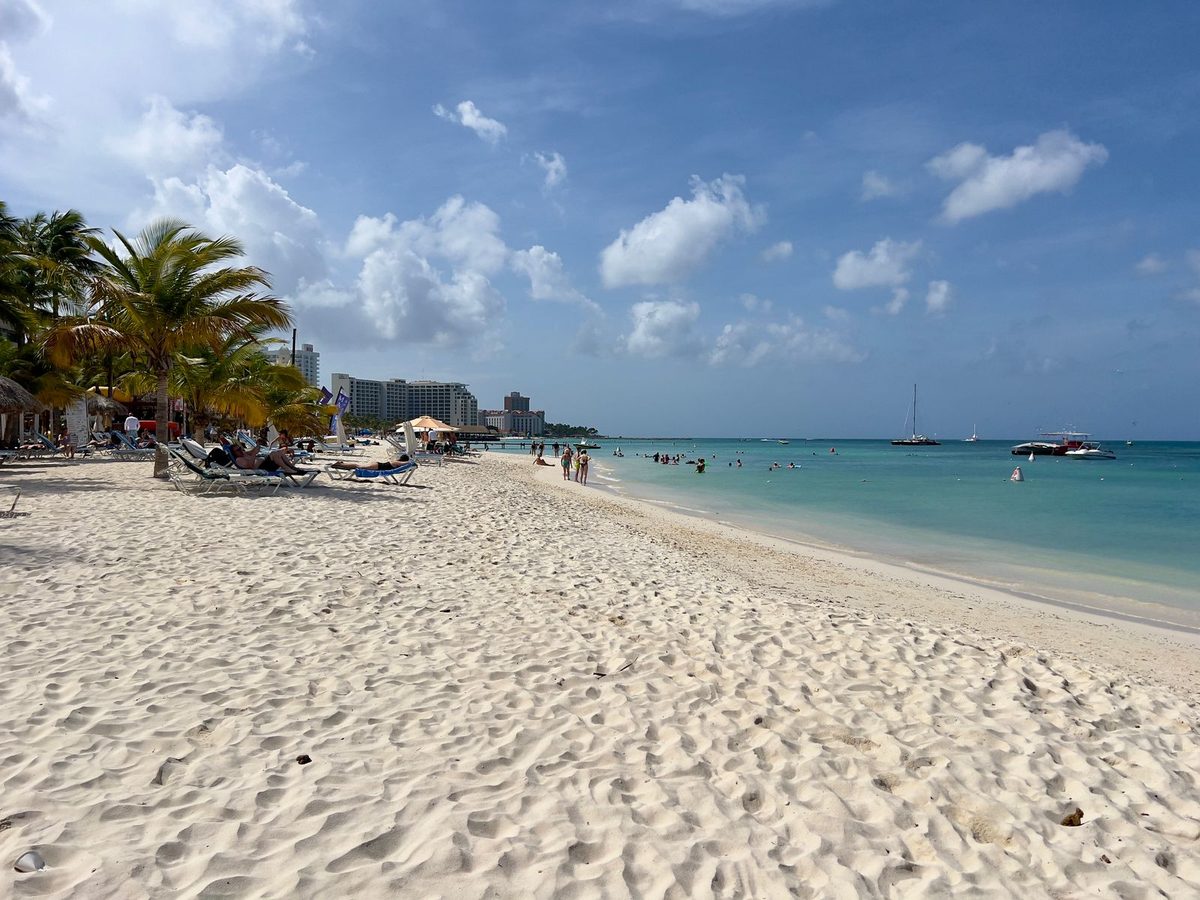
If Baby Beach is the destination, Palm Beach is home base. This is the long, palm-dotted strip fronting the high-rise resorts in Noord, and it’s the beach most families actually spend the bulk of their week on — for good reason. The water is calm and clear with barely any waves, the slope is gentle, and because it’s lined end to end with resorts, the amenities are unmatched: clean restrooms and showers, rentable palapas and loungers, lifeguard-free but constantly busy (which has its own reassurance), and a paved walkway behind the sand where you’re never more than a couple of minutes from a bathroom, an ice cream, or a frozen drink for the grown-ups.
For kids the appeal is the sheer convenience. You can rent a palapa for shade in the morning, walk back to your room for a nap at noon, grab lunch without packing a cooler, and let older kids try the watersports that cluster here — banana boats, tubing, parasailing, paddleboards, and short snorkel cruises all launch right off this stretch. Our boys did their first jet-ski ride (as passengers) and a banana-boat run here, and the operators are used to families and cautious about life vests. If watersports are a big part of your plan, our Aruba water sports guide breaks down what’s worth doing at which age.
The downsides: crowds and parking
Palm Beach is busy. In high season the sand in front of the big resorts fills early, and the people-watching is part of the experience rather than a quiet escape. If you’re not staying on the strip, parking is the real headache — the public lots fill by mid-morning and you may end up circling. Get there before 10am or come in the late afternoon for the golden light and a thinning crowd. The proximity to restaurants is a genuine perk with hungry kids, though; you can walk to dozens of options, and our roundup of where to eat in Aruba covers the family-friendly ones nearby. Most of the big all-inclusive resorts sit right on or behind this beach, which is why so many families never have to drive at all.
Eagle Beach: space to run and those iconic trees
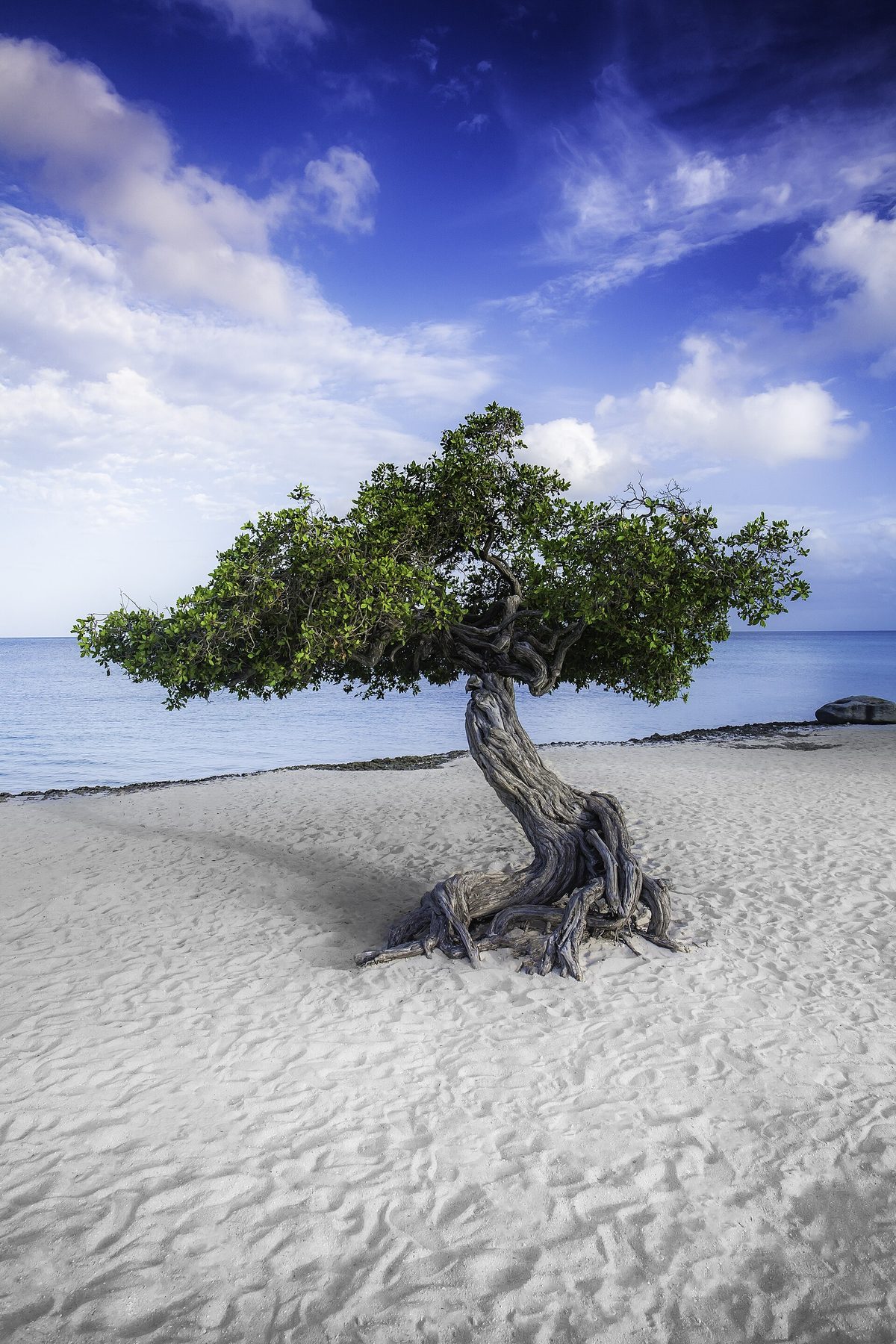
Just south of Palm Beach, Eagle Beach is the wide one — consistently rated among the best beaches in the world, and the most expansive on the island. Where Palm Beach packs everyone onto a narrow strip, Eagle gives you a huge, soft, blindingly white shoreline with room for kids to run, play tag, throw a frisbee, and build sandcastles without crowding anyone. The two photogenic, wind-bent fofoti (divi-divi) trees here are the postcard image of Aruba, and they make a great meeting landmark when you’ve got kids scattered across that much sand.
The water is shallow and beautiful, and on calm days it’s lovely for wading and gentle swimming. Be honest with yourself, though: because the beach is wider and a touch more open than Palm, it can pick up slightly more wave action and a bit of shore break on breezier days — nothing dramatic, but enough that a toddler can get knocked off balance when it’s blowing. On flat days it’s superb; on windy ones I keep the littlest one in the shallows. The trade-off for all that space is shade: aside from those two trees and any palapa you rent, there’s very little natural cover, so bring a pop-up tent or umbrella and reapply sunscreen relentlessly.
Facilities are good without being overwhelming — rentable loungers and palapas, restrooms, and a string of beach bars and restaurants along the walkway for refreshments. Depending on the season you may see roped-off sea-turtle nests on the sand; it’s a wonderful teaching moment for kids, and the rule is simple: look, don’t touch, and keep your distance. Eagle is also a short, easy drive from the resort area, making it a no-stress half-day even with a stroller.
Arashi Beach: quiet water and easy snorkeling
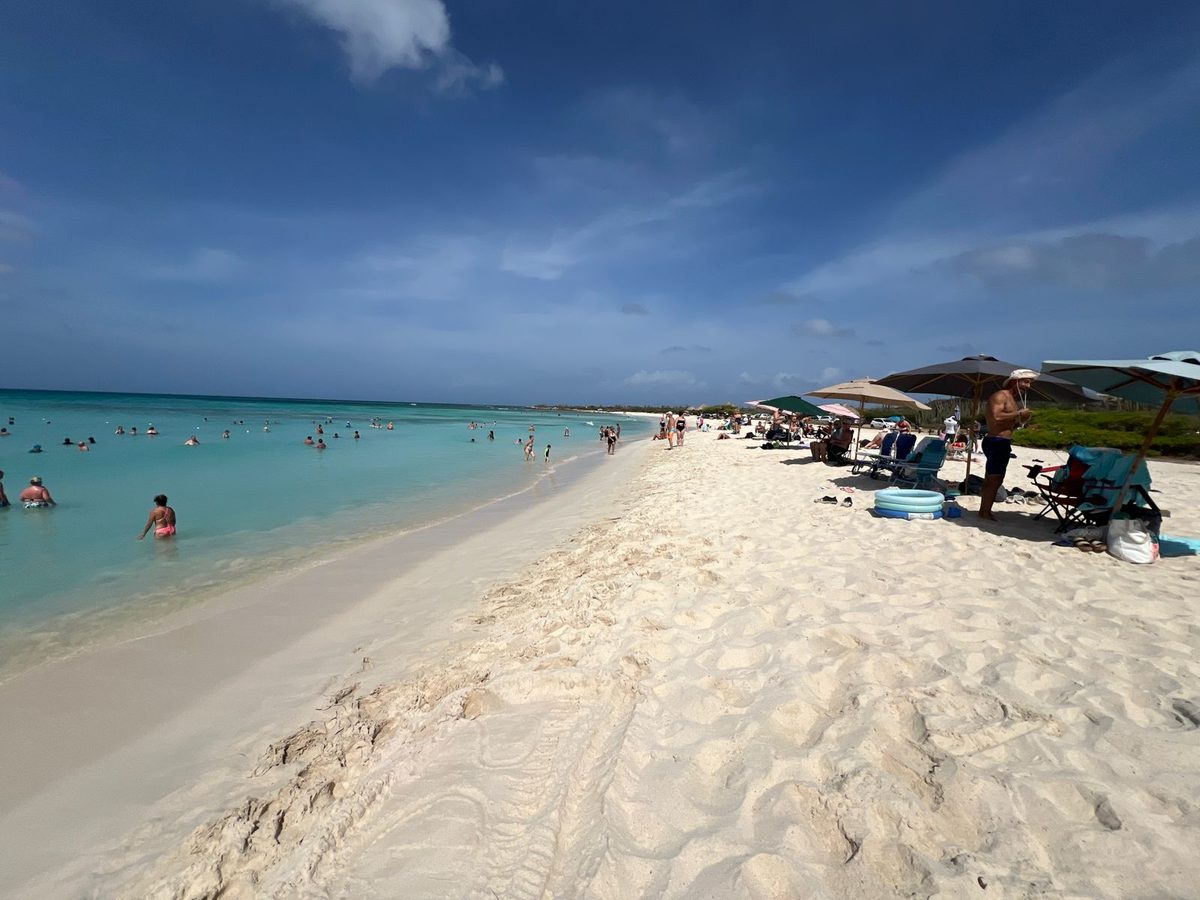
Up at the northwestern tip near the California Lighthouse, Arashi is my pick for families who want calm water and good snorkeling without the Palm Beach crowds. The bay is sheltered, the water is pool-flat and shallow, and there are no strong currents close to shore, so it’s a relaxed place to let kids paddle and practice with a mask. Swim out a little and there’s a genuinely good little reef with colorful fish — easy enough that a confident eight-year-old can enjoy it, calm enough that you’re not fighting chop the whole time.
Facilities are simple but real: a big, easy parking lot right behind the sand (a small miracle after Palm Beach), palm-leaf palapas for shade, showers to rinse off, and the Arashi Beach Shack for cold drinks, snacks, and ice cream — sometimes with live music. It rarely feels packed, especially on weekdays. Because it’s near the lighthouse and the start of the rugged north coast, it pairs perfectly with a morning of sightseeing; see our list of the best things to do in Aruba if you want to build a half-day around it. Bring your own snorkel gear — rentals are limited up here.
Boca Catalina: a little snorkeling cove for older kids
A few minutes south of Arashi, in the Malmok area, Boca Catalina is a small, tranquil bay that’s one of the best easy snorkeling spots on the island. The water is calm and clear, and there are fish to see even in the very shallow water close to shore, which makes it forgiving for kids who are still getting comfortable with a mask. Venture a bit further out (it’s only around 12 feet deep) and you may meet green sea turtles — a guaranteed thrill.
It’s a cove, not a sprawling beach: the sand is narrow, shade is scarce, and facilities are minimal, so this is a “pack everything” stop rather than an all-day base. You reach it by a staircase down from a roadside parking area. I’d save Boca Catalina for kids who already enjoy snorkeling rather than toddlers, and go on a weekday when it’s quietest. Many of the half-day boat trips anchor near here too, so if you’d rather have gear and a guide handled, our guide to Aruba excursions and the dedicated snorkeling and water sports rundown are good starting points.
Manchebo and Druif: the quiet, gentle alternative
Tucked just south of Eagle Beach, the Manchebo and Druif stretch is the low-key, grown-up-but-still-kid-friendly part of the leeward coast. The sand is wide and powdery, the water is shallow and calm with a gently descending slope and no sudden drops, and the whole area feels noticeably quieter than the high-rise strip a few minutes north. For families who find Palm Beach overwhelming, this is a lovely middle ground: easy water for teaching a child to swim, soft sand for castles, and low-rise resorts behind you with restrooms, loungers, and restaurants when you need them.
Manchebo is also one of the widest beaches on the island, so even when it’s “busy” it never feels crowded. There’s some natural shade in spots plus rentable palapas, and the calm conditions make it a relaxed base for a nap-schedule day with a baby. It’s my go-to recommendation for grandparents traveling with grandkids — gentle on everyone.
Mangel Halto: mangroves and snorkeling for bigger kids
Mid-island near Savaneta, Mangel Halto is a different kind of beauty — a secluded spot threaded through mangroves with a wooden sun deck, calm turquoise shallows right at the edge, and a reef just offshore that’s beloved by snorkelers of every level. The shallow inlets among the mangroves make a natural splash pool for little ones, while older, confident kids can snorkel out over the reef (you can reach a sunken structure with parrotfish and other sea life a short way out).
Two honest cautions. First, while the water at the very edge is calm and shallow, it drops off into deeper channels fairly quickly once you move past the mangrove fringe, so this isn’t a place to let a toddler wander unwatched the way you can at Baby Beach. Second, there’s very little shade and only basic facilities (public huts, a small parking lot that fills early, a tiny pub nearby), so pack accordingly and arrive in the morning. For families with school-age kids who love to snorkel and explore, though, it’s a magical, uncrowded change of pace — and a great half-day to combine with the south-of-island sights in our things to do in Aruba guide.
Renaissance Island: flamingos and a controlled, calm day
You’ve seen the photo: a child waist-deep in clear water beside a bright-pink flamingo. That’s Renaissance Island (Flamingo Beach and the family-friendly Iguana Beach), a private island reached by a short boat shuttle from the Renaissance Aruba resort in Oranjestad. Access is the catch — it’s reserved for resort guests, or you can sometimes buy a limited day pass — but if you can swing it, it’s a memorable, low-stress beach day. The water is pool-calm and protected by stone breakwaters, the sand is soft, and the island is dotted with palapas, hammocks, two restaurants, and two bars.
Important for families: the famous flamingos live on the adults-only Flamingo Beach, but there’s a designated family section and the neighboring Iguana Beach is the kid-friendly side, with calm, sheltered water and roaming iguanas the kids love spotting. Bring coins for the flamingo-feed pellets. It’s a splurge and a logistics puzzle, but as a once-per-trip treat it’s hard to beat. If you’re deciding where to base yourselves, our guide to where to stay in Aruba explains which resorts come with perks like this.
How to choose the best beaches in Aruba for kids by age and day
After enough trips, my mental shortcut for the best beaches in Aruba for kids goes by age. With a baby or toddler, I want the flattest, shallowest water and zero drop-offs, which means Baby Beach for a big day out and Palm, Manchebo, or Druif for everyday ease. With young school-age kids who can swim a little, I add Eagle for space and Arashi for gentle snorkeling. With older, confident kids, I open up Boca Catalina and Mangel Halto for proper snorkeling and a sense of adventure. And for one big-ticket memory, Renaissance Island’s flamingos.
A practical rhythm that worked for us: alternate. Do a calm, easy beach close to the resort one day, then a bigger expedition (Baby Beach, Arashi, or a boat snorkel) the next, so nobody — kid or parent — burns out. If you want a full day-by-day structure, our Aruba itinerary shows how to weave beaches, downtime, and a couple of excursions together, and the best time to visit Aruba is worth a look since wind and crowds shift by season.
Beach safety in Aruba: the windward coast is for looking, not swimming
This is the section I’d tattoo on a new Aruba parent’s brain. The north and east (windward) coast — places like Andicuri, Boca Grandi, Boca Prins, Dos Playa, Daimari, and Black Stone (Blackstone) Beach — is stunning: dramatic black rocks, dunes, crashing surf, wild Atlantic views, much of it inside Arikok National Park. It is also genuinely dangerous for swimming. The waves are powerful, the surf is rough, and rip currents are common. These beaches are for photos, sandcastles well back from the water, dune-scrambling, and watching the surf — not for letting kids into the sea.
A few rules we never break: swim only on the calm leeward (west/southwest) side — that’s where every beach above sits. Aruba’s beaches generally do not have lifeguards, so you’re swimming at your own risk and need to be your kids’ lifeguard. Watch for warning flags where posted — red means do not enter the water, yellow means caution — and obey any “no swimming” signs at north-coast coves. Permanent rip currents tend to form near piers and jetties, so keep kids swimming well away from them (at least 30 metres). And if anyone is ever caught in a current, the move is to stay calm, float, and not fight it — let it carry you out, then swim parallel to shore to escape it before heading back in. For the broader picture on staying safe and prepared, our Aruba travel tips cover sun, water, and getting-around basics.
Practical tips for a great family beach day
- Go early. Arrive before 10am for parking, shade, calmer water, and cooler sand — midday Aruba sun is intense, and the wind often builds in the afternoon.
- Bring your own shade. Outside Palm Beach, natural shade is scarce. A pop-up tent or umbrella saves the day, especially at Eagle, Arashi, and Mangel Halto.
- Pack water shoes. Useful at rockier entries like Boca Catalina, Malmok, and Mangel Halto, and reassuring for nervous little feet anywhere.
- Snorkel gear pays off. Rentals are spotty at the quieter beaches; kid-sized masks from home make Baby Beach, Arashi, and Boca Catalina far more fun.
- Over-pack water and sunscreen. The trade winds hide how much sun you’re getting. Reapply often; the breeze is deceiving.
- Mind the budget. Palapa and gear rentals, boat day-passes, and watersports add up; our Aruba vacation cost guide helps you plan.
Frequently asked questions
What is the best beach in Aruba for toddlers and babies?
Baby Beach near San Nicolas is the standout. It’s a sheltered lagoon with calm, shallow, knee-to-waist-deep water, a gentle sandy slope, and no sudden drop-offs or rocks near shore, so toddlers can wade safely and babies can splash in a few inches at the edge. Shade huts and easy snorkeling for little ones make it ideal.
Which Aruba beaches have the calmest water for kids?
The calmest, safest water is all on the leeward (west and southwest) coast. Baby Beach is the calmest of all, followed by Palm Beach, Arashi, Manchebo/Druif, and the protected Renaissance Island. These beaches are sheltered from the trade winds, so they stay flat and shallow. Avoid the windward north and east coast for swimming entirely.
Is it safe for kids to swim in Aruba?
Yes, on the leeward coast. The west and southwest beaches have calm, shallow, generally safe water for children. The north and east (windward) coast is dangerous, with strong surf and rip currents — beautiful to visit but not for swimming. Most beaches have no lifeguards, so supervise closely, watch for red and yellow flags, and stay away from piers.
Where is the best snorkeling for kids in Aruba?
For gentle, beginner-friendly snorkeling, start inside Baby Beach’s marked zone, then try Arashi Beach and the calm cove at Boca Catalina, where fish appear even in shallow water and turtles cruise a little further out. Mangel Halto’s offshore reef suits confident older kids. Bring kid-sized gear, since rentals are limited at the quieter spots.
How far is Baby Beach from the Palm Beach resorts?
Baby Beach is about a 45-minute drive south from the Palm Beach hotel strip, down at the island’s southeastern tip near San Nicolas. Plan it as a full-day outing rather than a quick morning trip, ideally with a rental car, and pack extra water, snacks, and sunscreen since the southern end is hot, exposed, and has only a couple of food stands.
Do Aruba beaches have lifeguards?
Generally, no. Most public beaches in Aruba do not have lifeguards, so you swim at your own risk and need to actively supervise children in the water. Stick to the calm leeward beaches, obey posted warning flags (red means stay out, yellow means caution), keep kids away from piers where rip currents form, and never let children swim on the rough north or east coast.
By the ArubaTourism.org team — Last updated October 2026.
Photo credits
- Baby Beach, Aruba — Photo: Dje9537459 (Public domain) via Wikimedia Commons.