There’s a reflex a lot of travelers have when they picture the Caribbean: sunshine and turquoise water, sure, but also a low hum of worry about crime, scams, and whether it’s smart to wander past the resort gate after dark. Aruba quietly dismantles that worry. So is Aruba safe for tourists in 2026? In a word, yes — and not in the hand-wavy “everywhere has its risks” sense. By the actual measures that matter, this little Dutch-Caribbean island is one of the most reassuring places you can choose for a sun holiday.
The short version: Aruba is one of the safest islands in the Caribbean. The U.S. State Department rates it Level 1 — “Exercise Normal Precautions,” the same tier as Switzerland and Japan. Violent crime against visitors is rare, the tap water is safe, and the island sits outside the main hurricane belt. The realistic risks are petty theft, strong surf on the wrong coast, and sunburn — all easily managed.
Quick answer: Yes. Aruba is consistently ranked among the safest Caribbean destinations, carries the lowest U.S. travel-advisory level, and is welcoming to solo travelers, families, and LGBTQ+ visitors. Use ordinary common sense — lock valuables away, respect the rough north coast, and stay hydrated — and you’re very unlikely to have any trouble.
Is Aruba safe right now? The official picture
Let’s start with the sources that don’t have a tour to sell you. The U.S. State Department places Aruba at Level 1 (Exercise Normal Precautions), its lowest of four advisory levels. The UK and Canadian foreign offices say much the same: travel as normal, watch your belongings. In early 2026 Aruba was again named the safest destination in the Caribbean, on the back of record tourism numbers — more than two million visitors a year on an island of roughly 107,000 people, and remarkably little friction between the two.
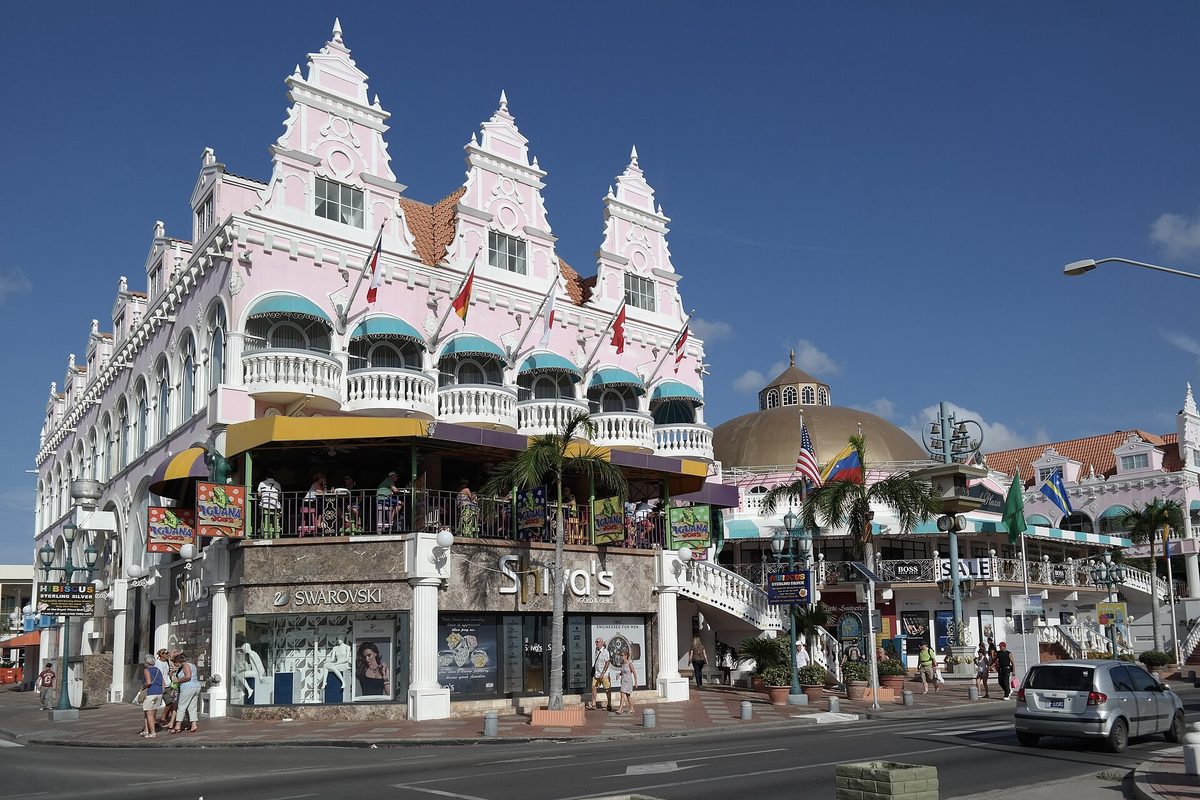
Why so calm? A few structural reasons. Aruba’s economy is tourism, so the island invests heavily in keeping visitors comfortable and policed. It’s an autonomous country within the Kingdom of the Netherlands, with Dutch-standard institutions, a stable government, and reliable infrastructure. And it’s genuinely small — about 20 miles long — so the police presence in the resort strip and Oranjestad is dense and visible. You’ll see officers on foot near the high-rise hotels, the cruise port, and the main beaches.
Aruba safety at a glance
| Factor | Rating | What it means for you |
|---|---|---|
| Overall crime level | Low | Among the lowest in the Caribbean |
| Violent crime | Rare | Very uncommon against tourists (roughly 7 per 100,000) |
| Most common crime | Petty theft | Beach-bag and rental-car break-ins; preventable |
| U.S. advisory level | Level 1 | “Exercise Normal Precautions” — the lowest |
| Solo & solo-female travel | Safe | Widely reported as comfortable, day and night |
| Tap water | Safe to drink | Desalinated, meets WHO/EU standards |
| Hurricane risk | Very low | Sits below the main Atlantic hurricane belt |
| Biggest real risks | Sun, surf, the road | Sunburn, rip currents on the north coast, rough back-roads |
Crime in Aruba: what’s actually likely (and what isn’t)
Here’s the honest framing I give friends before they go: you are far more likely to come home with a sunburn than a crime story. Aruba’s violent-crime rate hovers around 7 incidents per 100,000 residents — a fraction of what many U.S. cities report — and the overwhelming majority of those incidents have nothing to do with tourists. What you should actually plan around is opportunistic petty theft.
The classic scenarios are predictable, which is exactly why they’re avoidable:
- Beach-bag theft. You and your group all walk into the water at once, leaving a tote with phones and a wallet on the sand. Don’t. Take turns, or bring only what you can’t lose.
- Rental-car break-ins. Cars left at trailheads and remote lookouts — the California Lighthouse, Arikok’s dirt pull-offs, the Natural Pool parking — are the usual targets. Leave nothing visible, and never lock valuables in the trunk in front of the car.
- Hotel-room opportunism. Rare in reputable resorts, but use the in-room safe for your passport, spare cash, and a backup card anyway.
- Distraction at the ATM or market. Standard big-crowd awareness covers it.
Notice what’s not on that list: muggings, armed robbery of tourists, kidnapping. Those simply aren’t part of the normal Aruba experience. If you’ve traveled anywhere popular — Barcelona, Rome, Honolulu — the precautions here are gentler than what you already do at home.
Where to be a little more careful
Aruba doesn’t really have “no-go zones” for tourists, but a few situational notes help. San Nicolas, the colorful southern town famous for its murals, is perfectly worth visiting by day; like any town, it’s quieter and less watched late at night. Isolated stretches — empty beaches after dark, unlit residential lanes far from the resorts, lonely Arikok trailheads — are best skipped solo at night, not because something will happen, but because help is farther away if it does. And nightlife districts around Palm Beach are safe, but that’s where over-drinking and the usual late-bar pickpocketing risk overlap. None of this is Aruba-specific; it’s just travel.
The risk nobody warns you about: which coast you swim on
If I could put one safety message on a billboard at the airport, it wouldn’t be about crime — it would be about water. Aruba has two very different coastlines, and confusing them is the most genuinely dangerous mistake a visitor can make.
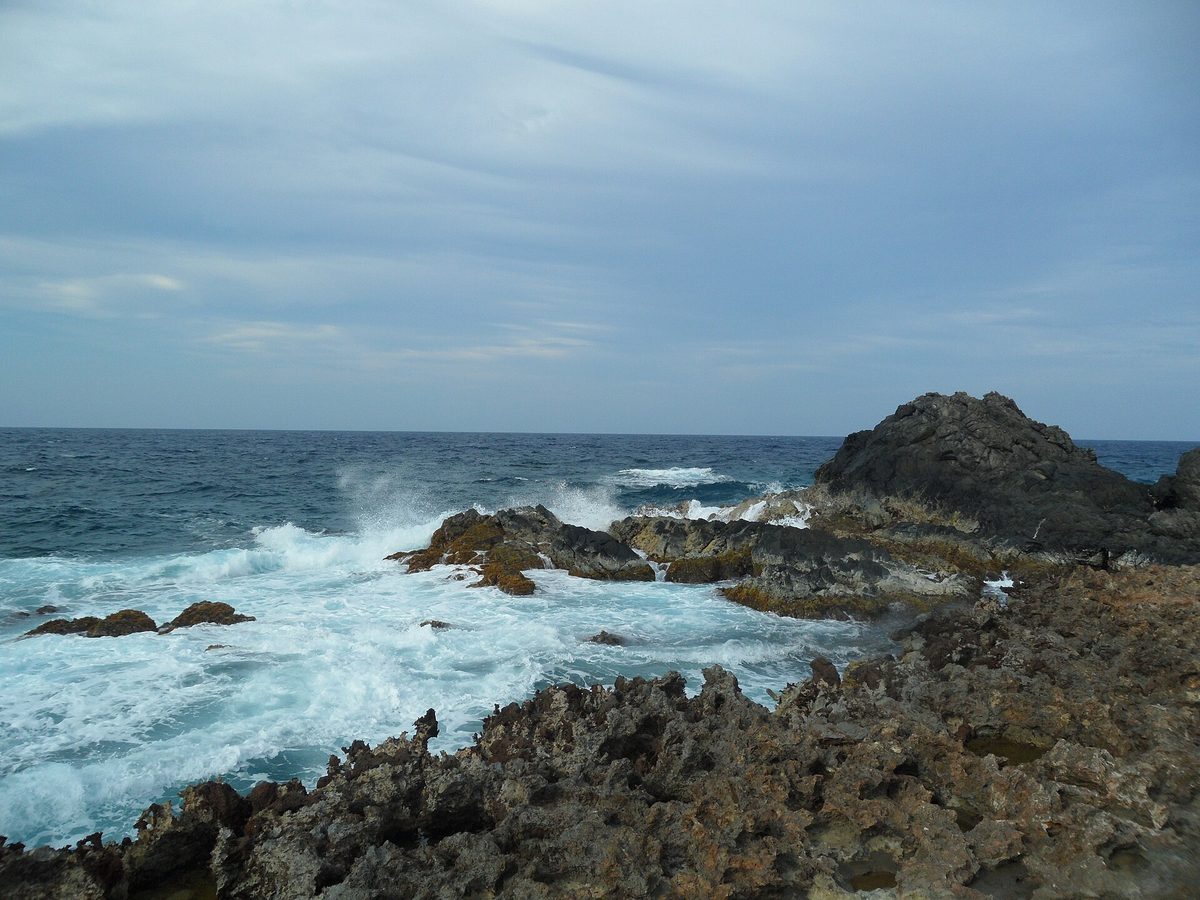
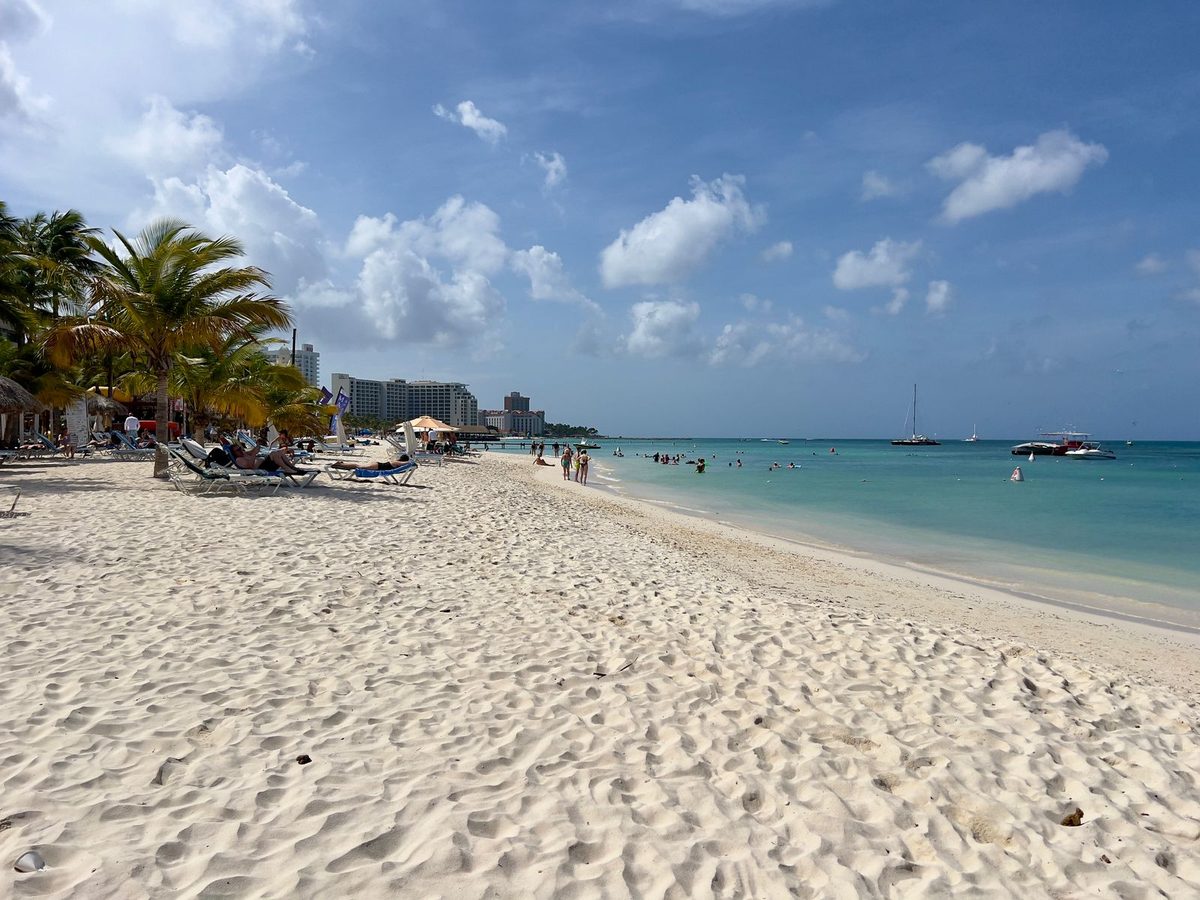
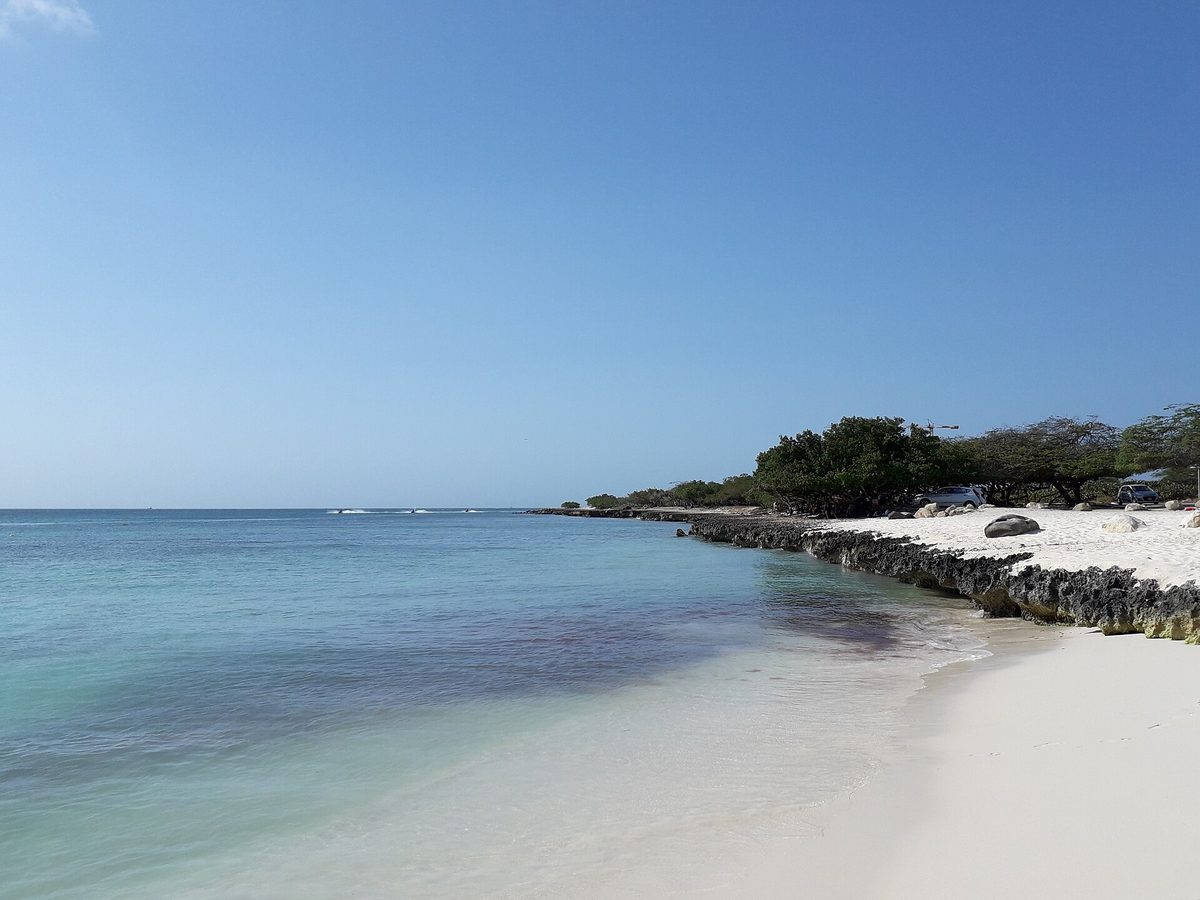
The leeward (west and southwest) coast — Palm Beach, Eagle Beach, Manchebo, Druif, Baby Beach’s lagoon down south — is calm, shallow, and protected. This is where the resorts are, where the postcard water lives, and where swimming is genuinely safe for all ages. The windward (north and east) coast faces the open Atlantic: pounding surf, powerful rip currents, and sudden drop-offs. Beaches like Wariruri, Andicuri, Boca Grandi, and the dramatic spots inside Arikok National Park are stunning to look at and dangerous to enter. People have drowned on the north coast. Photograph it, picnic above it, but do not swim there.
A few water rules that keep everyone safe:
- Read the flags. Red means don’t enter; yellow means caution; green or no flag at a guarded beach means normal conditions.
- If you’re unsure, it’s the wrong beach. The good swimming beaches are obvious — gentle, busy, lined with palapas.
- Watch kids constantly, even in calm water; the trade winds can push inflatables out fast.
- Rip current? Don’t fight it. Swim parallel to shore until you’re free, then angle back in.
For more on choosing the right sand, see our full guide to Aruba’s beaches, and if you’re booking boat trips or snorkeling, the Aruba water sports guide covers reputable operators.
Is it safe to drive in Aruba?
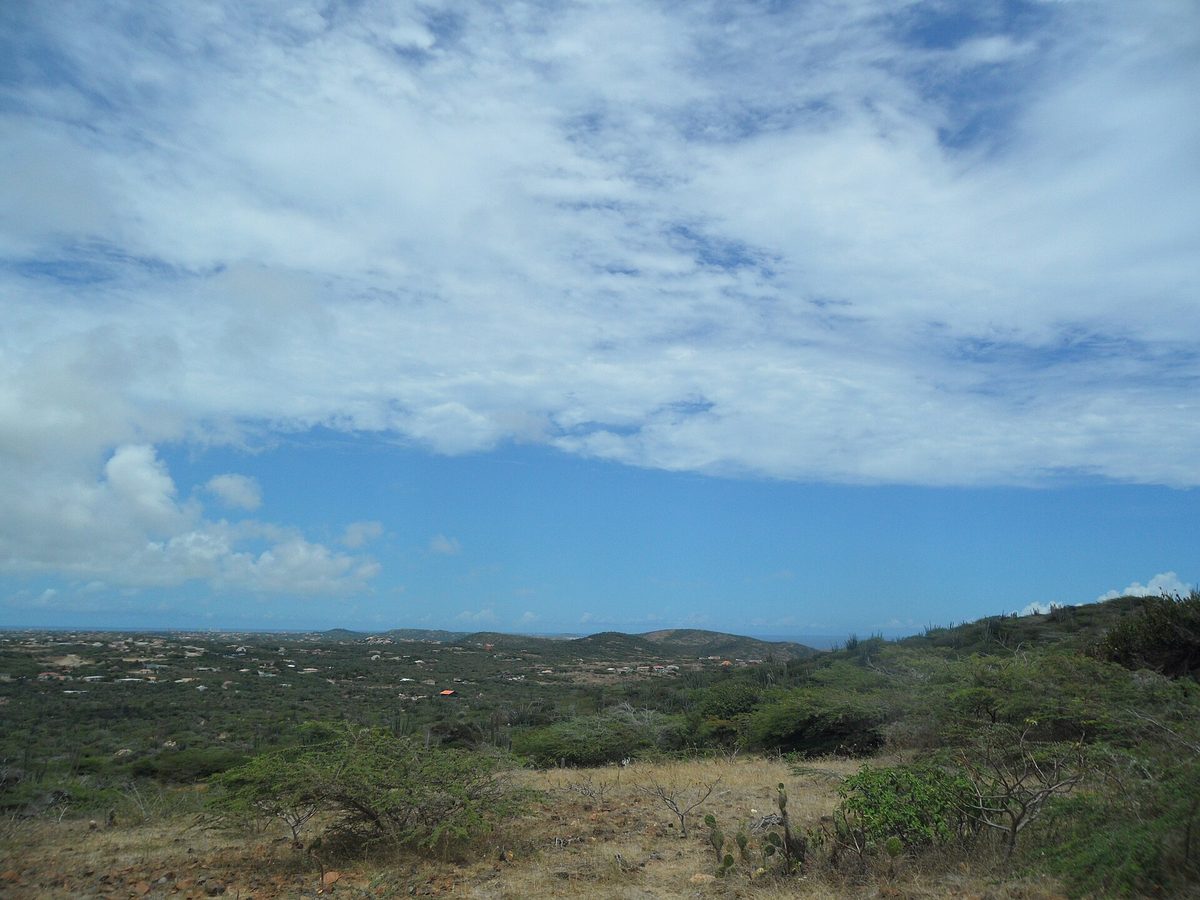
Mostly, yes — and renting a car is the best way to see the island — but the back-country deserves respect. The main roads through Oranjestad, Noord, and the resort strip are well-paved, well-signed, and easy; people drive on the right, and an ordinary license is fine. The complications are these: Arikok’s interior and the route to the Natural Pool (Conchi) are rough, rocky 4×4-only tracks where standard rental insurance often won’t cover you — book a guided UTV or Jeep tour instead. Free-roaming goats, donkeys, and the occasional wandering tourist on a scooter appear without warning, so daytime driving is far safer than night. And while Aruba is compact, signage outside town can be sparse, so download offline maps.
Drink-driving is taken seriously and the penalties are real; if you’re out drinking in Palm Beach, take a taxi. Our getting around Aruba guide breaks down car rental, taxis, and the public bus (the reliable, cheap Arubus line between the hotels and Oranjestad).
Health, medical care, and emergencies
Aruba’s healthcare is a genuine reassurance — it’s modern, Dutch-standard, and close at hand. The island’s main hospital, Dr. Horacio E. Oduber Hospital in Oranjestad, runs a 24-hour emergency department with specialists on call, and there are walk-in urgent-care clinics in Noord near the hotels and a medical center in San Nicolas. Pharmacies (botica) are easy to find.
Save these numbers in your phone before you fly:
| Service | Number |
|---|---|
| Ambulance & Fire | 911 |
| Police (general) | 100 |
| Coast Guard (water emergencies) | 913 |
| Dr. Horacio Oduber Hospital | +297 527-4000 |
Operators handle English without trouble. One important catch: for foreign visitors, emergency and hospital treatment is not free, and clinics may ask for payment up front. That single fact is why I never visit without coverage — a serious problem here can mean an air-ambulance bill to the U.S. mainland. Read our take on whether you need trip insurance and other Aruba travel essentials before you go.
The everyday health risks are the boring ones, and they’re the ones that actually catch people: sun and dehydration. Aruba sits 12 degrees north of the equator and the constant trade wind hides how hard you’re burning — you won’t feel hot, but you’ll cook. Wear reef-safe SPF, reapply, drink more water than you think you need, and ease off the midday sun between 11am and 3pm. Mosquito-borne illness (dengue) is uncommon but not impossible; pack repellent if you’re prone to bites.
Can you drink the water in Aruba?
Yes — with confidence. Aruba produces its drinking water by desalinating seawater at one of the largest such plants in the world, and it meets World Health Organization and EU standards. Tap water is clean, cheap, and genuinely good; refill a bottle rather than buying cases of plastic. Food safety at hotels and established restaurants is excellent, and even the famous food trucks are well-run. The usual traveler’s-stomach common sense is all you need.
How safe is Aruba compared to other Caribbean islands?
This is the question behind the question — most people aren’t really asking “is Aruba dangerous,” they’re asking “how does it stack up?” Favorably. Aruba consistently lands at or near the top of Caribbean safety rankings, ahead of larger islands where tourist-area crime is a more regular headline. Three things set it apart: it’s an autonomous Dutch territory with stable institutions and strong policing; its economy is almost entirely tourism, so safety is a national priority rather than an afterthought; and it sits outside the hurricane belt, removing the one risk that periodically shuts other islands down. That doesn’t mean nowhere else is safe — the Cayman Islands, Bonaire, and Turks and Caicos rate well too — but if a worry-free first Caribbean trip is the goal, Aruba is about as gentle an introduction as the region offers. If you’re weighing it against neighbors, our Aruba itinerary guide shows just how much an easy, compact island lets you pack in.
Local laws and customs worth knowing
Staying out of trouble in Aruba is mostly about respecting a few clear rules. Drugs are illegal — despite the Dutch connection, Aruba is not the Netherlands, and possession carries real penalties. Drink-driving is enforced. Nudity and topless sunbathing aren’t the norm on public beaches. Taking protected wildlife, coral, or sea-turtle products is prohibited, and Arikok National Park has rules about staying on marked trails for both conservation and your own safety. Arubans are warm and famously polite — a little Papiamento (“bon dia,” “danki” for thank you) goes a long way — and ordinary courtesy is met in kind. Dress is casual-tropical, but cover up over swimwear when you leave the beach for town or a restaurant.
Is Aruba safe for solo female travelers?
Yes, and it’s one of the easier Caribbean islands to do it on. Solo women consistently report feeling comfortable walking the resort strip and central Oranjestad after dark, eating alone, and taking taxis without hassle. English is universal, the tourist zones are busy and well-lit, and the catcalling that wears travelers down in some destinations is mild here by comparison. The sensible playbook is the one you’d use anywhere: keep accommodation in the established Palm Beach/Eagle Beach/Oranjestad areas, use licensed taxis or your hotel’s transport at night rather than walking long isolated stretches, keep an eye on your drink, and trust your gut. Plenty of women travel Aruba alone every week and have a relaxed, uneventful time — which is exactly the goal.
Is Aruba safe for families with kids?
It might be the single most family-friendly island in the region. The calm leeward beaches — Baby Beach and Palm Beach especially — are shallow and gentle enough for toddlers, the resorts are geared to children with pools and kids’ clubs, and the low crime rate means parents actually relax. Healthcare is close, tap water is safe for making bottles, and the island is small enough that nothing is a long, fraught drive away. Keep the usual sun and water vigilance dialed up for little ones, and you’ve got a genuinely low-stress family trip. Our Aruba with kids guide goes deep on beaches, resorts, and activities, and the where to stay in Aruba guide flags the most family-suited areas.
Is Aruba LGBTQ+ friendly?
Among the most welcoming in the Caribbean. Same-sex relationships are legal, the culture is tolerant and tourism-first, and many resorts actively market themselves as LGBTQ+-friendly. Same-sex couples walk hand in hand around Palm Beach and Oranjestad without issue, and the island has long courted LGBTQ+ travelers as a wedding and honeymoon destination. As anywhere, public attitudes can be a touch more conservative in small residential villages than in the resort strip, but visitors very rarely report problems.
Common scams and tourist traps to know
These aren’t dangers so much as annoyances — the kind of thing that’s easy to sidestep once you know to look:
- Timeshare and “activity desk” touts. Friendly people near the resorts and cruise port offer free breakfasts, gifts, or tours in exchange for sitting through a high-pressure timeshare presentation. Politely decline unless you genuinely want to spend a vacation morning being sold to.
- Unlicensed taxis and fare confusion. Aruba’s taxis don’t use meters — fares are set by zone. Agree the price before you get in, and use official taxis from stands or your hotel. The Aruba vacation cost guide lists typical fares so you know what’s fair.
- Double-tipping. Many restaurants add a 10–15% service charge automatically. Check the bill before adding more — staff won’t tell you it’s already there. See our Aruba restaurants guide for the local dining etiquette.
- ATM skimming. Rare, but prefer ATMs inside banks or resorts over standalone street machines, and cover the keypad.
- Casino over-served regret. Drinks flow freely on the floor; pace yourself, and don’t carry the night’s winnings around obviously. Our Aruba nightlife guide covers the casino and bar scene.
Natural hazards: hurricanes, heat, and wind
This is where Aruba quietly wins. The island sits at roughly 12°N, below the main Atlantic hurricane belt, so direct hits are rare — one big reason the island stays open and dry while storms track north. “Hurricane season” technically runs June through November, but in practice Aruba usually sees nothing worse than a passing band of rain and gusty wind. It’s still smart to watch the forecast and choose travel insurance that covers weather disruption, but you are not booking into the path of regular major storms the way you might be elsewhere in the Caribbean. For the month-by-month picture, see our best time to visit Aruba guide.
The everyday “hazards” are really just the climate: relentless sun, and the famous trade winds that can whip sand and push light watercraft around. Both are easy to plan for — and the wind is also why Aruba is a world-class windsurfing spot.
11 quick safety tips for Aruba
- Lock your passport, spare cash, and a backup card in the room safe; carry a photo of your passport on your phone.
- Never leave bags unattended on the beach — take turns swimming.
- Leave nothing visible in a parked rental car, anywhere.
- Swim only on the calm leeward (west/south) coast; never the north shore.
- Obey beach flags and watch children every second near water.
- Drive the back-country only by day; take guided 4×4 tours to the Natural Pool.
- Use licensed taxis and agree the fare first; never drink and drive.
- Wear and reapply reef-safe SPF; hydrate constantly.
- Save 911 (ambulance/fire) and 100 (police) in your phone.
- Buy travel insurance with medical evacuation — treatment isn’t free for visitors.
- Decline timeshare touts and check restaurant bills for an included service charge.
Frequently asked questions
Is Aruba safe for tourists in 2026?
Yes. Aruba is rated Level 1 by the U.S. State Department (the lowest risk tier) and is regularly named the safest island in the Caribbean. Violent crime against tourists is rare; the main concern is petty theft, which basic precautions prevent.
Is Aruba safe to walk around at night?
In the resort strip, central Oranjestad, and busy tourist areas, yes — these stay well-lit and patrolled. As anywhere, avoid isolated, unlit areas and empty beaches alone late at night, and take a taxi rather than walking long, lonely stretches after dark.
What is the most dangerous thing in Aruba?
The ocean on the north (windward) coast, not crime. Strong rip currents and surf there have caused drownings. Stick to the calm leeward beaches for swimming. After that, sunburn and dehydration injure far more visitors than any criminal does.
Can you drink the tap water in Aruba?
Yes. Aruba’s tap water is desalinated and meets WHO and EU standards. It’s safe, clean, and good-tasting — bring a refillable bottle.
Do I need travel insurance for Aruba?
It’s strongly recommended. Medical care is excellent but not free for foreigners, and clinics may require upfront payment. Insurance with medical evacuation coverage protects you from a potentially large air-ambulance bill.
Is Aruba safe from hurricanes?
Largely, yes. Aruba lies below the main Atlantic hurricane belt, so direct strikes are uncommon. The June–November season usually brings only occasional rain and wind rather than major storms.
Final thoughts
Aruba earns its “One Happy Island” tagline partly because it lets you exhale. You can hand your kids the snorkel gear, walk back from dinner under the palms, leave the worry at home, and spend your mental energy on which beach to pick rather than whether you’re safe. Travel smart — mind the surf, lock up the valuables, respect the sun — and the island gives you one of the most relaxed trips in the Caribbean. For everything else you’ll want to sort before you fly, our complete Aruba travel tips and essentials hub pulls it all together, and the big-picture things to do in Aruba guide will fill the days.
By the ArubaTourism.org team — Last updated June 2026. Safety ratings reflect the U.S. State Department travel advisory and published Caribbean safety rankings current at the time of writing; always check the latest official advisory before you travel.
Photo credits
- Colorful streets of Oranjestad, Aruba’s safe and walkable capital — Photo: Choinowski / CC BY-SA 4.0 via Wikimedia Commons.
- Aruba’s rough windward north coast with crashing Atlantic surf, unsafe for swimming — Photo: EgorovaSvetlana / CC BY-SA 4.0 via Wikimedia Commons.
- Palm Beach Aruba resort strip beside calm leeward water — Photo: Kwihi / CC BY 4.0 via Wikimedia Commons.
- Rugged terrain in Arikok National Park on Aruba’s wild north coast — Photo: EgorovaSvetlana / CC BY-SA 4.0 via Wikimedia Commons.
- Is Aruba safe for swimming? Eagle Beach’s calm, clear leeward water suggests yes — Photo: DDJJ / CC BY-SA 4.0 via Wikimedia Commons.