Picture the Caribbean and your brain probably fills in lush rainforest, dripping ferns and waterfalls tumbling through green hills. Aruba did not get that memo. This little Dutch island sits barely 18 miles off Venezuela, and it is a desert — a sun-bleached landscape of cacti, boulders and wind-bent divi-divi trees, raked by a trade wind that never quits. The water is impossibly turquoise, but turn your back to the sea and you could be in Arizona.
That single fact reframes nearly everything else, which is exactly why a short list of things to know before visiting Aruba saves first-timers a lot of fumbling. Pack for heat and relentless sun rather than jungle humidity, expect bone-dry blue skies instead of afternoon downpours, and understand that the island’s two coasts behave like two different worlds. Get those expectations right and the rest of the trip is gloriously easy — this is, after all, the place that trademarked the nickname “One Happy Island.”
Quick answer: Aruba is a dry, breezy desert island just off South America, safely outside the hurricane belt and sunny almost year-round. US dollars are accepted everywhere alongside the local florin, English is widely spoken, tap water is safe to drink, and the island is famously safe and easy. Rent a car to explore, pack reef-safe sunscreen, and respect the strong sun and the constant trade winds.
By the ArubaTourism.org team — Last updated June 2026.
Aruba at a glance: the cheat sheet
If you read nothing else, read this. The table below is the quick-facts rundown most first-time visitors actually want before they start booking. Treat any prices and rates as 2026 ballparks and confirm the specifics close to your trip — the broad strokes, though, rarely change.
| The question | The short answer |
|---|---|
| Where is it? | Southern Caribbean, ~18 mi (29 km) off Venezuela |
| What is the landscape? | Arid desert — cacti, divi-divi trees, constant wind |
| Hurricane risk? | Very low — Aruba sits outside the main hurricane belt |
| Currency | Aruban florin (AWG); US dollars accepted everywhere |
| Languages | Papiamento & Dutch official; English & Spanish widely spoken |
| Is it safe? | One of the safest islands in the Caribbean |
| Tap water | Safe to drink — desalinated and high quality |
| Electricity | 120V / 60Hz, US-style plugs (types A & B) |
| Getting around | Rent a car to explore; taxis & buses also work |
| Driving side | Right-hand side, like the US |
| Best time to visit | Great year-round; spring shoulder season is a sweet spot |
| Sunscreen | Must be reef-safe; oxybenzone sunscreens are banned |
| Tipping | 10–15% service charge often added; round up or add a little more |
Want the deeper version of any line here? This guide is the front door to our wider library of Aruba travel tips and trip-planning essentials, where each topic gets its own detailed walkthrough.
The single biggest thing to know before visiting Aruba: it is a desert
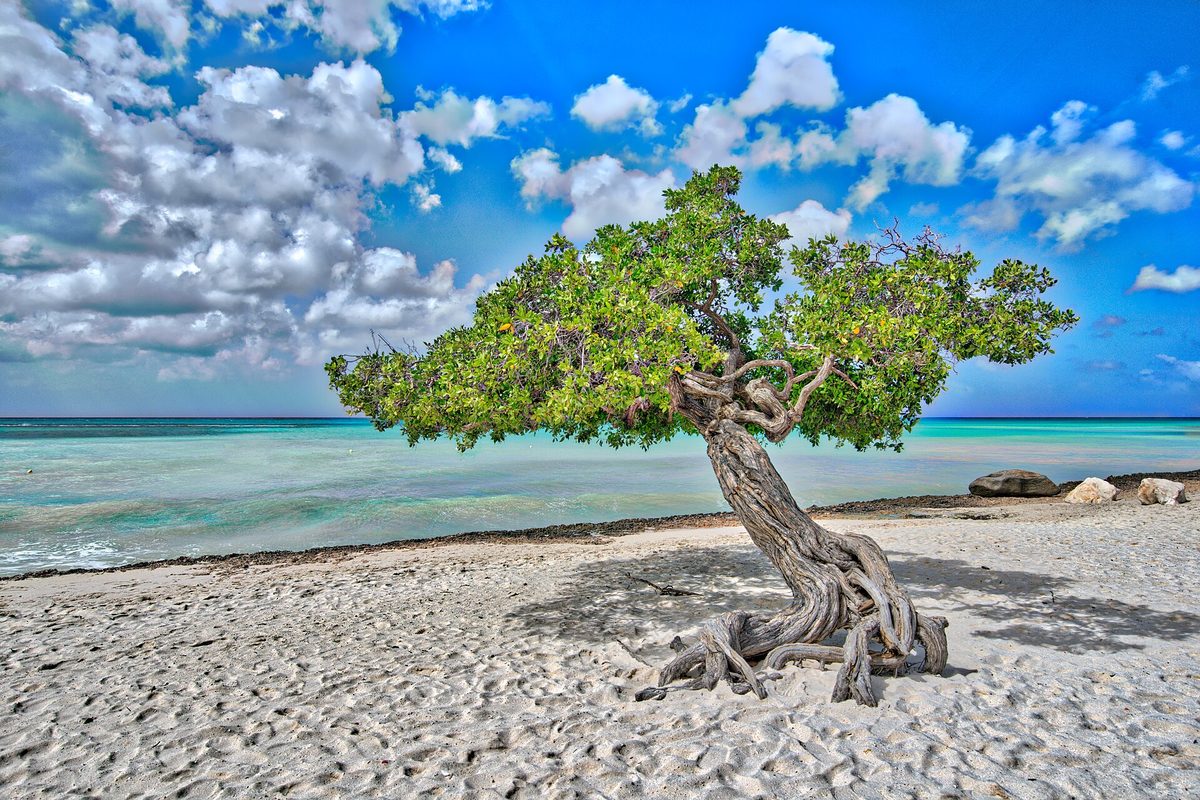
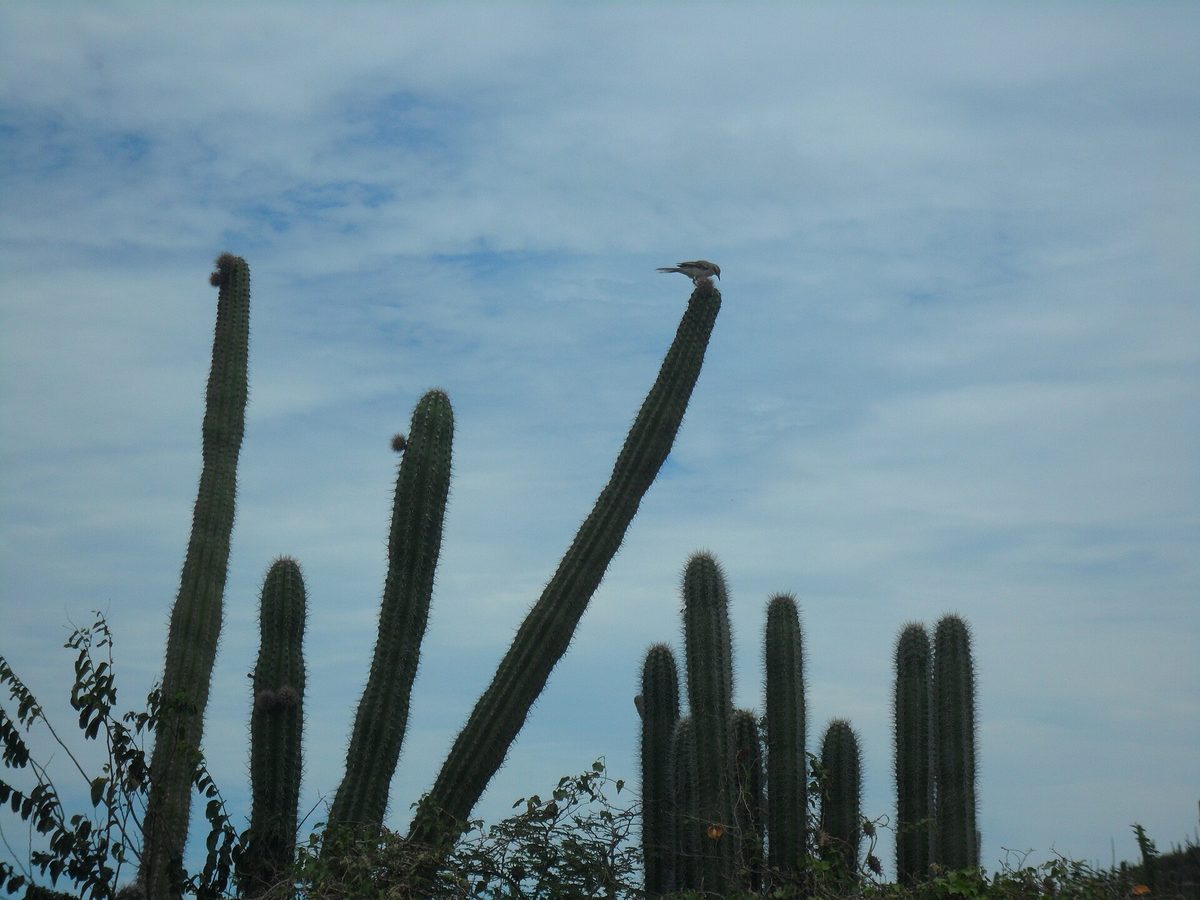
Let us hammer this one home because it surprises almost everyone. Aruba lies in the southern Caribbean, well south of the rain-soaked tropics, and it receives only around 20 inches of rain a year — less than many places people think of as “dry.” The result is a genuine desert ecosystem. The interior is studded with tall columnar cacti, spiny scrub, aloe fields and the occasional roaming wild donkey or goat. The signature plant, the divi-divi tree, grows permanently bent at a dramatic angle, combed into shape by the wind so reliably that locals joke its branches always point southwest like a natural compass.
What does this mean for your trip in practical terms? Three things. First, the sun is intense and there is very little natural shade, so hats, sunglasses and shade-seeking matter (more on the brutal sun below). Second, the air is dry rather than sticky, which honestly makes the heat far more pleasant than humid islands — you sweat less and the breeze does real work. Third, do not expect waterfalls and rainforest hikes; Aruba’s wild beauty is rugged and stark, best seen in places like Arikok National Park, which covers nearly a fifth of the island in cactus, lava rock and hidden coves.
Why the weather is so dependable (and the hurricane question)
Here is the reassuring part. Aruba sits at roughly 12 degrees north latitude, far enough south that it falls outside the main Atlantic hurricane belt. Direct hits are rare; the island can occasionally feel the distant edge of a passing system as extra wind or a brief band of rain, but the catastrophic storms that define hurricane season elsewhere in the Caribbean mostly track well to the north. This is a big reason Aruba markets itself as a year-round, all-weather destination, and why prices do not collapse in autumn the way they do on storm-prone islands.
Day to day, the forecast is almost comically stable: temperatures hover in the low-to-mid 80s Fahrenheit (around 27–32°C) virtually every day of the year, skies are mostly sunny, and the trade wind keeps things from feeling oppressive. The “rainy season” (loosely October through December) really just means a slightly higher chance of short, passing showers — often a five-minute sprinkle that dries before you have finished your drink. You will rarely lose a beach day to weather here.
So when should you actually go?
Because the climate barely changes, “best time” is really about crowds and price rather than weather. Peak season runs roughly mid-December through mid-April, when North Americans flee winter; the island is liveliest and most expensive then, and you will want to book well ahead. The spring and early-summer shoulder months are a sweet spot many regulars swear by — you keep the gorgeous weather while crowds thin and rates ease. Late summer and autumn are the quietest and cheapest, with only that marginally higher (still minor) chance of a passing shower.
If your dates are driven by a festival, note that Carnival — a weeks-long explosion of parades, music and colour that builds toward late winter — is one of the island’s signature experiences and pulls big crowds. For a month-by-month breakdown of weather, crowds and events, see our full guide to the best time to visit Aruba.
Money: bring US dollars, meet the florin
One of the most liberating things to know before visiting Aruba is that you barely need to think about currency. The official money is the Aruban florin (written AWG or Afl.), pegged to the US dollar at roughly 1.79 florin to US$1. But here is the kicker: US dollars are accepted virtually everywhere — hotels, restaurants, shops, taxis, tours. Many American visitors spend a whole week without ever holding a florin, paying in dollars and simply getting florin (or a mix) back as change.
Practical tips: bring a stack of small US bills for tips and taxis, carry a credit card with no foreign-transaction fee for bigger purchases, and do not bother exchanging money in advance — there is no real advantage to florin over dollars. ATMs on the island dispense florin and, at some machines, US dollars too. For the full breakdown of the peg, card fees, getting change and what things actually cost, see our dedicated Aruba currency and money guide and the companion piece on the real cost of an Aruba vacation.
Language: four tongues and a warm “bon dia”
Aruba is wonderfully multilingual. The two official languages are Papiamento and Dutch, but in practice you will hear four languages flying around: add English and Spanish, both widely spoken thanks to tourism and the island’s proximity to South America. For an English-speaking visitor this means you will have essentially zero communication trouble — menus, signs, tours and front desks all operate comfortably in English.
That said, learning a few words of Papiamento, the lilting local creole, goes a long way and genuinely delights locals. Try bon dia (good morning), danki (thank you) and masha danki (thank you very much). It is a small gesture that signals you see Aruba as more than a backdrop. Our guide to handy Papiamento phrases has a starter kit you can learn on the plane.
Yes, it is genuinely safe
Aruba consistently ranks among the safest islands in the Caribbean, with low rates of both petty and violent crime and a stable, prosperous, tourism-built economy. Violent crime against visitors is rare. The realistic precautions are the same boring ones you would take anywhere: lock valuables in your room or car, do not leave bags unattended on the beach, and use normal common sense at night. The bigger genuine hazards here are natural — the strong sun and the powerful surf and currents on the wild side of the island — rather than crime.
None of this means switching off your brain; it means you can relax more here than in many destinations. Solo travellers, couples and families all report feeling at ease. (We are building a dedicated safety deep-dive; in the meantime this section covers the essentials most first-timers ask about.)
Getting around: rent a car (at least for a day or two)
You can have a perfectly happy trip never leaving the resort strip, but you would miss most of what makes Aruba special. The island is small — roughly 20 miles end to end — and the best way to unlock it is to rent a car. With your own wheels you can chase deserted beaches, drive up to the California Lighthouse, poke around Oranjestad and reach the trailheads of Arikok at your own pace. You will not need an international permit; your home driver’s licence is fine, and Arubans drive on the right-hand side, just like in the US.
A few road realities: a regular car handles the main paved roads and most attractions, but the rough tracks to spots like the Natural Pool genuinely require a 4×4. Fuel and signage are straightforward, parking is generally easy, and distances are short. If you would rather not drive, fixed-rate taxis and a reliable public bus running along the main hotel-and-beach corridor both work well. Our guide to getting to and around Aruba compares car rental, taxis, buses and airport transfers in detail.
Two coasts, two completely different islands
This is the geography secret that first-timers wish they had known sooner. Aruba has a calm side and a wild side, and they could not be more different:
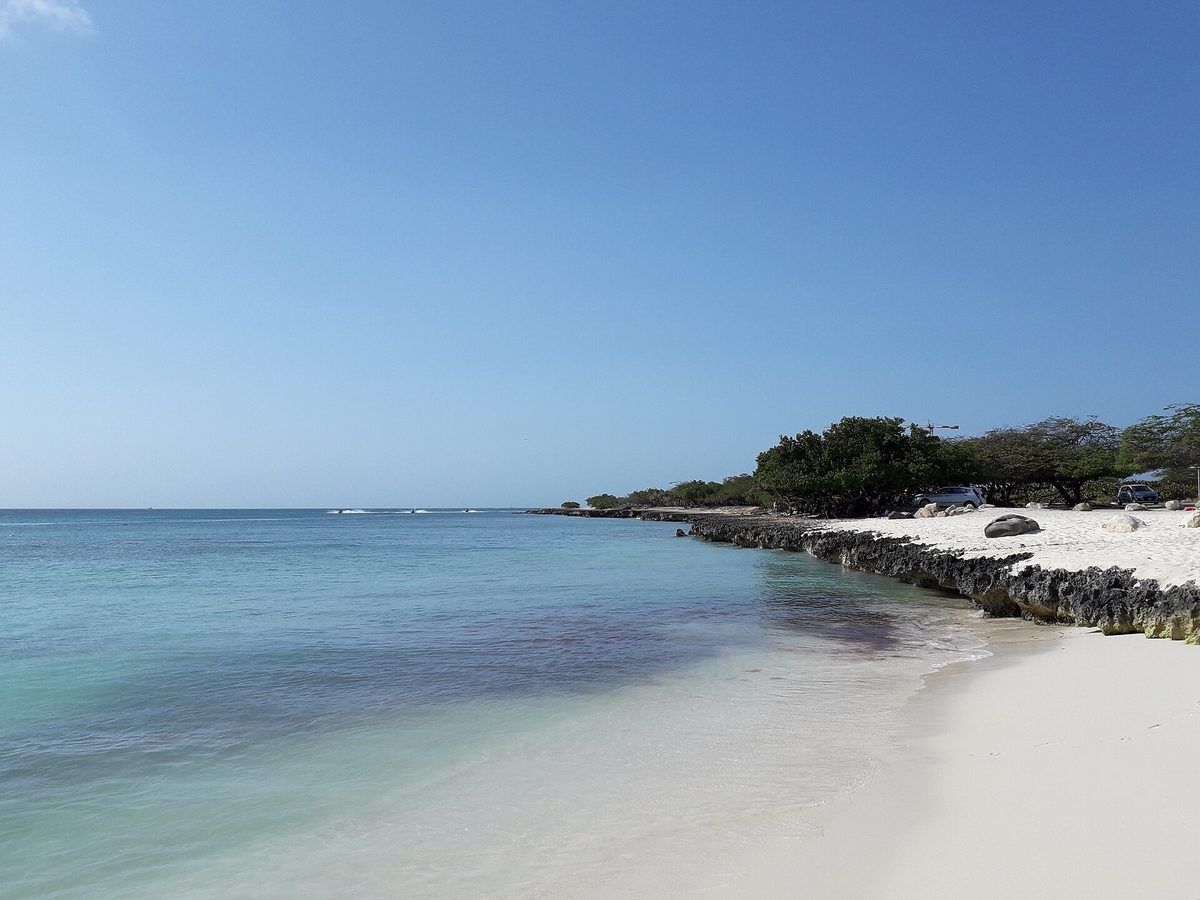
- The leeward (western and southern) coast is the sheltered, calm side. This is where you find the postcard beaches — Eagle Beach, Palm Beach, Baby Beach — with gentle, swimmable, gin-clear water. Nearly all the resorts, restaurants and swimming happen here.
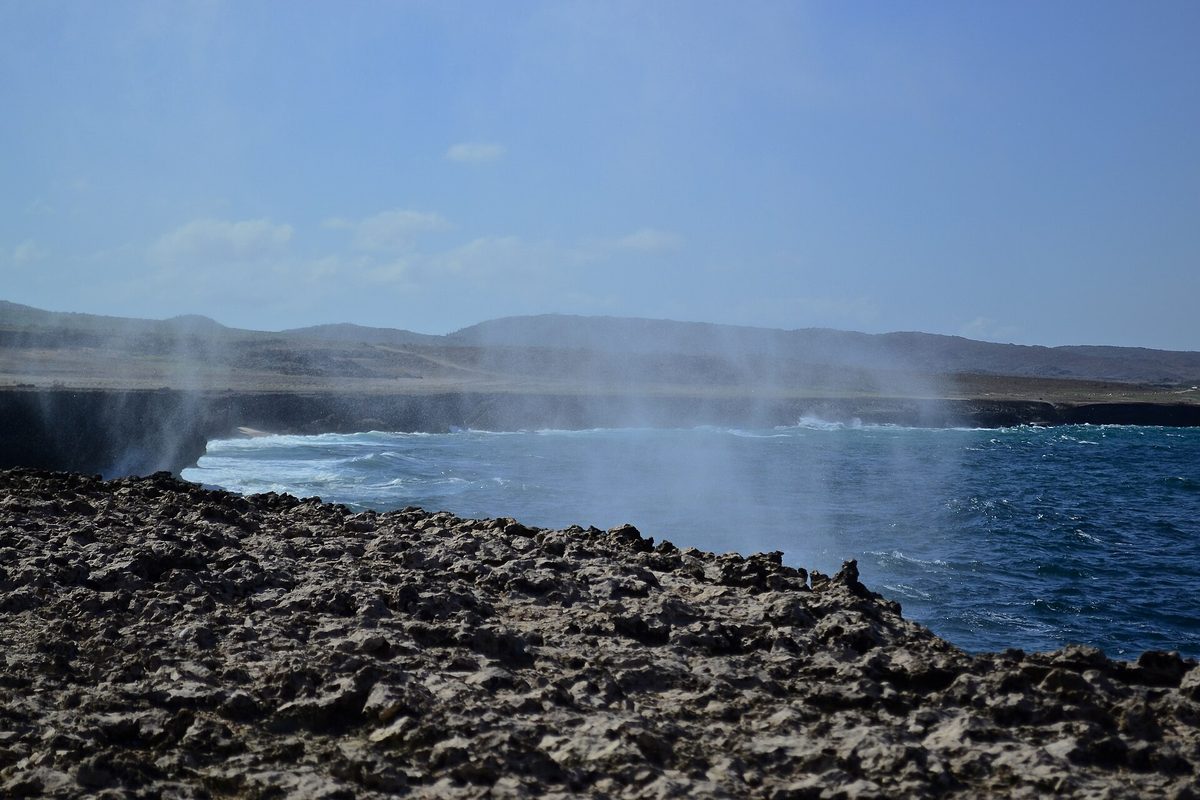
- The windward (northern and eastern) coast is the rugged, dramatic side, pounded by open-ocean surf and trade winds. It is spectacular to look at — crashing waves, limestone cliffs, blowholes — but the water here is rough and often dangerous to swim. Come for the scenery and photos, not for a dip.
Knowing which coast you are on explains everything: why one beach is glassy and the next is a churning mess, where to swim safely, and where to simply stand and gawp. When you are choosing a base, our guide to where to stay in Aruba breaks down the calm-coast neighbourhoods, and the Aruba beaches roundup sorts the swimmable from the scenic.
The practical essentials, briefly
These are the small logistics that quietly make or break a trip. None is complicated, but knowing them in advance means no scrambling once you land.
The sun is no joke
You are at low latitude in a cloudless desert with cooling wind that masks how hard the sun is working. People get badly burned here precisely because the breeze keeps them from feeling hot. Reapply sunscreen often, wear a hat and a rash guard for long water sessions, seek shade midday, and drink more water than feels necessary. The wind is a liar; the UV is real.
Reef-safe sunscreen is the law
Aruba has banned sunscreens containing oxybenzone (and discourages other reef-harming chemicals) to protect its coral and marine life. Products with oxybenzone cannot legally be imported, sold or used on the island. The fix is easy: pack a mineral, reef-safe sunscreen (zinc oxide or titanium dioxide) from home, since reef-safe options can be pricier and less available locally. It is good for the reef and increasingly expected of every visitor.
Tap water is safe — and excellent
Skip the bottled water guilt. Aruba produces its drinking water by desalinating seawater, and the result is clean, safe and meets World Health Organization standards. Tap water is fine to drink, brush your teeth with and fill a reusable bottle from. Bringing a refillable bottle is the move — it cuts plastic and saves money in a place where everything is imported.
Electricity: pack light on adapters
Good news for North American travellers: Aruba runs on 120 volts at 60 Hz with US-style plugs (types A and B), the same as the United States and Canada. That means American devices plug straight in with no adapter or converter. Visitors from Europe, the UK or Australia will need a plug adapter, and should check that their devices handle 120V (most modern phone and laptop chargers are dual-voltage).
Tipping and the service charge
Restaurants frequently add a service charge of about 10–15% to the bill, usually labelled “service” or “servicio.” Check your receipt: if it is already there, an extra small round-up is plenty; if it is not, a tip in the 15–20% range is the norm. Tipping in US dollars is completely fine. A dollar or two per bag for porters and a few dollars for a great tour guide or driver are all appreciated. Our money guide goes deeper on the etiquette.
Dining: book the popular tables
Aruba’s food scene punches well above the island’s size, from beachfront seafood shacks to polished fine dining. Dress is mostly casual — you will rarely need a jacket — but the standout and sunset-view restaurants do fill up, especially in peak season, so reserve ahead for anywhere you have your heart set on. For inspiration, browse our roundup of Aruba restaurants, then try local plates like keshi yena, pastechi and fresh-off-the-boat fish.
The arrival card and entry fee
Before you fly, you will complete an online Embarkation/Disembarkation (ED) card, and air arrivals now pay a modest Sustainability Fee (around US$20 per visitor as of 2024) through that same platform. Sort this out in the days before departure rather than at the airport. Always confirm the current entry requirements, fees and passport rules with official sources close to your trip, as these details change.
Cruise day vs staying a while
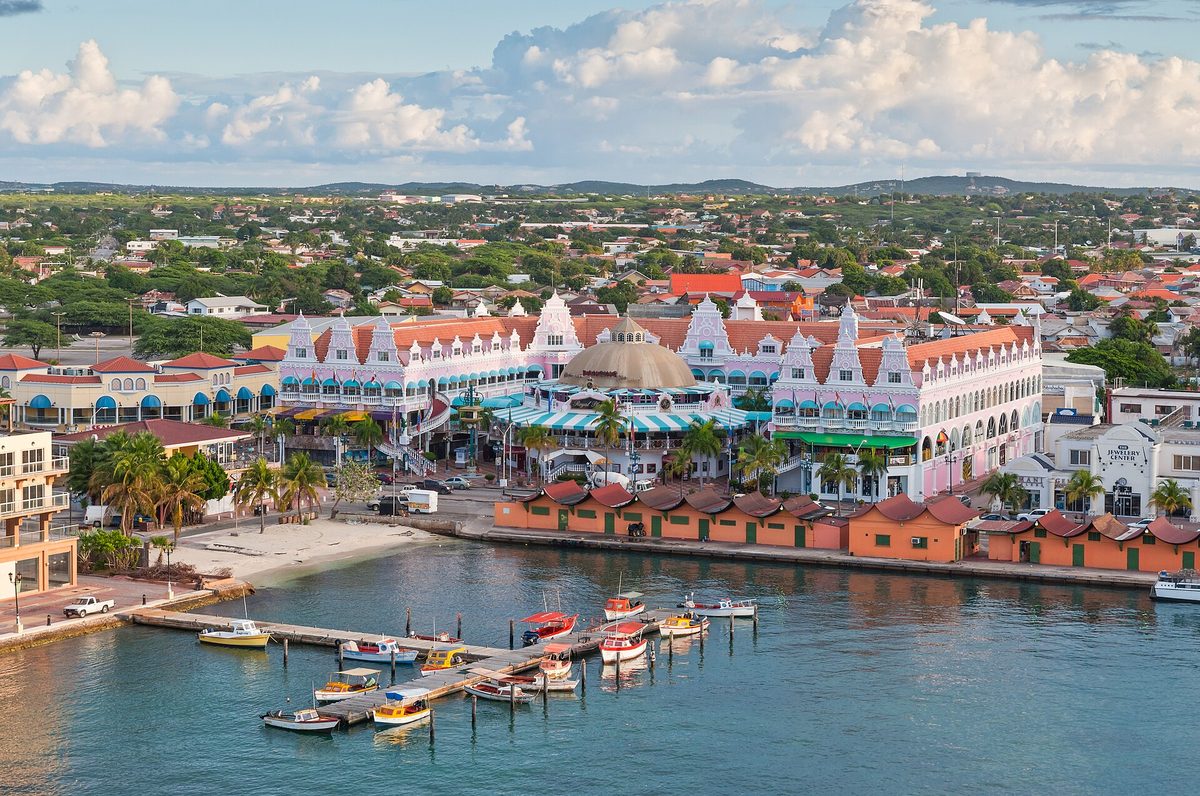
Aruba is both a popular cruise port and a stay-put beach destination, and the two experiences are very different. If you are arriving on a cruise, you will dock right at Oranjestad with only a handful of hours ashore — enough to stroll the colourful capital, hop the free downtown tram, shop, and perhaps taxi to a nearby beach or a short snorkel trip. Pick one or two things and do them well; trying to “see the island” in six hours is a recipe for frustration.
If you are staying, the island rewards a slower rhythm: a few beach days, a day exploring Arikok and the wild coast, a sunset sail, a night out in San Nicolas. A week is ample to mix relaxation with adventure without ever feeling rushed. Whichever camp you are in, the things to do in Aruba guide helps you prioritise, and the Aruba water sports roundup covers snorkelling, diving and windsurfing for the active crowd.
“One Happy Island”: culture and etiquette
The slogan on the licence plates is not just marketing — Arubans are genuinely warm, easy-going and proud of their island, and a little courtesy is returned tenfold. A few gentle etiquette notes: greet people before launching into a request (a simple bon dia works wonders), dress is relaxed but cover up when leaving the beach for shops or restaurants, and the local pace is unhurried, so lean into it rather than fighting it.
The culture is a genuine melting pot — Dutch, Caribbean, South American and more — reflected in the food, the architecture of Oranjestad, the music and the Carnival traditions. Respect the natural environment too: do not touch or stand on coral, take your litter with you, and give the island’s iguanas, donkeys and burrowing owls their space. Travelling with little ones? Our Aruba with kids guide and the all-inclusive resorts roundup are built for family logistics.
First-timer mistakes worth dodging
- Underestimating the sun because the wind keeps you cool — the fastest way to ruin day two.
- Packing chemical sunscreen that is banned; bring reef-safe from home.
- Never leaving the resort and missing the desert interior, Arikok and the wild coast.
- Trying to swim on the windward side, where currents are strong and dangerous.
- Exchanging cash in advance — unnecessary when US dollars work everywhere.
- Skipping a rental car for the whole trip and seeing only one slice of the island.
- Not booking popular restaurants or tours in peak season.
Frequently asked questions about visiting Aruba
What are the most important things to know before visiting Aruba?
The big ones: Aruba is a dry desert island, not a jungle, and sits outside the hurricane belt, so it is sunny year-round. US dollars work everywhere, English is widely spoken, tap water is safe, the island is very safe, and you should pack reef-safe sunscreen and rent a car to explore beyond the resorts.
Is Aruba a desert or a tropical island?
Both, in a sense. Aruba has tropical Caribbean beaches and water, but its land is a genuine desert — arid, cactus-covered and shaped by constant trade winds, with only about 20 inches of rain a year. Expect powdery beaches fringing a sun-baked interior of divi-divi trees, boulders and scrub rather than rainforest.
Do I need cash, or are US dollars accepted in Aruba?
US dollars are accepted almost everywhere in Aruba alongside the local florin, so most American visitors never exchange money. Bring small US bills for tips and taxis, carry a card with no foreign-transaction fee for larger purchases, and expect any change to come back in florin or a mix of both.
Is the tap water safe to drink in Aruba?
Yes. Aruba’s tap water is produced by desalinating seawater and is clean, safe and high quality, meeting World Health Organization standards. You can drink it, brush your teeth with it and refill a reusable bottle without worry. Bringing a refillable bottle is smart and cuts down on plastic on an island where goods are imported.
Do I need a power adapter for Aruba?
If you are coming from the US or Canada, no — Aruba uses the same 120V/60Hz electricity and US-style type A and B plugs, so your devices plug straight in. Travellers from Europe, the UK or Australia will need a plug adapter and should confirm their chargers support 120 volts (most modern ones do).
Does Aruba get hurricanes?
Very rarely. Aruba lies in the far southern Caribbean, outside the main Atlantic hurricane belt, so direct hits are uncommon. The island may occasionally catch extra wind or a brief band of rain from a distant storm, but it largely avoids the destructive hurricanes that affect islands further north, which is why it is a reliable year-round destination.
How many days do you need in Aruba?
For a first visit, five to seven days hits the sweet spot. That gives you several beach days, time to explore Arikok National Park and the wild windward coast, a sunset sail or snorkel trip, and an evening or two out, without feeling rushed. Cruise visitors with only a few hours should pick one or two highlights.
Photo credits
All images are freely licensed via Wikimedia Commons; many thanks to the photographers who share their work.
- A wind-bent divi-divi tree on Aruba, one of the first things to know before visiting Aruba is that it is a desert island — Photo: sbmeaper1 (CC0) via Wikimedia Commons.
- The wide white sand and calm turquoise water of Eagle Beach on Aruba’s leeward coast — Photo: DDJJ / CC BY-SA 4.0 via Wikimedia Commons.
- Colorful Dutch colonial buildings in downtown Oranjestad, Aruba’s capital — Photo: Navigator334 / CC BY-SA 4.0 via Wikimedia Commons.
- The rugged cactus-studded desert landscape of Arikok National Park on Aruba’s windward coast — Photo: Misty Johnson / CC BY 2.0 via Wikimedia Commons.
- Tall cacti dotting the arid desert interior of Aruba under a bright blue sky — Photo: EgorovaSvetlana / CC BY-SA 4.0 via Wikimedia Commons.