Let me get the awkward part out of the way first. I went into Aruba mildly skeptical. It is not the cheapest island in the Caribbean — not even close — and it is the opposite of “undiscovered.” The Palm Beach strip is a wall of high-rise resorts, the beach bars charge Miami prices, and half the people you meet are repeat visitors who treat the place like a second home. So when people ask is aruba worth visiting, and they usually mean “is it worth the money,” I understand the doubt. If your idea of a great trip is finding somewhere nobody has heard of and living on five dollars a day, I will save you some reading: this is probably not your island.
And yet. After all that hedging, my honest verdict is that for most travelers Aruba is absolutely worth it — and I think the question “is aruba worth visiting” usually gets answered for the wrong reasons. People obsess over the price tag and miss what they are actually paying for: near-guaranteed sunshine, water you can swim in without a current trying to drag you out, a genuinely safe island where you can walk back to your hotel at midnight, and beaches that consistently land on world “best of” lists. You are not paying for novelty. You are paying for reliability. That is a very different thing, and for a lot of people it is exactly the thing worth paying for.
The 30-second verdict: Aruba is worth visiting if you want a safe, sunny, low-hassle Caribbean trip with world-class beaches and you are okay spending mid-to-upper-range money. It is outstanding for couples, families and first-timers. It is a poor fit for budget backpackers and anyone craving lush jungle or a remote, local-only vibe — for those, Curacao, Cancun or another island will serve you better.
By the ArubaTourism.org team — Last updated June 2026.
Below I will make the honest case both ways: why Aruba wins for most people, who should genuinely skip it, what it really costs (with the prices hedged, because they move), and how it stacks up head-to-head against the Bahamas, Curacao, Turks & Caicos and Cancun. If you only read one section, jump to the comparison table and the verdict at the end. For the wider picture on planning a smooth trip, our Aruba travel tips guide is the parent hub this article belongs to.
Is Aruba worth visiting? The honest short answer
Yes — with one big asterisk on budget. Aruba consistently delivers the three things travelers most want from the Caribbean and most often fail to get: dependable weather, real safety, and beautiful, swimmable beaches. What it does not deliver is a bargain, a rainforest, or a sense of discovery. If those three trade-offs are acceptable to you, it is one of the most reliably satisfying islands in the region. If even one of them is a dealbreaker, read the “who should skip Aruba” section before you book.
The reason this question even comes up so often is that Aruba has a reputation for being expensive, and that reputation is earned. But “expensive” and “not worth it” are not the same sentence. Plenty of pricey places are overrated. Aruba mostly is not — it tends to deliver on the promise. The trick is knowing what the promise actually is.
The honest case FOR Aruba
Here is what Aruba does better than almost anywhere else in the Caribbean, and why those things are worth real money.
The weather is almost boringly reliable
This is the single most underrated reason to choose Aruba. The island sits in an arid, breezy pocket of the southern Caribbean and is famously sunny — locals will happily tell you it sees something close to sun every day of the year. Rainfall is low and tends to come in brief overnight showers rather than the daylong tropical downpours that can wash out a week elsewhere. Daytime temperatures hover in the low-to-mid 80s Fahrenheit (around 28–31°C) year-round, and a steady trade wind keeps the humidity from feeling oppressive.
What that means in practice: when you book Aruba six months out, you are buying about as close to a sunshine guarantee as the Caribbean offers. If you want the month-by-month detail, our best time to visit Aruba guide breaks down exactly what to expect across the year — but the short version is that there is no genuinely “bad” month.
It sits OUTSIDE the hurricane belt
This one is not marketing fluff — it is geography, and it matters enormously if you travel between June and November. Aruba lies far enough south, near the coast of Venezuela, that the storms that regularly threaten the Bahamas, Florida, Cancun and much of the eastern Caribbean almost always track north of it. Aruba does occasionally feel the outer edge of a passing system, but a direct hurricane hit is genuinely rare.
For a fall traveler, that is huge. A September week in many Caribbean destinations is a gamble with your flights, your resort and your money. In Aruba, fall is low season for crowds and price — not because the weather turns, but simply because it is off-peak. You get the same reliable sun for less. That asymmetry is one of the strongest value arguments for the island, and it is exactly why the shoulder months can be the smartest time to go.
It is among the safest islands in the Caribbean
Aruba is routinely cited as one of the safest destinations in the region. The U.S. State Department keeps it at its lowest travel-advisory tier (Level 1, “exercise normal precautions”) — a notch safer than several popular neighbors, including the Bahamas and Mexico, which sit at Level 2. Violent crime against tourists is uncommon, the resort and beach areas are well-lit and patrolled, and plenty of visitors comfortably walk back from dinner after dark.
None of that means you switch your brain off — petty theft from unattended bags or unlocked cars happens here like anywhere — but the baseline sense of ease is real, and it is a big part of why families and couples keep coming back. We go deeper in our full guide on safety within the broader Aruba travel tips hub.
The beaches are genuinely world-class — and calm
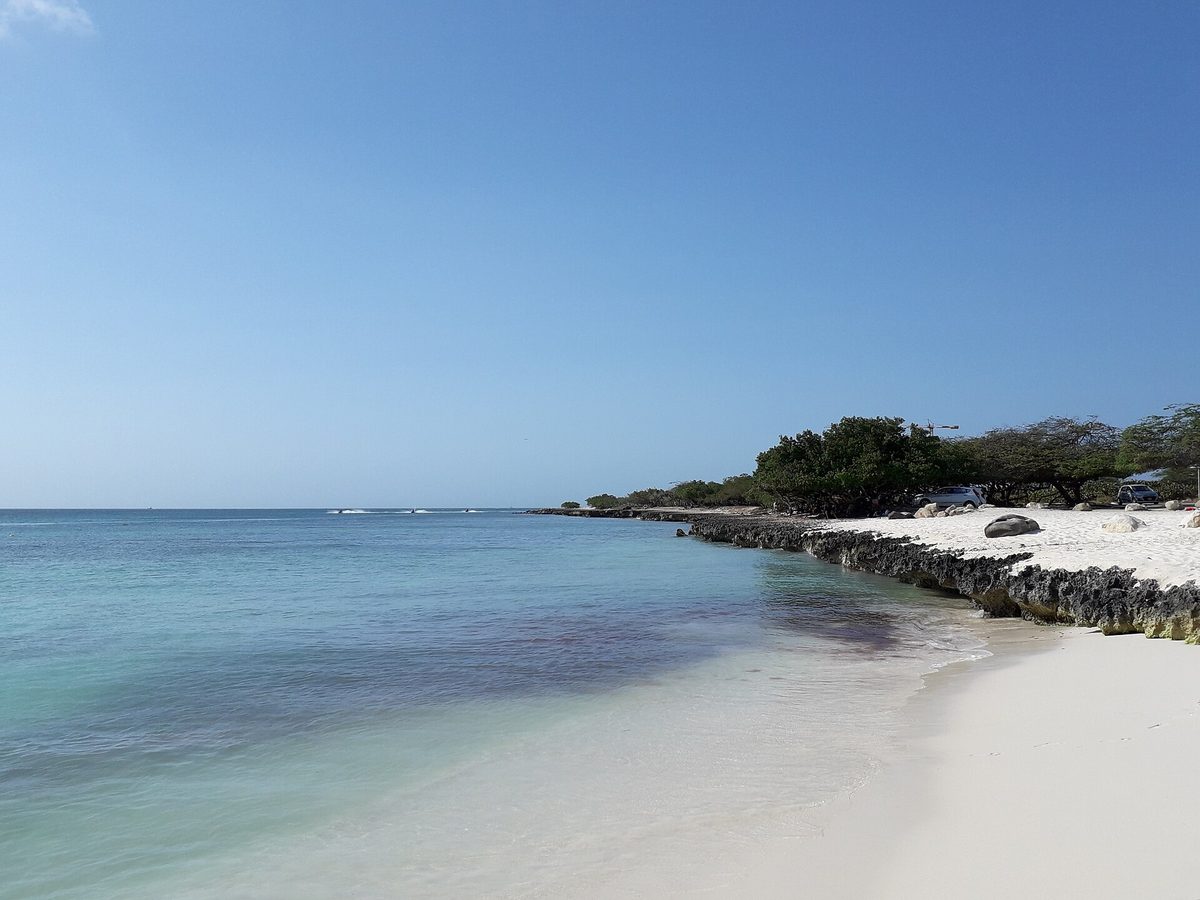
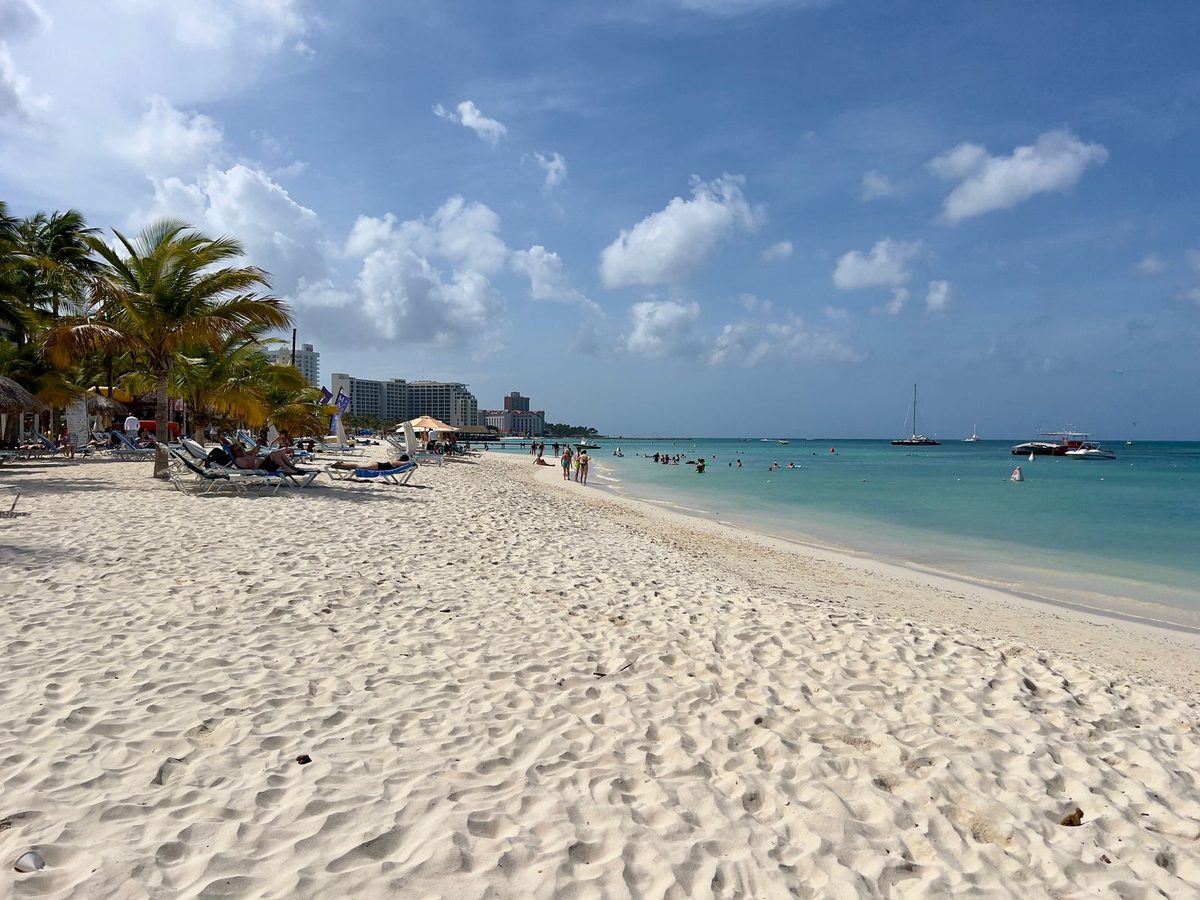
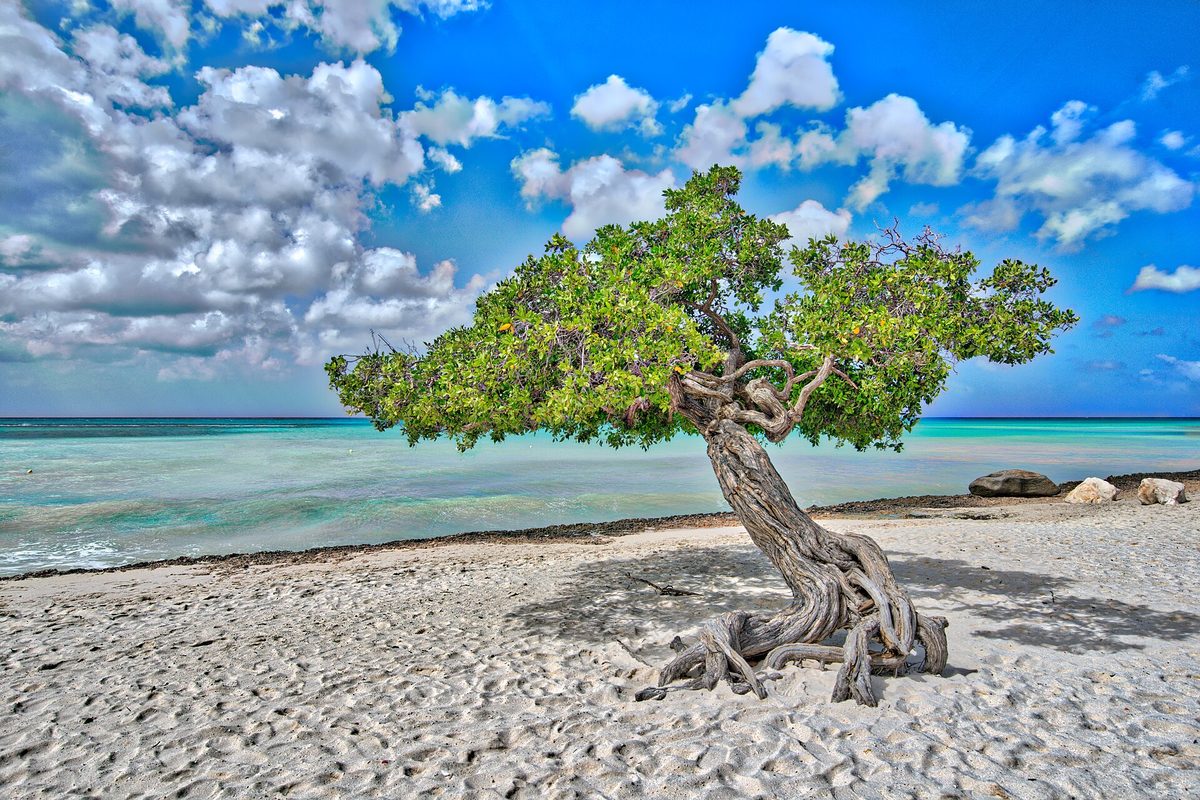
This is the part nobody disputes. Eagle Beach — a wide, soft, white-sand stretch dotted with the famous wind-bent divi-divi trees — regularly ranks among the best beaches on Earth in traveler polls. Palm Beach, just up the coast, is the lively resort beach: calm, shallow, turquoise water lined with hotels, water-sports kiosks and beach bars. Baby Beach at the southern tip is a shallow, sheltered lagoon that is ideal for small kids and nervous swimmers.
The thing that sets Aruba apart is not just looks — it is the calm. Because the best beaches face the leeward (western) side of the island, the water is typically gentle and swimmable rather than churned up by surf. You can wade out a long way, snorkel near shore, or just float. For a full rundown of which beach suits which traveler, see our complete Aruba beaches guide.
English is everywhere and the US dollar is accepted
Aruba is a constituent country of the Kingdom of the Netherlands, and Arubans tend to be impressively multilingual — many speak four languages (Papiamento, Dutch, English and Spanish). For an English-speaking visitor, that removes nearly all friction: menus, signs, tours and front desks all operate comfortably in English.
The local currency is the Aruban florin, but you almost never need it. US dollars are accepted essentially everywhere — hotels, restaurants, taxis, shops — and prices are frequently quoted in dollars to begin with. Cards are widely accepted too. It is one of the lowest-stress money situations in the Caribbean, and it is a real, if unglamorous, reason the island feels easy.
Getting there is easy, with lots of direct flights
Queen Beatrix International Airport (AUA) is well connected to the US East Coast and beyond, with frequent nonstop service from hubs like Miami, New York, Charlotte, Atlanta and others, plus seasonal routes from more cities. For many North American travelers, Aruba is a single direct flight — no island-hopping puddle-jumper, no overnight connection. The airport also has US Customs preclearance, so you clear US immigration before you fly home and walk off as a domestic arrival. Small thing; big convenience.
Food and resort variety punch above the island’s size
For a small island, Aruba’s dining and lodging range is wide. You will find everything from beachfront fine dining and a famous seafood scene to casual food trucks, Dutch pancakes, Argentine steakhouses and local Aruban cooking heavy on fresh fish and the comforting stews of the Dutch-Caribbean kitchen. On the lodging side, the choice runs from sprawling high-rise resorts and all-inclusives on Palm Beach to the lower-rise, more boutique feel near Eagle Beach and quieter local guesthouses. Our Aruba restaurants guide and all-inclusive resorts guide cover the specifics.
It is excellent for families, couples and first-timers
Put the above together — safe, calm water, easy logistics, English everywhere, reliable sun — and you get an island that is forgiving. That forgiveness is exactly what you want when you are traveling with kids, planning a honeymoon, or taking your first real Caribbean trip and do not want surprises. Couples have a polished resort-and-romance scene (see our Aruba honeymoon guide), families have shallow beaches and kid-friendly resorts (our Aruba with kids guide goes deep), and first-timers get a place where very little can go wrong.
The honest case AGAINST Aruba — who should NOT go
A travel guide that only sells you the upside is not a guide, it is a brochure. So here is the candid other half: the specific travelers for whom Aruba is genuinely the wrong choice. If you see yourself in one of these, spend your money somewhere it will buy you what you actually want.
Budget backpackers and shoestring travelers
Aruba is one of the pricier islands in the Caribbean, and there is no real way around it. The whole economy is geared toward mid-to-upper-range tourism. Restaurant dinners, organized excursions and beachfront resorts all run higher than on neighboring islands, and the “cheap” tier of accommodation is thin. You can trim costs — cook from a supermarket, stay off the beach, travel in the low season — but you are swimming against the current. If your trip lives or dies on a tight daily budget, Curacao, Cancun or the Dominican Republic will stretch the same money much further. We lay out real numbers in the Aruba vacation cost guide.
Anyone craving lush rainforest, jungle or waterfalls
This surprises a lot of first-timers: Aruba is a desert. It is arid, scrubby and cactus-studded, with the iconic divi-divi trees bent sideways by the constant trade winds. The landscape is beautiful in a stark, otherworldly way — the windswept coast and the cacti of Arikok National Park are genuinely striking — but it is the opposite of the dripping green, waterfall-and-rainforest Caribbean some people picture. If you want jungle hikes, river swims and emerald hillsides, you want a volcanic island like Dominica, St. Lucia, Puerto Rico or even Curacao’s wilder corners — not the ABC desert.
Travelers chasing a remote, undiscovered, local-only vibe
Aruba is developed and tourism-forward, and it does not pretend otherwise. The high-rise strip along Palm Beach is busy, built-up and unmistakably resort-land. There are quieter, more local corners — San Nicolas, Savaneta, the windward coast — but the center of gravity is firmly the tourist zone. If your dream is an empty beach, a hand-painted guesthouse and the feeling that you found somewhere before everyone else, Aruba will feel too polished and too discovered. That is not a flaw; it is just a different product. The very predictability that makes Aruba great for first-timers is what makes it underwhelming for the off-grid crowd.
Serious divers and snorkelers chasing the very best reef
Aruba has perfectly good snorkeling and some excellent wreck dives (the Antilla shipwreck is a highlight). But the windward conditions and sandy near-shore bottom mean it is not the standout reef destination of the southern Caribbean — that title belongs to neighboring Bonaire and, to a lesser degree, Curacao, where the clear, calm leeward water and healthy reefs are the main event. If your trip is built around underwater time, weigh that honestly. For what Aruba does do well on the water, our Aruba water sports guide has the details.
The cost reality: how expensive is Aruba, really?
Let me hedge hard here, because prices move with season, exchange rates and how you travel — treat every figure below as a ballpark and check current rates before you book. That said, here is the honest shape of it.
Broadly, you can think of three tiers per person, per day, excluding flights. A careful budget traveler — self-catering, off-beach lodging, few paid excursions — might keep things to roughly the low-to-mid US$100s a day, though doing that in Aruba takes real discipline. A comfortable mid-range trip — a decent hotel, a mix of restaurants, a couple of tours — tends to land somewhere around the US$250–400 a day range per person. A luxury trip with a beachfront resort, fine dining and private excursions climbs well beyond that. For a typical week, mid-range couples often report spending in the low-to-mid four figures before airfare. Again: ranges, not promises.
Two levers move your total more than anything else. The first is season: the December–April high season carries a steep premium on hotels, while the late-spring and fall shoulder months can be dramatically cheaper for the same weather. The second is how much you eat and drink at the resort versus locally — supermarket breakfasts, food trucks and a rental car for getting around can meaningfully cut the bill. For the full breakdown of what a trip actually costs and where the money goes, the Aruba vacation cost guide is the place to start, and the best time to visit guide shows you when the price drops.
The honest bottom line on cost: Aruba is not where you go to save money, and if a low price is your top priority you will feel the squeeze. But the spend buys a level of reliability, safety and beach quality that many cheaper islands cannot match. Whether that trade is “worth it” is genuinely personal — which is the whole point of the comparisons below.
Aruba vs other Caribbean islands: the head-to-head comparisons
The real way to answer “is Aruba worth it” is to ask “worth it compared to what?” Here is how Aruba stacks up against the four islands travelers most often weigh it against. First, the quick-glance table; then the nuance for each.
At-a-glance comparison table
| Factor | Aruba | Bahamas | Curacao | Turks & Caicos |
|---|---|---|---|---|
| Typical cost | High | High | Moderate (best value) | Very high (most expensive) |
| Hurricane risk | Very low (outside the belt) | Higher (Jun–Nov season) | Very low (outside the belt) | Higher (Jun–Nov season) |
| Sun reliability | Excellent, dry & sunny | Good, more humid/rain | Excellent, dry & sunny | Very good |
| Safety (US advisory) | Level 1 (safest tier) | Level 2 | Level 1 | Level 1 |
| Beaches | World-class, calm, wide | Huge variety across 700+ islands | Smaller coves, clear water | Grace Bay among world’s best |
| Best for | First-timers, families, couples | Variety, cruises, culture | Value, diving, culture | Luxury, pristine beaches, diving |
| Vibe | Polished, lively, easy | Varied, busy hubs + quiet outislands | Colorful, authentic, lower-key | Quiet, exclusive, boutique |
Costs and advisory levels shift over time — verify current prices and the latest U.S. State Department travel advisories before booking.
Aruba vs Bahamas
This is the classic matchup, and it really comes down to consistency versus variety. The Bahamas is not one place — it is a sprawling chain of 700+ islands, from the busy hubs of Nassau and Paradise Island to gloriously empty out-islands like the Exumas. That range is its superpower: you can do glitzy mega-resorts, swimming pigs, or a near-deserted cay. The Bahamas is also closer to the US and a cruise heavyweight.
But two things tip the balance toward Aruba for many travelers. First, weather and hurricane exposure: the Bahamas follows a humid, tropical pattern and sits squarely in the hurricane belt, so a summer or fall trip carries real storm risk, while Aruba stays dry, sunny and largely out of harm’s way. Second, safety: Aruba holds the top-tier Level 1 advisory while the Bahamas sits at Level 2, with most concerns concentrated in specific parts of Nassau/Freeport. On price they are broadly similar — both can be expensive. Choose Aruba for reliable sun, calm beaches and a safe, low-stress trip; choose the Bahamas if you want variety, easy cruise access, more vibrant local culture, or the option to escape to a remote cay.
Aruba vs Curacao
These two ABC sisters are the closest comparison on this list — same arid climate, same Dutch-Caribbean roots, both safely outside the hurricane belt, both Level 1 safe. The deciding factors are value, beaches and character. Curacao is meaningfully cheaper — commonly cited as something like 20–30% less for hotels and dining — and it has more visible local culture and history, anchored by the postcard-colorful waterfront of Willemstad (a UNESCO World Heritage site). Its water is famously clear, which makes its many small coves excellent for snorkeling and diving.
Aruba counters with bigger, calmer, more uniformly excellent beaches (Curacao’s tend to be smaller coves), a more polished resort scene, and an easier, more effortless feel overall — it is simply more set up to take care of you. The shorthand a lot of travelers use: choose Aruba if you want the Caribbean to be effortless, beautiful and exactly like the brochure; choose Curacao if you want better value, better diving, and a bit more local soul and character — and you do not mind that it is a touch less polished.
Aruba vs Turks & Caicos
Turks & Caicos is the luxury benchmark, and the comparison is mostly about price versus convenience. T&C’s Grace Bay is routinely ranked among the most beautiful beaches in the entire world, the water is staggeringly clear, and the diving is superb. The catch: it is generally the most expensive destination of this group — it leans hard into the high-end, boutique, exclusive end of the market, and prices reflect that. It is also quieter, with less nightlife, fewer budget options and a more remote, hushed feel.
Aruba offers a strikingly similar core experience — excellent beaches, good snorkeling, comfortable resorts, reliable sun — for noticeably less money, with more energy, more dining range and livelier nightlife. Both sit at the top Level 1 safety tier. Choose Turks & Caicos if pristine, world-best beaches and quiet luxury are the entire point and budget is no object; choose Aruba for comparable beauty with more value, more to do, more buzz and easier flight access.
Aruba vs Cancun
A bonus matchup, because plenty of travelers weigh these two. Cancun’s pitch is price, nightlife and Mayan culture: it is significantly cheaper, especially on all-inclusive packages and flights, the party scene is legendary, and you have world-class archaeological sites (Chichen Itza, Tulum) and cenotes within reach. For a budget-conscious, high-energy or culture-curious trip, that is a strong hand.
Aruba’s counter is reliability and beach quality. Cancun’s Hotel Zone beaches have battled heavy sargassum seaweed in recent years (worst roughly May–October), which can genuinely affect your beach days; Aruba’s beaches are far less affected and more consistently pristine. Aruba is also safer (Level 1 versus Mexico’s Level 2 overall) and sits outside the hurricane belt, where Cancun does not. Choose Cancun for budget, nightlife, ancient ruins and short flights from the US; choose Aruba for dependable, seaweed-free beaches, top-tier safety and storm-free sun.
So who should choose Aruba?
Stripping away the marketing, here is the clean version. Aruba is the right call if you are:
- A first-time Caribbean traveler who wants a sure thing — reliable weather, easy logistics, English everywhere, and very little that can go wrong.
- A family with kids who needs calm, shallow water, safe surroundings and resorts built for children. (Start with our Aruba with kids guide.)
- A couple or honeymooner after a polished, romantic, low-stress beach trip with great dining and sunset sails. (See the Aruba honeymoon guide.)
- A fall or hurricane-season traveler who wants sun without the storm risk that haunts much of the Caribbean from June to November.
- A repeat visitor who values consistency over novelty and likes knowing exactly what they are getting.
- Anyone who prioritizes safety and ease and is willing to pay a bit more to get them.
Aruba is the wrong call if you are: a strict-budget backpacker, a rainforest-and-waterfall seeker, an off-the-beaten-path purist who needs somewhere undiscovered, or a hardcore diver chasing the region’s very best reef (look to Bonaire or Curacao instead).
If you have decided Aruba is your island, the next steps are figuring out how long to stay, where to base yourself and what to do. Our Aruba itinerary guide maps out day-by-day plans, the where to stay in Aruba guide breaks down the best areas, and the things to do in Aruba guide covers everything from snorkel trips to the nightlife scene. When the sun goes down, our Aruba nightlife guide takes over.
The verdict: is Aruba worth visiting?
For most travelers, yes — and I say that as someone who walked in ready to be unimpressed. Aruba is not cheap and it is not a secret, and if either of those is your top priority you should book elsewhere with my blessing. But if what you actually want from a Caribbean trip is to step off the plane and have everything just work — sun that shows up, water you can swim in, beaches that earn their reputation, a safe place to wander, and food and resorts that do not disappoint — Aruba delivers that more consistently than almost anywhere in the region.
You are not paying a premium for hype. You are paying for reliability, and reliability is shockingly hard to find in travel. For first-timers, families and couples especially, that is money well spent. Go in clear-eyed about the cost and the desert landscape, pick your season wisely, and Aruba is very much worth it.
Frequently asked questions
Is Aruba worth the money?
For most travelers, yes — if you value what the money buys. Aruba is one of the pricier Caribbean islands, but the spend delivers reliable sunshine, top-tier safety, calm world-class beaches and easy, English-speaking logistics. If a rock-bottom budget is your priority, a cheaper island makes more sense; if dependability and quality matter most, Aruba earns its price tag.
Is Aruba better than the Bahamas?
It depends on what you want. Aruba wins on reliable dry weather, hurricane safety (it sits outside the belt) and a top-tier Level 1 safety rating versus the Bahamas’ Level 2. The Bahamas wins on sheer variety — 700+ islands, easy cruise access and more vibrant culture. For a low-stress, sunny beach trip choose Aruba; for variety and exploration, the Bahamas.
How many days do you need in Aruba?
Five to seven days is the sweet spot for most visitors. That gives you time to settle into the beaches, take a catamaran or snorkel trip, explore Arikok National Park and Oranjestad, and still have lazy days by the water. A long weekend (3–4 days) works for a quick beach reset, while 7-plus days suits anyone who wants a fuller mix of relaxing and exploring. Our itinerary guide has day-by-day plans.
Is Aruba a desert island? Where is the jungle?
Aruba is genuinely a desert — arid, breezy and dotted with cacti and wind-bent divi-divi trees rather than rainforest. There is no jungle and there are no waterfalls. The landscape is starkly beautiful, especially in Arikok National Park and along the rugged windward coast, but if you specifically want lush green hills and tropical forest, a volcanic island like St. Lucia, Dominica or Puerto Rico is a better fit.
Is Aruba or Curacao cheaper?
Curacao is the cheaper of the two ABC sisters, commonly cited as roughly 20–30% less than Aruba for hotels and dining, with stronger mid-range and boutique value. Both share the same dry climate and hurricane-safe location. Aruba counters with bigger, calmer beaches and a more polished resort scene. Choose Curacao for value, diving and local character; choose Aruba for effortless beach perfection.
When is the best (and cheapest) time to visit Aruba?
Because Aruba sits outside the hurricane belt and stays dry and sunny year-round, there is no truly bad time to go. High season (December–April) brings the best crowds-and-events energy but the highest prices. The late-spring and fall shoulder months offer the same reliable weather for noticeably less money and thinner crowds. See our best time to visit Aruba guide for the month-by-month breakdown.
Is Aruba safe for tourists?
Yes — Aruba is consistently ranked among the safest islands in the Caribbean and holds the U.S. State Department’s lowest advisory tier (Level 1). Violent crime against tourists is uncommon, and visitors routinely walk back from dinner after dark in the resort areas. Normal precautions still apply: don’t leave valuables unattended on the beach or visible in a rental car.
Final thoughts
Aruba’s reputation as “expensive and touristy” is accurate — and almost beside the point. The island’s real value proposition is that it removes the gambles from a Caribbean vacation. You are buying near-certain sun, real safety, and beaches that live up to the photos, on an island where everything is easy. For the right traveler, that is worth every dollar. For the wrong one, no amount of beauty will make the price or the desert feel right. Now you know which one you are.
Ready to plan? Start at our Aruba travel tips hub, then dig into the beaches, things to do and where to stay.
Photo credits
- Eagle Beach Aruba with soft white sand and turquoise water, a key reason this guide answers whether is aruba worth visiting — Photo: DDJJ / CC BY-SA 4.0 via Wikimedia Commons. Source.
- High-rise resorts lining calm turquoise water at Palm Beach, Aruba — Photo: Kwihi / CC BY 4.0 via Wikimedia Commons. Source.
- Wind-bent divi-divi tree on Aruba’s arid desert coast — Photo: sbmeaper1 (CC0) via Wikimedia Commons. Source.
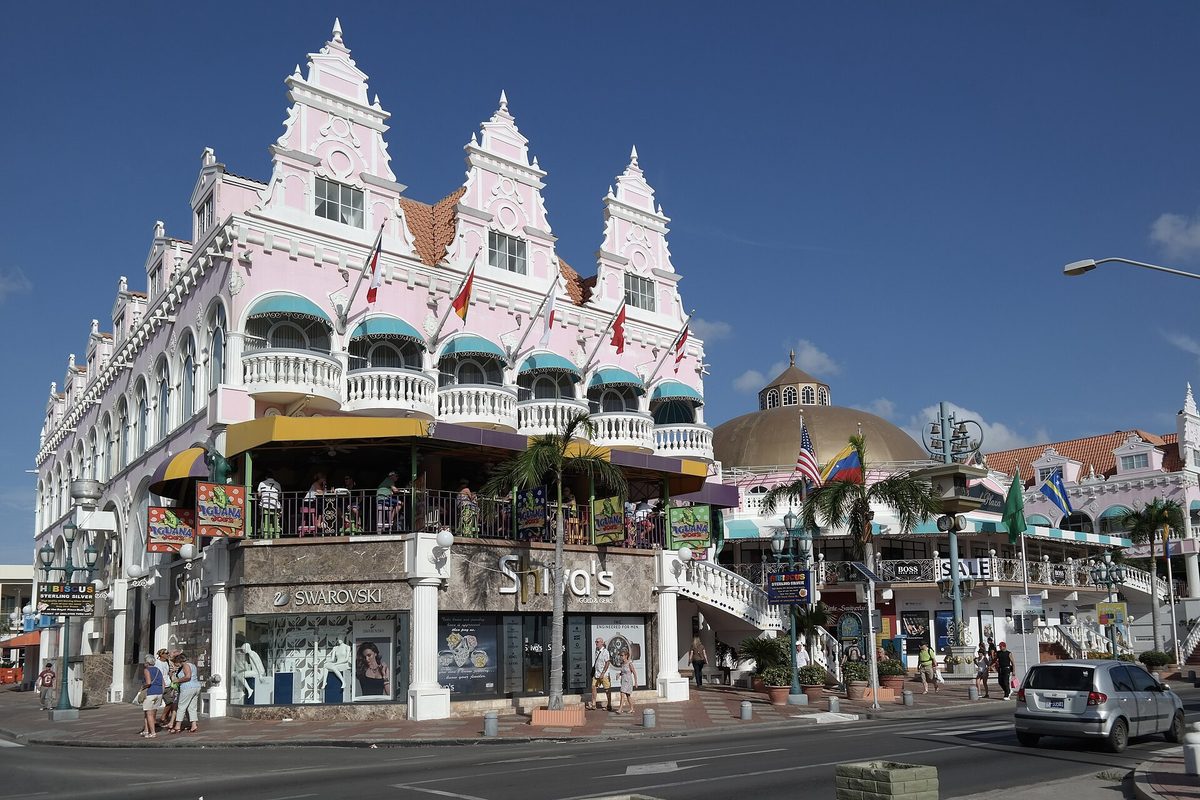
- Colorful Dutch colonial buildings and harbor in Oranjestad, Aruba — Photo: Choinowski / CC BY-SA 4.0 via Wikimedia Commons. Source.
- Pink flamingos on a shallow white-sand beach in Aruba — Photo: David Stanley from Nanaimo, Canada / CC BY 2.0 via Wikimedia Commons. Source.