Here is the myth I wish someone had punctured for me sooner: that legally tying the knot on a Caribbean island means you have to live there first, hire a lawyer, and untangle some residents-only paperwork nightmare. Couples talk themselves out of a Dutch-Caribbean wedding because they assume the law is a wall. It isn’t. The truth about what getting married in Aruba actually involves is a lot less dramatic, and a lot more doable, than the rumor mill suggests.
You do not need to be a resident. You do not need to be a citizen. Non-residents marry here legally every week, and the requirements come down to a short, predictable stack of documents, a bit of lead time, and one historic building in Oranjestad. The catch is that the details (apostilles, witnesses, ceremony hours) trip people up, so this guide walks you through every piece. Think of it as the planning brief I hand to friends before they book anything.
The direct answer: Yes, foreign couples can legally marry in Aruba without residency. You submit a set of apostilled documents (passports, long-form birth certificates, and a single-status certificate) to the Civil Registry at least a month ahead, then hold a short civil ceremony at the historic City Hall in Oranjestad with two witnesses. Most couples pair that with a separate beach celebration.
This is an informational guide from a travel-content team, not legal advice. Rules and fees on the island change, so treat every figure here as a starting point and confirm the current requirements with Aruba’s official Civil Registry (Kanselarij / Censo) or a licensed local wedding planner before you commit to dates or flights. The authoritative source is the Aruba Tourism Authority’s wedding-requirements page; this article expands on it with planning context.
At a glance: documents you’ll likely need
Before we get into the why and the when, here is the shortlist most non-resident couples are asked for a civil (legal) marriage. Get these moving early, because the apostille step is the one that eats time. Always verify the current list with the Civil Registry or your planner, as requirements differ by your home country and can be updated.
| Document | Who needs it | Notes / common gotchas |
|---|---|---|
| Valid passport | Both partners | Bring the original; submit a clear copy of the photo page. |
| Long-form birth certificate (with parents’ names) | Both partners | Must carry a raised/official seal, then be apostilled. |
| Certificate of No Impediment (single-status / “negative statement of marriage”) | Both partners | Proves you are free to marry; also needs an apostille. Canada often accepts a sworn notary statement instead. |
| Final divorce decree (apostilled) | If previously divorced | Only required if applicable. |
| Death certificate of prior spouse (apostilled) | If widowed | Only required if applicable. |
| Two witnesses (18+) + passport copies | The ceremony | A planner can supply local witnesses if you travel as a couple. |
| Declaration of Marriage Intent & Declaration of Single Status forms | Both partners | Provided and prepped by your wedding planner/coordinator. |
| Parental consent | If under the legal marriage age | Standard adult age is 18; confirm specifics for your situation. |
That table is the spine of the whole process. Everything below is really just explaining how to feed it correctly and on time. If you are still deciding whether the island is right for the bigger picture (where to stay, when to go, what the week costs), our complete Aruba honeymoon guide is the parent resource I’d read alongside this one.
What Getting Married in Aruba Legally Requires
Let’s be precise about the word “legally,” because this is where most of the confusion lives. There are two completely different things people mean when they say “wedding in Aruba,” and mixing them up is the single most expensive mistake I see.
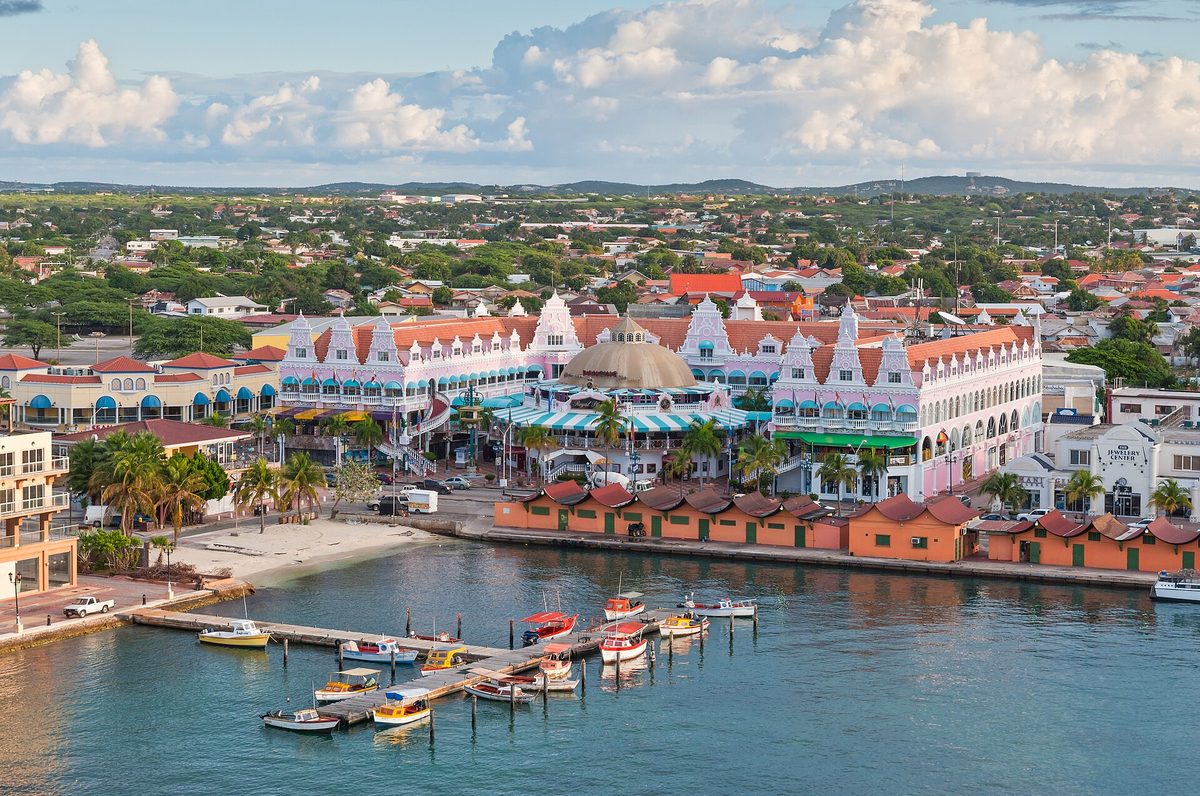
A legal civil marriage is the real, recognized-back-home version. It is performed by a civil official (effectively a marriage officer/judge) at the Historical City Hall, sometimes called the Civil Town House or Stadhuis, in downtown Oranjestad. It produces a marriage certificate. It comes with the document requirements in the table above, fixed appointment hours, and a dress code (no swimsuits, shorts, cut-offs, or flip-flops in the civil ceremony room).
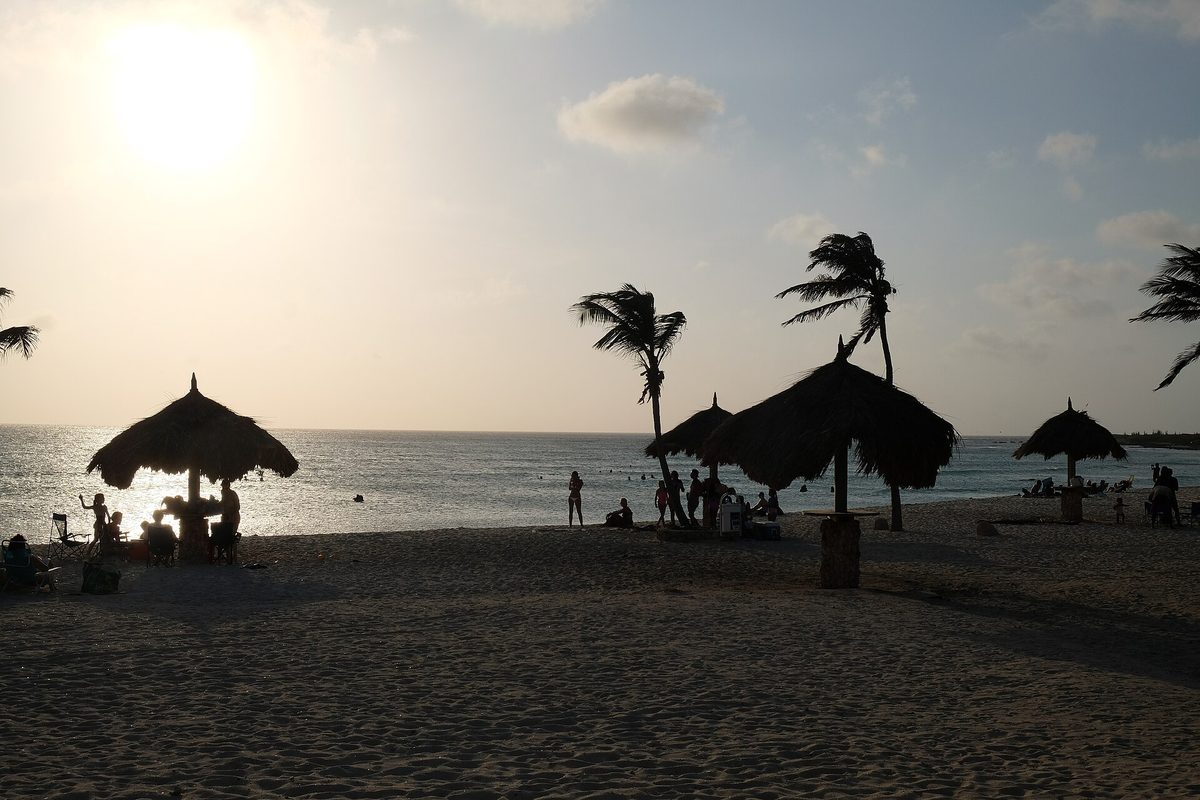
A symbolic ceremony (also called a beach blessing) is the barefoot-on-the-sand experience most people picture. It is beautiful, endlessly customizable, and usually led by a non-denominational reverend or celebrant. But it is not legally binding. By most local planners’ estimates, something like nine in ten “beach weddings” on the island are symbolic. Couples handle the legal paperwork at home, then fly down for the celebration.
Neither path is “better.” They solve different problems, and plenty of couples deliberately combine them. The point is to choose on purpose, not by accident.
Who can legally marry in Aruba
The reassuring headline: non-residents are welcome. You do not have to live on the island or hold Dutch or Aruban nationality to have a legal civil marriage here. Both partners generally need to be 18 or older (parental consent comes into play below that threshold), unmarried and free to wed, and able to produce the apostilled documents proving it.
Because Aruba is part of the Kingdom of the Netherlands, its civil-registry process leans on that Dutch-Caribbean legal framework, which is part of why the paperwork is exacting but also why it is reliable and internationally recognized. That said, your own country’s rules for recognizing a foreign marriage matter too, so it is worth a quick check with your home authorities before you travel.
Same-sex marriage in Aruba
This one has changed recently, so read it carefully and then confirm the current law before you plan. Aruba recognized registered partnerships starting in 2021, and then same-sex civil marriage became legal following a ruling by the Supreme Court of the Netherlands on 12 July 2024, which took effect immediately. In practical terms, same-sex couples can now pursue a legal civil marriage in Aruba on the same footing as anyone else.
Because this is a newer development and administrative practice can lag a headline, I’d strongly suggest verifying the exact current process and document handling for your situation directly with the Civil Registry or an established local planner who has recently done same-sex civil ceremonies. The legal status is settled; you just want to confirm the paperwork flow is smooth on your dates.

The required documents, explained
The table gives you the what. Here is the how, because each line has a quirk that can quietly derail your timeline.
Passports and IDs
Both partners need valid passports. You’ll submit a copy of the photo page in advance and carry the originals when you travel. Your two witnesses also need to provide copies of their passport photo pages, so loop them in early rather than scrambling the week before.
Long-form birth certificates
This is not the wallet-sized card. You need the long-form certificate that lists your parents’ names and carries a raised or official seal. Once you have that sealed original, it has to be authenticated with an apostille, in the U.S. that means sending it to your home state’s Secretary of State office. Order these well ahead; vital-records offices and apostille turnarounds are the slowest link in the chain.
Certificate of No Impediment (single-status)
Sometimes called a “single-status report” or a “negative statement of marriage,” this document certifies that you are currently unmarried and legally free to marry. In the U.S. it usually comes from a vital-statistics or records office and then also needs an apostille. Rules vary by country: in Canada, couples who have never married can often supply a sworn statement from a notary or lawyer instead; couples from England may route this through the relevant Commonwealth/registry channel. Confirm your country’s exact path with your planner.
Divorce or widowhood documents
If either of you was married before, you’ll need to prove that prior marriage ended. For a divorce, that’s a final divorce decree; for a widowed partner, the deceased spouse’s death certificate. Either document also needs an apostille. If this applies to you, build in extra time, retrieving old court or vital records is rarely quick.
Translations, apostilles, and the fine print
The recurring theme is apostille, apostille, apostille. An apostille is an internationally recognized authentication (under the Hague Convention) that validates the signature and seal on your document. Documents not in Dutch, English, Spanish, or Papiamento may need a certified translation, ask your planner whether your specific paperwork requires it. Do not assume; a missing translation or apostille is the most common reason a file gets bounced.
The declaration forms and witnesses
You’ll also complete an Aruba Declaration of Marriage Intent and a Declaration of Single Status. These are typically provided and prepared by your wedding planner or coordinator, which is one more reason hiring one is worth it. And you need two witnesses aged 18 or older; if you’re traveling as just the two of you, a planner can arrange local witnesses so you’re never stuck.
How far ahead to apply: a realistic timeline
Here is where I’ll save you some stress. The official requirement is that your documents be reviewed (usually emailed first), then sent by courier such as FedEx to the Civil Registry at least one month before your desired wedding date. That’s the minimum. The practical advice from planners is to start much earlier, because the apostille step on your end is unpredictable.
A sane working timeline looks like this:
- 3–6 months out: Decide legal-civil vs. symbolic. Choose and book a wedding planner. Lock your travel dates and accommodation, peek at the best time to visit Aruba so weather and crowds work in your favor.
- 2–3 months out: Order long-form birth certificates and your single-status certificates, then get every required document apostilled. This is the long pole; don’t wait.
- ~6–8 weeks out: Send scans to your planner/Civil Registry for review and lock your ceremony date and time slot at City Hall.
- At least 1 month out: Courier the original apostilled documents to the Civil Registry. Confirm your witnesses and their passport copies.
- Arrival week: Bring all originals, dress to the civil dress code, and show up for your appointment window.
One scheduling reality to plan around: civil ceremonies happen only during set hours on set weekdays. As listed by the Aruba Tourism Authority, slots have run Monday, Tuesday, Thursday and Friday from about 10:00–11:30 and 14:00–15:30, with a shorter Wednesday window; other sources list Monday through Saturday morning and afternoon blocks. Hours change, so do not book flights around an assumed slot, confirm your exact appointment in writing first.
Where the legal ceremony happens (and where the party does)
The legal civil ceremony itself is centered on Oranjestad’s Historical City Hall. It’s a short, dignified affair, often 20–30 minutes, and it’s genuinely charming in that pastel Dutch-colonial way the capital does so well. After the “I do” and the signatures, the rest of the day is yours.
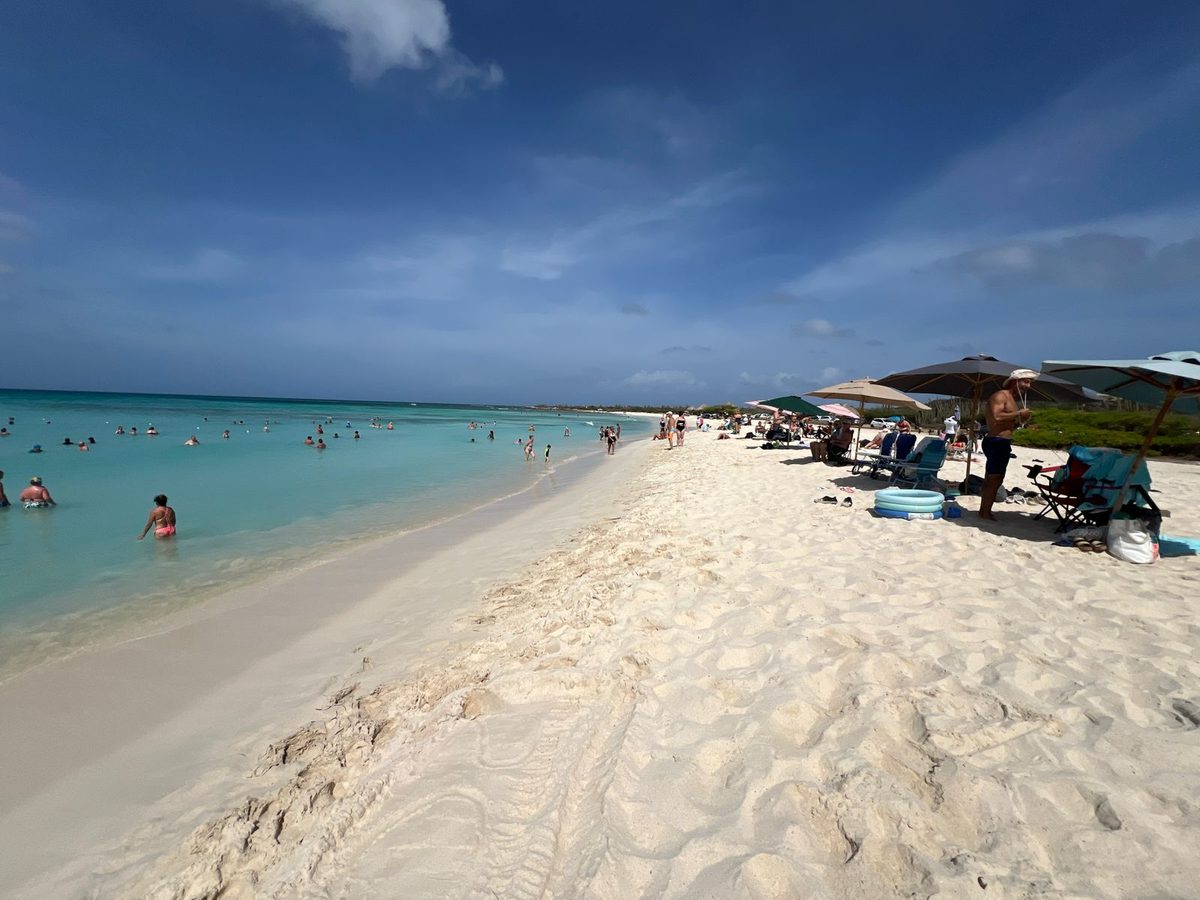
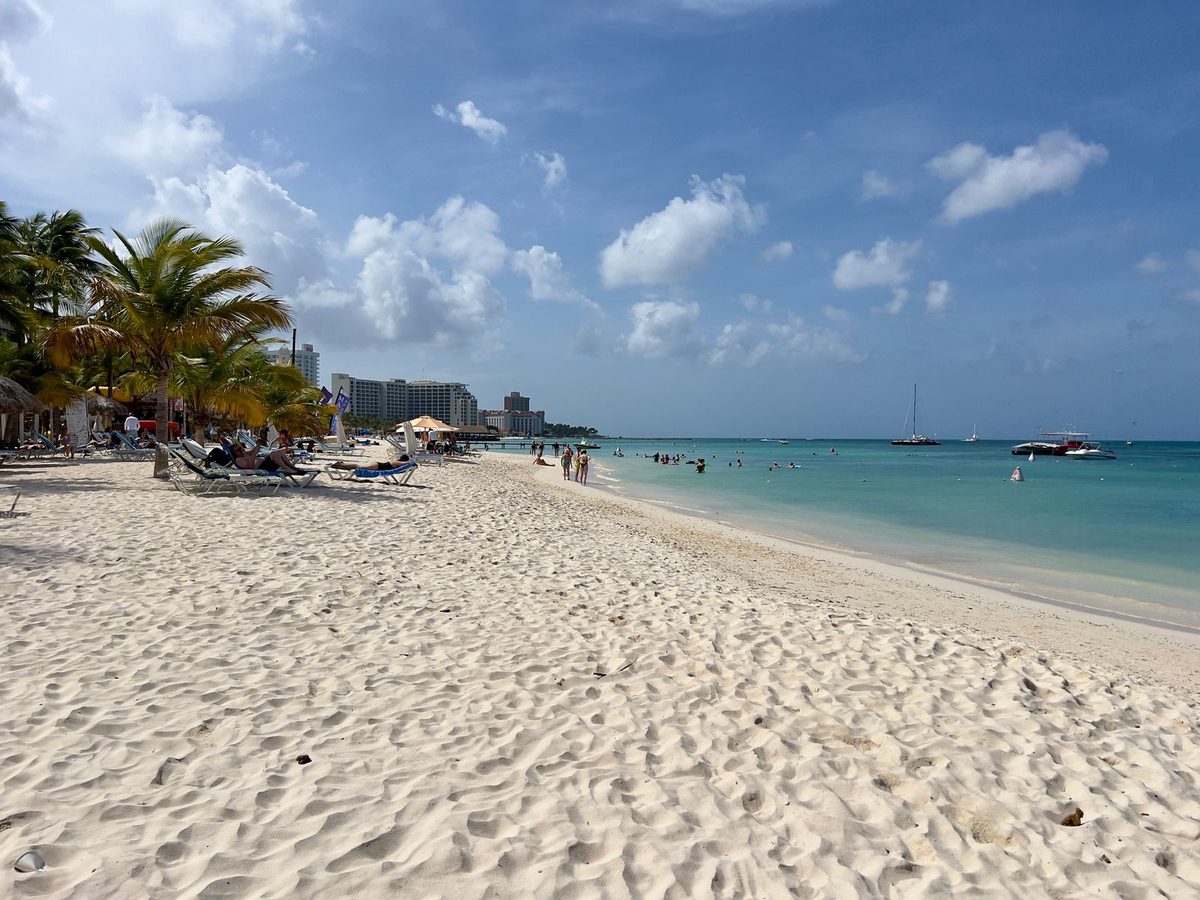
And this is the fun part of marrying on a 70-square-mile island: your celebration backdrop options are absurd. Many couples do the civil signing, then host a symbolic vow exchange and reception on the sand. If you want help picturing it, browse our rundown of the best beaches in Aruba, the wide, calm stretch of Eagle Beach and the resort-lined sweep of Palm Beach are the classic ceremony spots for good reason.
Prefer something with more history or a quieter, photogenic edge? The tiny, much-loved Alto Vista Chapel on the island’s north coast is a romantic backdrop for vow renewals and intimate blessings, and the windswept California Lighthouse is a favorite for sunset portraits and proposals. Couples chasing dramatic scenery sometimes add a stop at the Natural Bridge area for photos.
What it costs (and why I’m hedging)
Straight talk: there is no single published “marriage license fee” you can pin down from your couch, and the numbers move year to year. Government and officiant fees for the civil ceremony aren’t posted as a tidy public price list the way a U.S. county clerk’s fee might be, which is exactly why couples lean on planners for current quotes. So treat everything here as ballpark and verify.
What I can tell you from the market: packaged wedding offerings on the island have spanned roughly $1,280 to about $7,699 depending on inclusions, while a fuller wedding with guests, dinner, photography, and flowers commonly lands somewhere in the $10,000–$30,000+ range, same as anywhere. Wedding-planner fees have historically run in the four figures. Your apostille and document costs back home are separate and modest but real.
Because budgeting a destination wedding is really budgeting a whole trip, it helps to model the surrounding costs too. Our breakdown of a typical Aruba vacation cost and the guide to Aruba all-inclusive resorts will give you a far more honest total than the ceremony line item alone. For where to base yourselves, our where to stay in Aruba guide breaks down the neighborhoods.
By couple type: which path fits you
Couples who want it fully legal, done on-island
If having the legally binding marriage actually happen in Aruba matters to you (for the story, the certificate, the symbolism), commit to the civil ceremony and start the apostille process early. Hire a planner, accept the fixed hours and dress code, and you’ll be fine. This is very achievable; it just rewards organization.
Couples who want the beach dream with zero paperwork stress
Honestly, this is what a lot of people actually want. Legalize your marriage quietly at home (your local courthouse), then fly down for a symbolic beach blessing where you control everything, time of day, location, vows, music. No apostilles, no City Hall hours. You still get the photos, the sunset, and the meaning, minus the bureaucracy.
Couples eloping, just the two of you
Aruba is fantastic for an elopement. The thing to solve is witnesses, but a planner supplies local ones, so two people can absolutely marry here. Pair the ceremony with a great dinner out (start with our Aruba restaurants guide) and a couple of unforgettable outings from our things to do in Aruba list.
Couples doing a vow renewal or anniversary blessing
No legal paperwork needed at all, this is purely symbolic, which makes it the most flexible option of the bunch. A celebrant, a meaningful spot like Alto Vista Chapel or your favorite beach, and you’re set.
Religious and blessing ceremonies
If a faith ceremony matters to you, the island accommodates several, with their own rules layered on top of (not instead of) the civil process.
Catholic ceremonies are the most paperwork-heavy: you’ll typically need written consent from your home pastor, proof you’ve completed pre-marital counseling, certificates of baptism and confirmation, and crucially proof that you’ve already been married civilly, since the Church here generally expects the civil marriage first. These documents are usually due around four months ahead, and the ceremony takes place in a Catholic church.
Protestant, Methodist, and Episcopalian blessings are more flexible, often allowed in a church or another location of your choosing, generally with a copy of your civil marriage certificate and appropriate dress. Jewish ceremonies require both partners to be Jewish with a certificate from their rabbi and a formal request to the Jewish Community of Aruba. As always, your planner coordinates the specifics, and requirements can change.
Why a local wedding planner is worth it
I’m not usually one to push add-ons, but for a legal wedding abroad, a local planner earns their fee. They know which apostille the Civil Registry will actually accept, they prep your declaration forms, they secure your ceremony slot, they can provide witnesses, and they translate the moving parts of a Dutch-Caribbean bureaucracy into a checklist you can follow from home. The official tourism authority itself recommends working with one, and for “minimum additional cost” relative to the trip, the peace of mind is real.
Even for a purely symbolic beach ceremony, a planner handles permits, the celebrant, setup, and timing so you’re not negotiating with vendors on your wedding morning. If you’re the type who’d rather DIY, at minimum read our Aruba travel tips and our guide to getting to and around Aruba so the logistics of the trip itself don’t blindside you.
Frequently asked questions
Can foreigners legally get married in Aruba without being residents?
Yes. Non-residents can have a legal civil marriage in Aruba, no residency or citizenship required. You’ll need the apostilled documents (passports, long-form birth certificates, single-status certificates, plus divorce or death records if applicable), two witnesses, and a booked civil-ceremony slot at the Historical City Hall in Oranjestad. Confirm the current list with the Civil Registry or your planner.
How far in advance do I need to submit my documents?
The official minimum is that your documents reach the Civil Registry, usually emailed for review first, then couriered, at least one month before your wedding date. In practice, start two to three months out, because getting your birth and single-status certificates apostilled at home is the slowest step and the one most likely to run long.
Is a beach wedding in Aruba legally binding?
Usually not. The classic barefoot beach ceremony is a symbolic blessing led by a celebrant, and most beach weddings on the island are symbolic rather than legal. To be legally married, you either complete the civil ceremony at City Hall or get legally married at home and treat the beach event as your celebration. Many couples deliberately do exactly that.
Is same-sex marriage legal in Aruba?
Yes. Following a Supreme Court of the Netherlands ruling that took effect on 12 July 2024, same-sex couples can legally marry in Aruba; registered partnerships had been available since 2021. Because this change is recent, verify the current civil-registry process for your specific situation with the registry or an experienced local planner before finalizing plans.
Do we need our own witnesses?
You need two witnesses who are at least 18 years old, and you’ll submit copies of their passport photo pages. If you’re eloping or traveling without guests, that’s not a dealbreaker, a local wedding planner can arrange witnesses for you. Just confirm this in advance so no one is improvising on the day.
How much does it cost to get married in Aruba?
It varies widely and figures change, so confirm current pricing. Packaged ceremonies have ranged from roughly $1,280 to around $7,699, while a full wedding with guests, dining, and photography commonly runs $10,000–$30,000 or more. Government and officiant fees aren’t posted as a fixed public price, so ask your planner for an itemized, up-to-date quote.
Final thoughts
The fear that legally marrying in Aruba is a residents-only ordeal is exactly that, a fear, not a fact. Strip away the myth and you’re left with a short stack of apostilled documents, a one-month-minimum lead time, two witnesses, and one lovely old building in Oranjestad. Add a beach, a sunset, and a good planner, and you’ve got a wedding that’s genuinely simple to pull off and impossible to forget.
My honest advice: decide early whether you want the legal ceremony on-island or just the celebration, start your paperwork sooner than feels necessary, and confirm every changeable detail, hours, fees, same-sex process, document list, with the official Civil Registry or your planner before you book flights. Do that, and the only thing left to stress about is which beach. For the bigger romantic picture, circle back to our Aruba honeymoon guide and start dreaming up the days after “I do.”
By the ArubaTourism.org team — Last updated June 2026
Photo credits
- Photo: Navigator334 / CC BY-SA 4.0 via Wikimedia Commons (source)
- Photo: David Stanley from Nanaimo, Canada / CC BY 2.0 via Wikimedia Commons (source)
- Photo: Kwihi / CC BY 4.0 via Wikimedia Commons (source)
- Photo: Kwihi / CC BY 4.0 via Wikimedia Commons (source)
- Photo: Ginelly.Q (CC0) via Wikimedia Commons (source)