Travel insurance is the line item nearly everyone wants to delete from the budget. You have already paid for the flights, the resort, and the catamaran trip, so a policy that pays out only if something goes wrong can feel like money thrown into the sea. Then a reef cut becomes a clinic visit, a storm cancels the flight home, or a relative falls ill the week before departure — and suddenly aruba travel insurance is the smartest line in the whole budget. The travelers who kept it are very glad they did.
So here is the crisp answer before the details: for most tourists, aruba travel insurance is not a legal requirement to enter the island, but it is strongly recommended, because foreign visitors pay out of pocket for medical care and a serious emergency — especially a medical evacuation off the island — can cost a staggering amount. This guide walks through what is and is not required at the border, why coverage is worth considering anyway, exactly what to look for in a policy, what it typically costs, where credit-card protection falls short, and how to file a claim if you ever need to. We are a travel resource, not financial advisers, so treat this as general information and compare current policies yourself before you buy.
By the ArubaTourism.org team — Last updated June 2026.
The short answer: do you need travel insurance for Aruba?
No, Aruba does not mandate that ordinary tourists buy a travel insurance policy to be admitted. There is no blanket rule at immigration that says “show us your insurance certificate or you cannot enter.” That said, the answer deserves a hedge, because the border is not quite a free pass either, and the rules can change. Customs and immigration officers are entitled to ask arriving visitors for a handful of things, and on paper that list can include proof of valid health insurance alongside the documents most people already expect to show.
In practice, the vast majority of vacationers clear Queen Beatrix International Airport without ever being asked to prove they hold a policy. But “rarely enforced” is not the same as “never,” and entry requirements are exactly the kind of thing that shifts from year to year. The pandemic era is a good reminder: for a stretch Aruba did require every visitor to carry a specific government visitor-insurance product as a condition of entry. That requirement was retired, yet it shows the island is willing to attach insurance to entry when it sees a reason to. Always confirm the current rules with an official source close to your travel date.
What Aruba can ask for at the border (insurance is only part of it)
To set expectations, here is what immigration officers may request from a visitor on arrival. None of this is meant to scare you — thousands of people breeze through daily — but knowing the list helps you arrive prepared rather than flustered:
| Item officers may request | What it means in practice |
|---|---|
| Valid passport | Valid for the duration of your stay; many airlines apply stricter validity rules than Aruba itself. |
| Completed ED Card (Embarkation/Disembarkation) | Filed online within a few days before you fly; a required digital form, not insurance. |
| Return or onward ticket | Evidence you intend to leave again — a printed or digital itinerary is enough. |
| Proof of sufficient funds | Often framed as roughly USD 150 per day per person; a credit card, recent bank statement, or cash can satisfy it. |
| Proof of the purpose of your stay | A hotel booking or address where you are staying. |
| Proof of valid health insurance | Listed by some government travel advisories as something officers may ask for — rarely demanded of tourists in practice, but the reason a policy is smart to carry. |
Notice the pattern: even where insurance is not strictly mandatory, the border is interested in whether you can pay your own way and get yourself home. A travel policy is, in a sense, the thing that backstops several items on that list at once — it is proof you can cover a medical bill, and many comprehensive plans also help get you home if a storm or emergency disrupts your return.
Why travel insurance for Aruba is still strongly recommended
If it is not required, why does almost every seasoned traveler and government advisory still nudge you toward buying it? Three blunt realities about being a foreign visitor on a Caribbean island.
First, your home health insurance probably does not travel with you. Most U.S. domestic plans, and notably Medicare and Medicaid, provide little or no coverage for care received in Aruba. Many Canadian, British, and other national plans are similarly limited abroad. That means a clinic visit, a course of stitches, or an overnight hospital stay is something you are likely paying for yourself, then claiming back later — if you have a policy that lets you.
Second, Aruban hospitals and clinics generally expect payment up front from foreigners. Care on the island is actually very good — the modern Dr. Horacio E. Oduber Hospital in Oranjestad handles emergencies, and there are private clinics and urgent-care options for tourists — but “good” does not mean “free.” Facilities can require immediate cash or card payment before or at the time of treatment, and a credit-card hold for a hospital admission can run into the thousands. Travel medical coverage is what keeps a bad afternoon from becoming a financial emergency.
Third, and most importantly, the truly catastrophic cost is evacuation. Aruba has solid hospitals, but for certain specialized or critical conditions the recommended course is transfer to a larger facility, frequently in the United States. An air ambulance off the island is the single line item that can dwarf everything else on your trip.
Medical care and emergency evacuation: the coverage that matters most
If you read nothing else, read this section. Routine travel mishaps are annoying; a medical evacuation is the thing that can genuinely upend a family’s finances. Industry figures vary, but an air ambulance from the Caribbean back to the U.S. mainland is commonly cited in the tens of thousands of dollars, and complex cases can climb far higher — ranges from roughly $25,000 to well over $100,000 get quoted, and some specialized transfers are estimated higher still. We cannot promise a specific number for your situation, which is exactly the point: it is an open-ended cost you do not want to self-fund.
Because of that, when people weigh whether travel insurance for Aruba is worth it, the medical-and-evacuation piece is usually the deciding factor. A useful rule of thumb that many travel-insurance educators suggest is looking for a plan with a healthy emergency-medical limit and a separate, substantial medical-evacuation limit — figures in the six-figure range for evacuation are commonly recommended. Confirm the current numbers and exclusions on any plan you consider; do not take a marketing headline at face value.
What “emergency medical and evacuation” should actually include
- Emergency medical treatment — doctor and hospital costs for a new illness or injury during the trip.
- Emergency medical evacuation and repatriation — getting you to adequate care, or home, when local facilities cannot treat your condition. This is the expensive, must-have piece.
- A 24/7 assistance line — a real human who can coordinate the evacuation, talk to the hospital, and arrange payment. In a genuine emergency this service is worth as much as the dollar limit.
- Coverage that is primary, not just secondary — primary medical coverage pays first without you fighting your home insurer; read the fine print to see which you are getting.
Decision matrix: do you need travel insurance for your Aruba trip?
Insurance is not one-size-fits-all. The honest answer for a long-weekend, all-refundable, healthy-solo-traveler trip is different from the answer for a multigenerational two-week holiday booked nine months out. Use this at-a-glance matrix to gauge how strong the case is for you:
| Your situation | How strong is the case for insurance? |
|---|---|
| Large nonrefundable deposits (resort, villa, package) | Strong — trip cancellation/interruption can return money you would otherwise lose. |
| Traveling during hurricane season (June–November) | Strong — weather disruption and trip-interruption coverage become genuinely useful. |
| Any pre-existing or unstable health condition (you or close family) | Strong — but you typically must buy soon after the first deposit to get the pre-existing-condition waiver. |
| Adventure plans: diving, jet ski, cliff jumping, off-road Arikok | Strong — check that the policy does not exclude your specific activities. |
| Older travelers, or anyone where a big medical bill would hurt | Strong — the medical and evacuation cover is the whole point. |
| Short, fully refundable trip; in good health; minimal gear | Moderate — you might lean on a strong credit-card benefit, but medical/evac gaps remain. |
| Robust credit-card travel protection you have actually read | It depends — cards rarely match standalone medical/evac limits; verify the specifics. |
What a good Aruba travel insurance policy actually covers
Medical and evacuation are the headline, but a comprehensive policy bundles several other protections. Here is what each one does and why it might matter on an Aruba trip specifically — so you can decide which features you actually need rather than buying every bell and whistle.
Trip cancellation and interruption
This is the benefit most people end up using. Trip cancellation reimburses prepaid, nonrefundable costs if you have to cancel before departure for a covered reason — a covered illness, injury, a death in the family, jury duty, certain work emergencies. Trip interruption kicks in once you have left, covering the unused portion of your trip and the cost of getting home early. On a trip where you have prepaid a resort, a villa, or an all-inclusive package, these two benefits are what protect the largest chunk of money. Read the list of “covered reasons” carefully — standard policies only pay for the reasons they name. If you want the freedom to cancel for any reason at all, that is a separate, pricier “Cancel For Any Reason” upgrade that typically reimburses only part of your cost and must be bought soon after your first deposit.
Trip delay and missed connection
Flights to Aruba often route through hubs like Miami, Charlotte, or Atlanta, which means a single delayed leg can cascade. Trip-delay coverage reimburses reasonable out-of-pocket costs — a hotel night, meals, a change fee — when you are stuck beyond a set number of hours, and missed-connection coverage helps when a late inbound flight makes you miss your onward one. These are small payouts compared with a medical claim, but they are also the ones that quietly make a rough travel day bearable.
Baggage loss, theft, and delay
Baggage benefits split in two. Baggage delay gives you money to buy essentials — swimwear, sunscreen, a change of clothes — if your bag is late, which on a beach holiday is exactly when you need it most. Baggage loss reimburses the depreciated value of belongings that are lost, stolen, or damaged, subject to per-item caps that are usually too low for cameras or laptops. If you are bringing valuable gear, check whether your home contents insurance already covers it off-premises before paying twice.
Weather and hurricane disruption
Here is a reassuring bit of geography: Aruba sits to the south of the main Atlantic hurricane belt and is only rarely hit directly, which is part of why it is a popular shoulder-season and even late-summer destination. But “rarely” is not “never,” the official hurricane season runs from June through November, and the bigger practical risk is indirect — a storm elsewhere in the Caribbean or at a connecting hub that grounds flights and snarls your itinerary. You usually do not need a special hurricane policy; standard trip-cancellation and trip-interruption coverage that lists severe weather as a covered reason generally handles it. The catch every traveler must respect: weather coverage only works if you buy the policy before the storm is named. Once a hurricane is a known event, it is no longer “unforeseen,” and new policies will exclude it. If you are traveling in season, insure early. For timing your trip around the weather, see our guide to the best time to visit Aruba.
Rental car and collision damage (CDW)
Many visitors rent a Jeep or SUV to reach the windward coast and the wilder beaches — and rental desks in Aruba will offer you a collision-damage waiver that can add a meaningful amount per day. Some travel insurance plans include, or let you add, rental-car collision coverage that can substitute for the desk’s pricey CDW, and some premium credit cards provide it too (more on cards below). The wrinkle is that coverage terms differ by provider and by what you are driving, and off-road damage is a common exclusion — relevant if you plan to take a 4×4 onto rough tracks. Sort out who covers the vehicle before you sign at the counter, not after a fender-bender. Our guide to getting to and around Aruba covers driving and rental logistics in more depth.
Adventure and water-sports activities
This is the exclusion that catches active travelers off guard. The reason you came to Aruba — scuba diving on the Antilla wreck, snorkeling, jet-skiing, kitesurfing off the breezy southern coast, cliff jumping, ziplining, or bouncing across Arikok National Park in a 4×4 — is exactly the kind of activity that some standard policies quietly exclude or cap. Scuba beyond a certain depth, anything labeled “extreme,” and motorized water sports are the usual suspects. If your itinerary leans active, confirm in writing that your chosen activities are covered, or buy an adventure-sports rider. Government travel advisories make the same point bluntly: check that your insurance covers accidents related to the recreational activities you plan to do. If water sports in Aruba are the heart of your trip, this is not a box to leave unchecked.
How much does Aruba travel insurance cost?
The number everyone wants and nobody can pin down precisely, because price depends on you. As a widely cited ballpark, a comprehensive policy often runs somewhere in the range of roughly 4% to 10% of your total prepaid, nonrefundable trip cost — treat that as a rough guide, not a quote. A medical-only plan that skips the trip-cancellation piece is usually far cheaper. The premium moves with a handful of levers:
- Trip cost — because cancellation cover reimburses prepaid costs, insuring a $12,000 family holiday costs more than insuring a $2,500 getaway.
- Traveler age — premiums rise with age, sometimes steeply for older travelers, because the medical risk does.
- Trip length — more days on the island means more exposure and a higher premium.
- Coverage limits and deductible — higher medical and evacuation maximums cost more; a higher deductible lowers the premium.
- Add-ons — Cancel For Any Reason, adventure-sports riders, and rental-car coverage each add cost.
Put it in perspective. Travelers already budget carefully for the trip itself — our breakdown of a typical Aruba vacation cost shows how flights, resorts, and dining add up — and against that total, a policy is usually a small single-digit percentage. Whether that percentage is “worth it” is a personal judgment about how much risk you are comfortable carrying yourself.
Where credit-card travel protection falls short
A common and reasonable instinct is, “My travel rewards card already includes insurance, so I am covered.” Sometimes that is partly true — many premium cards bundle trip cancellation, trip delay, baggage delay, and rental-car collision coverage when you charge the trip to the card. Those benefits are real and worth knowing. But credit-card protection has well-known gaps that matter most in exactly the scenarios that scare people:
- Emergency medical and evacuation are usually thin or absent. This is the single biggest gap. Few cards offer meaningful emergency medical coverage abroad, and evacuation — the six-figure risk — is rarely included at a level that would actually get you home.
- Lower limits and narrower covered reasons. Card cancellation benefits often cap lower and recognize fewer covered reasons than a dedicated policy.
- You must pay with that card, in full, and follow strict rules. Miss a condition and the benefit can evaporate.
- No pre-existing-condition waiver and no Cancel For Any Reason. Features a standalone policy can offer, a card generally cannot.
The practical move is to read your card’s actual benefits guide — not the marketing summary — and treat the card as a useful supplement for cancellation, delay, and rental coverage, while looking to a dedicated policy for the medical and evacuation protection a card rarely provides.
When you might reasonably skip it
We are not here to fearmonger. There are situations where a thoughtful traveler decides to go without, and that can be a defensible choice: a short trip where every booking is fully refundable; travelers in good health who hold strong international medical coverage through another source; or a low-cost trip where the total at risk is small and you are genuinely comfortable self-insuring. Even then, the medical-and-evacuation gap is the one to think hardest about — a cancelled flight is an inconvenience, but an uninsured air ambulance is the scenario that bankrupts people. Many travelers who skip the full comprehensive plan still buy an inexpensive standalone travel-medical policy just for that protection.
How to choose a policy: a practical checklist
Rather than naming products, here is a neutral process you can apply to compare any plans on the market today:
- Total your prepaid, nonrefundable costs first. That figure drives how much cancellation coverage you actually need — do not over-insure refundable bookings.
- Set medical and evacuation as non-negotiable minimums. Decide on a comfortable floor for emergency medical and a substantially higher floor for evacuation, then filter out anything below it.
- Match the policy to your itinerary. Traveling in hurricane season? Confirm weather is a covered reason. Diving or off-roading? Confirm the activity is covered or add a rider.
- Buy early if timing-sensitive features matter. Pre-existing-condition waivers, Cancel For Any Reason, and storm coverage are all tied to buying within days of your first deposit.
- Read the exclusions before the brochure. The exclusions and the “covered reasons” list tell you what the policy really does. Compare a few side by side.
- Check whether medical coverage is primary. Primary coverage pays without you first fighting your home insurer.
If something goes wrong: claims tips
A policy is only as good as the claim you can actually collect. A few habits make the difference between a smooth reimbursement and a denied one:
- Call the 24/7 assistance line first in a real emergency. For anything serious — a hospital admission or a possible evacuation — let the insurer coordinate before you commit to costs, so the care is arranged and approved.
- Keep every receipt and document. Medical reports, itemized bills, police reports for theft, and written confirmation of flight delays or cancellations are the evidence your claim stands on.
- Get airline and provider statements in writing. A delay or cancellation claim usually needs the carrier’s confirmation of the reason and length.
- Notify the insurer within the required window. Many policies have deadlines for reporting a claim; missing them is an easy, avoidable denial.
- Keep a digital copy of your policy and emergency numbers. Save them to your phone and email so they are reachable even if your bag is not.
The bottom line on insurance for your Aruba trip
Insurance is the line item that feels like waste right up until the moment it is the smartest money you spent. For most visitors it is not required to set foot on the island, but the combination of no usable home health coverage, upfront-payment hospitals, and open-ended evacuation costs makes a strong case for carrying it — especially if you have real money in nonrefundable bookings, you are traveling in storm season, or your trip is built around diving, off-roading, and the water. The right move is not to copy a stranger’s recommendation but to total your own risk, set hard medical-and-evacuation minimums, read the exclusions, and buy early if timing-sensitive features matter. Build the rest of your trip with our complete Aruba travel tips and essentials guide, and you will arrive both excited and genuinely prepared.
Once your coverage is sorted, the fun part begins: deciding where to stay in Aruba, lining up things to do in Aruba, and — if you are traveling as a couple or a family — planning an Aruba honeymoon or a trip to Aruba with kids. Couples and families leaning toward a hassle-free, prepaid stay often compare Aruba all-inclusive resorts — just remember that prepaid bookings are exactly the kind of cost trip-cancellation coverage is designed to protect.
Disclaimer: This article is general information for travelers, not financial, insurance, or legal advice, and we are not financial advisers. Coverage terms, prices, exclusions, and Aruba’s entry requirements change over time and vary by provider and by your personal circumstances. Always read the full policy wording and confirm current entry rules with an official source before you travel and buy.
Aruba travel insurance FAQ
Is travel insurance required to enter Aruba in 2026?
No, ordinary tourists are not generally required to buy a travel insurance policy to enter Aruba as of 2026. However, immigration officers may ask arriving visitors for proof of valid health insurance along with a passport, completed ED Card, onward ticket, and proof of sufficient funds. Rules can change, so confirm the current requirements with an official source before you travel.
Is travel insurance worth it for Aruba?
For most visitors, yes. Your home health plan often will not cover care in Aruba, hospitals expect payment up front from foreigners, and a medical evacuation off the island can cost tens of thousands of dollars or more. Against those risks, a policy that typically costs a small single-digit percentage of your trip is, for many travelers, worth it — though it remains a personal decision.
Does my U.S. health insurance work in Aruba?
Usually not, or only minimally. Many U.S. plans provide little or no coverage abroad, and Medicare and Medicaid generally do not cover care received in Aruba at all. That gap is the main reason travelers buy a dedicated travel-medical or comprehensive policy. Check your specific plan’s out-of-country benefits before you assume you are covered overseas.
Do I need special hurricane insurance for Aruba?
Generally no. Aruba sits south of the main hurricane belt and is rarely hit directly, and standard trip-cancellation and trip-interruption coverage that lists severe weather as a covered reason usually handles storm-related disruptions. The key rule is timing: you must buy the policy before a storm is named, because once a hurricane is a known event it is no longer considered unforeseen and will be excluded.
Will travel insurance cover scuba diving and water sports in Aruba?
Only if the policy says so. Many standard plans exclude or limit activities like scuba diving beyond a certain depth, jet-skiing, kitesurfing, cliff jumping, and off-road driving. If your trip centers on adventure or water sports, confirm in writing that your specific activities are covered or add an adventure-sports rider before you buy, rather than assuming a basic policy includes them.
Does a credit card give me enough travel insurance for Aruba?
Sometimes for trip cancellation, delay, baggage, and rental-car collision — if you pay with that card and follow its rules — but rarely for the big risks. Most cards offer little or no emergency medical coverage abroad and minimal evacuation cover, which is exactly the protection that matters most. Read your card’s benefits guide and consider a dedicated policy to fill the medical and evacuation gap.
When should I buy travel insurance for my Aruba trip?
As soon as you make your first nonrefundable payment. Buying early unlocks time-sensitive features — the pre-existing-condition waiver, Cancel For Any Reason, and coverage for weather events that are not yet named storms. Wait too long and those options either disappear or cost more, even though the basic medical coverage can usually be added closer to departure.
How much should travel insurance for Aruba cost?
It varies with your trip cost, age, trip length, coverage limits, and any add-ons, so treat all figures as estimates. A comprehensive policy is often cited in the rough range of 4% to 10% of prepaid, nonrefundable trip cost, while a medical-only plan is usually considerably cheaper. Always compare current quotes from more than one provider rather than relying on a single ballpark.
Photo credits
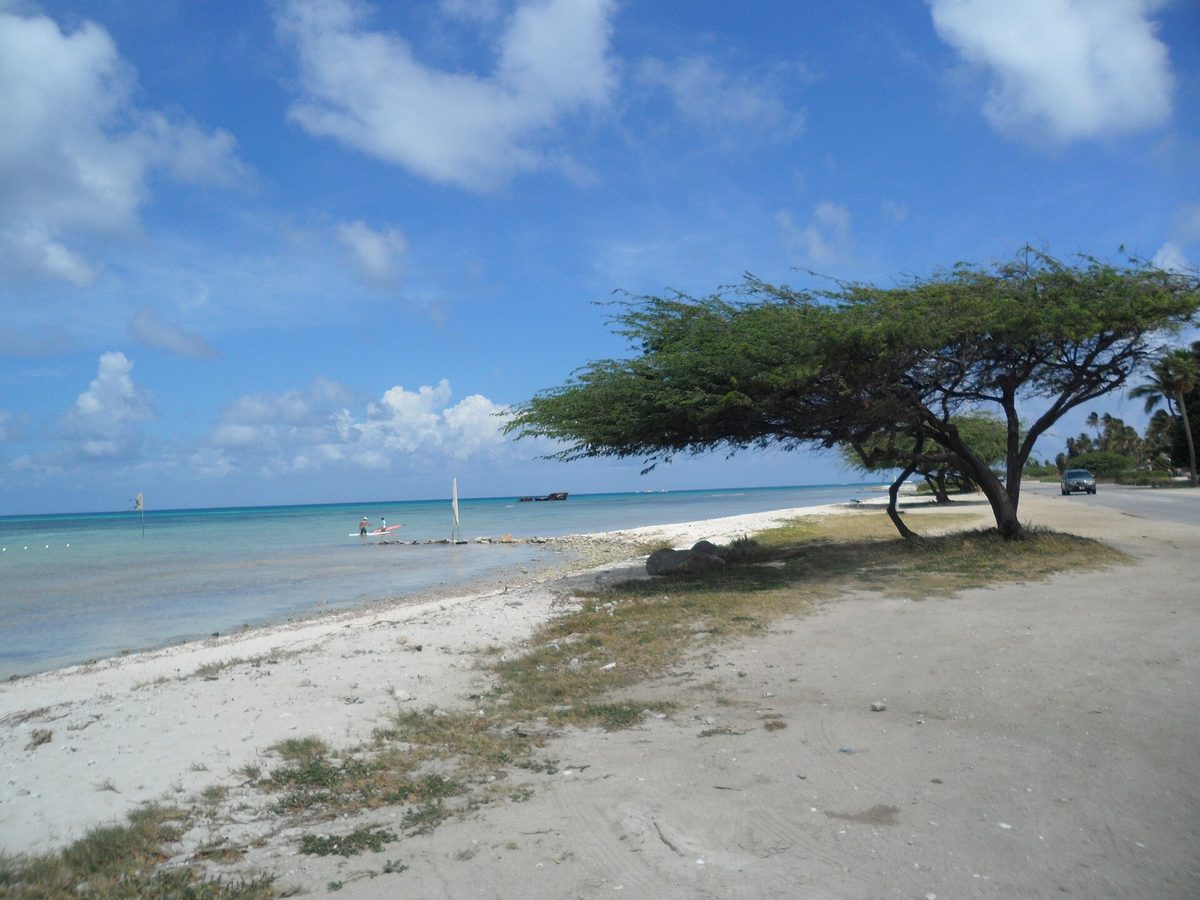
- Aruba’s windswept coastline with a divi-divi tree, the kind of scenery that draws visitors to the island — Photo: EgorovaSvetlana / CC BY-SA 4.0 via Wikimedia Commons.
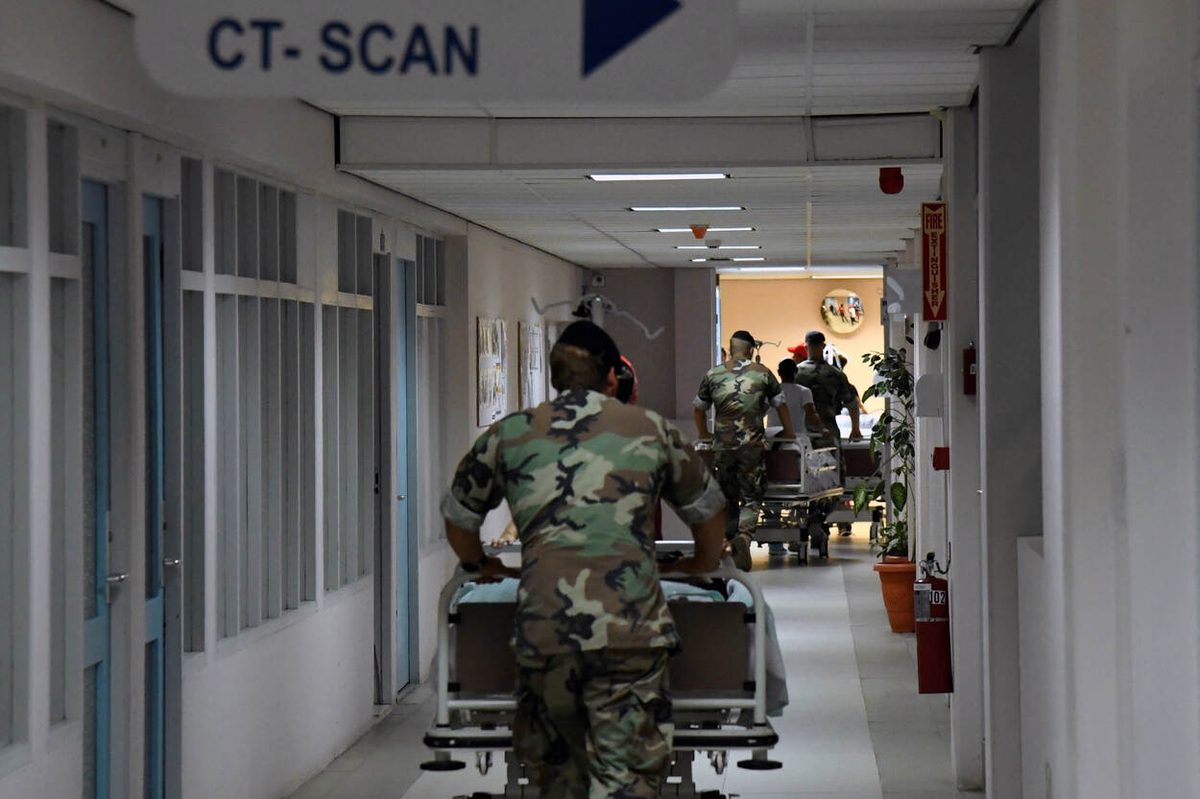
- Healthcare in Aruba, where foreign visitors generally pay out of pocket for medical care — Photo: Ministerie van Defensie (public domain/CC0) via Wikimedia Commons.
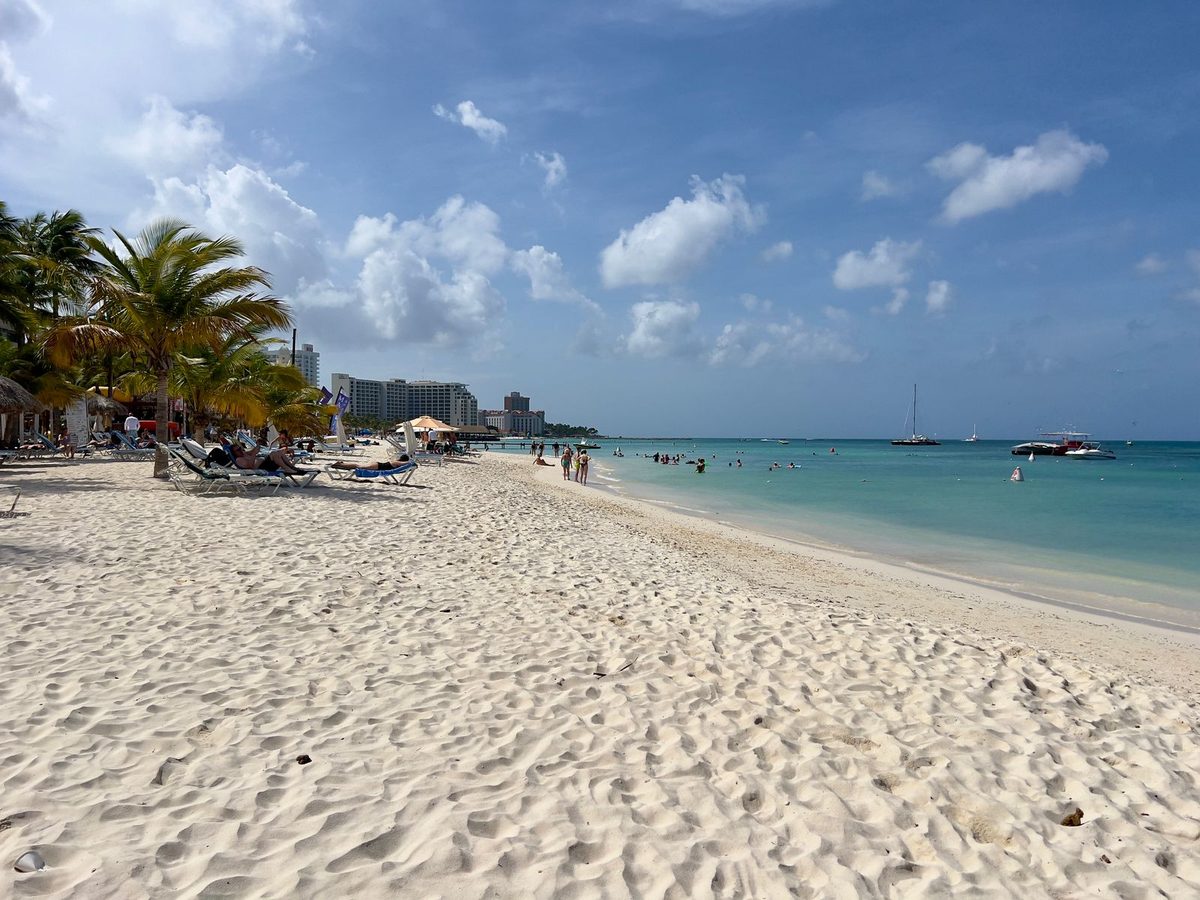
- Palm Beach Aruba with calm turquoise water and resort high-rises, a scene that shows why aruba travel insurance is worth considering for a beach holiday — Photo: Kwihi / CC BY 4.0 via Wikimedia Commons.
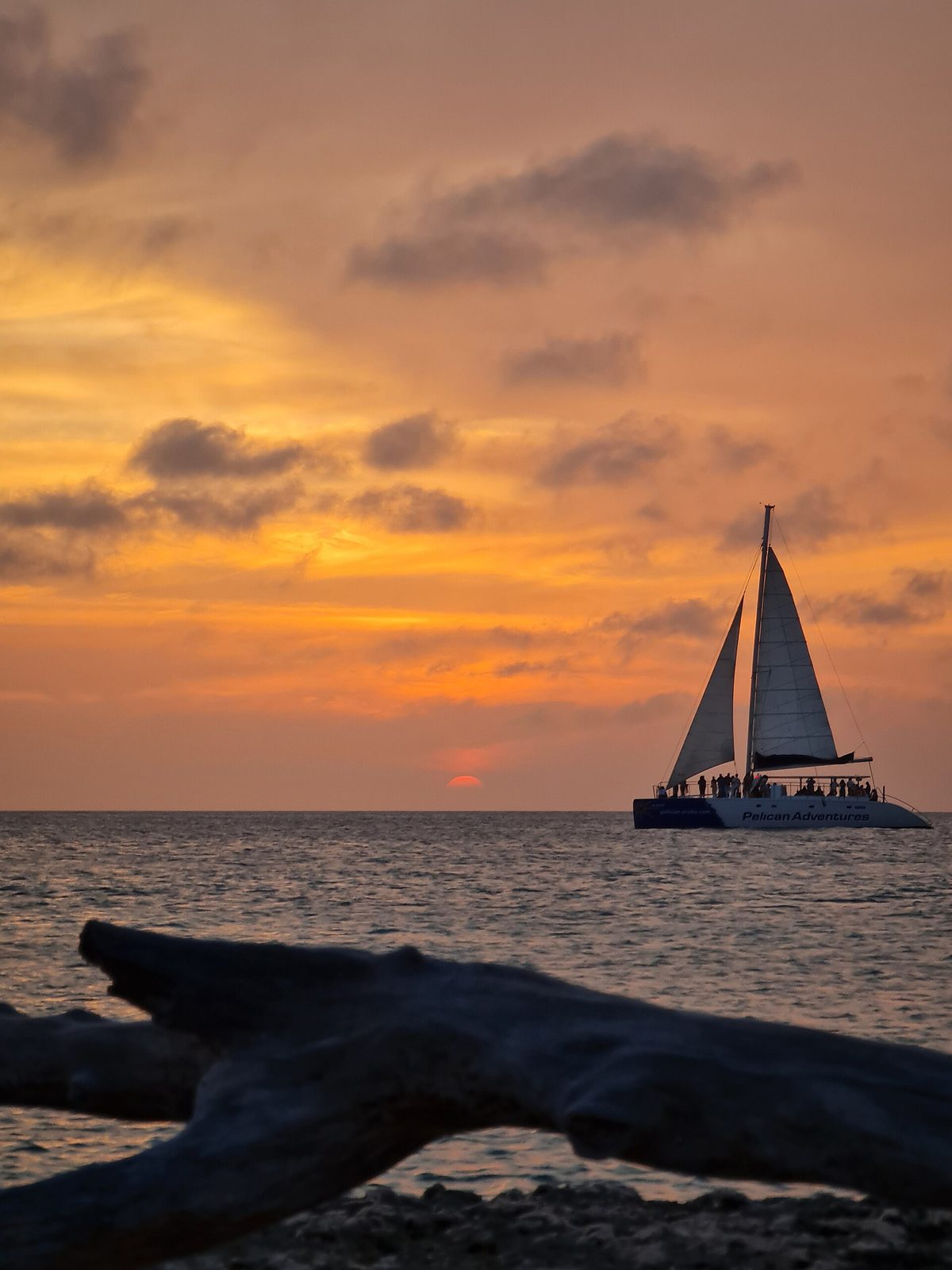
- A catamaran sailing off the coast of Aruba at sunset, the kind of water activity travelers check their insurance covers — Photo: Rarends297 (public domain/CC0) via Wikimedia Commons.
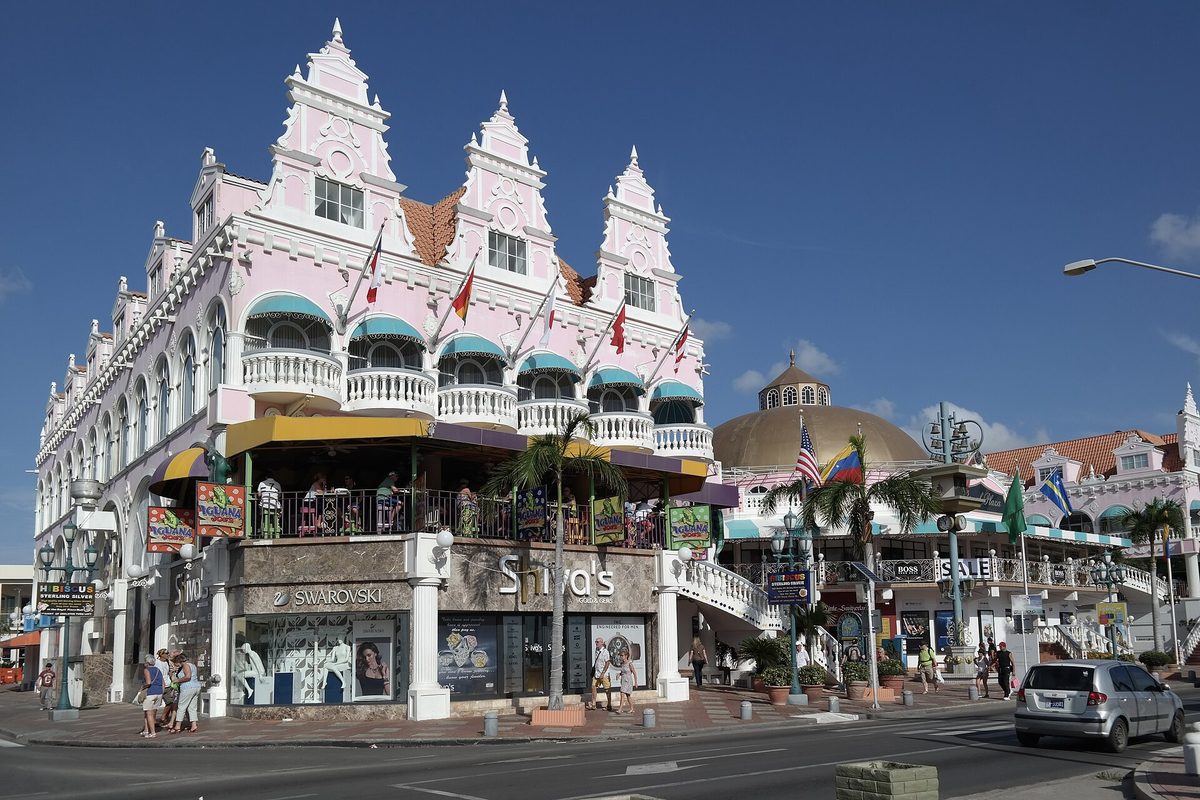
- Colorful colonial buildings in Oranjestad, the capital of Aruba — Photo: Choinowski / CC BY-SA 4.0 via Wikimedia Commons.