Do you need a passport for Aruba, and what on earth is this “ED card” everyone keeps mentioning? Here is the short answer: yes, if you are flying you need a valid passport, and every single traveler — adults, toddlers, and babies included — must also complete Aruba’s free online Embarkation/Disembarkation (ED) card. Those are the two pillars of the aruba passport requirements, and you can sort both before you leave home. Get them right and immigration is a five-minute formality; get them wrong and you can be turned away at your departure gate.
That is the whole game in a sentence, but the details are where trips get saved or sunk. This guide is a deep, document-by-document walkthrough of the aruba passport requirements that actually matter at the gate and at the immigration desk: how old your passport can be, how much validity you need, the step-by-step ED card process, the $20 sustainability fee and who is exempt, what customs lets you bring, and exactly how the rules shift if you are American, Canadian, British, or an EU citizen. We finish with the mistakes that trip people up and a real-question FAQ.
By the ArubaTourism.org team — Last updated June 2026.
Before we dig in: rules and fees can change, and Aruba has tweaked its entry process more than once in recent years. Treat this article as a thorough orientation, then confirm the live specifics on the official Aruba immigration / ED card site (edcardaruba.aw) before you travel. For the bigger-picture checklist that surrounds these documents, our pillar guide to Aruba travel tips and trip-planning essentials ties everything together.
Aruba entry documents at a glance: the quick answer
If you only read one section, read this one. Here is the document checklist for a typical leisure visitor arriving by air, with the deep dive on each item to follow.
| Document | Required? | Key detail |
|---|---|---|
| Valid passport | Yes (air travel) | Must be valid for your entire stay; not more than 10 years old; 6 months’ validity recommended. |
| Online ED card | Yes — everyone, all ages | Complete free at edcardaruba.aw within 7 days before arrival; one per traveler. |
| $20 sustainability fee | Yes (most air arrivals) | Paid inside the ED card by credit card; children under 8 and some others are exempt. |
| Return or onward ticket | Yes | Proof you will leave Aruba — a booked flight or cruise itinerary. |
| Proof of accommodation | Yes | Hotel/resort booking, rental address, or an invitation from a host. |
| Proof of sufficient funds | Yes | Evidence you can cover your stay (card, cash, or booking that includes meals). |
| Visa | Most visitors: No | US, Canadian, UK, EU and many other nationals do not need one. Some nationalities do. |
The crisp version: a valid passport plus an approved ED card are the two non-negotiables. The return ticket, accommodation, and funds are things an immigration officer can ask to see — usually they do not, but if you cannot produce them when asked, your entry can be refused. Pack the proof; hope you never need it.
The passport rules for Aruba, in plain English
A passport is the foundation of the aruba passport requirements, so it pays to understand it precisely rather than relying on the vague “you need a passport” line. Aruba is an autonomous country within the Kingdom of the Netherlands, and it applies Dutch-Caribbean entry rules. Three specifics catch travelers off guard.
Your passport must be valid for the whole stay (and ideally six months)
Aruba’s official rule is that your passport must be valid for the entire duration of your stay. That is more generous than the “six months beyond your trip” rule many countries impose — technically a passport that expires the week after you fly home can satisfy the letter of the Aruban rule. In practice, though, the Aruba Tourism Authority recommends carrying at least six months of validity beyond your travel dates, and here is the catch most people miss: your airline may enforce the stricter six-month standard at check-in even when Aruba does not. Airlines are fined for carrying improperly documented passengers, so they err on the side of caution. If your passport has under six months left, renew it before you book travel. Do not gamble on the technicality.
Your passport cannot be more than 10 years old
This is the rule almost nobody knows about, and it has stranded travelers at the gate. Aruban entry guidance states your passport cannot be more than 10 years old, counting from the issue date. Most modern adult passports are issued for a 10-year term, so this rarely bites — but some countries have at times issued passports with extended validity (for example, adding leftover months from an old passport onto a new one). If your document shows an expiry date more than 10 years after its issue date, the “extra” months beyond the 10-year mark may not be honored. Check the issue date, not just the expiry date.
A passport card is not a passport (for flights)
US travelers sometimes own a wallet-sized passport card. It is a real travel document, but it is valid only for land and sea border crossings — never for international air travel. If you are flying to Aruba, you need the full passport book. The card can come in handy for cruise travelers, which we cover below, but it will not get you onto a plane bound for Oranjestad.
The Aruba ED card, step by step
The Embarkation/Disembarkation card — the “ED card” — is the digital form that, alongside your passport, makes up the core of modern Aruba entry. It replaced the old paper card handed out on planes, and since a platform redesign in late 2024 the approval you receive is called a “qualifier” (you may also hear it described as the green checkmark or “OK to board”). Without it, your airline can refuse to board you.
Who needs an ED card? Everyone.
This is the single most important thing to internalize: the ED card is mandatory for every passenger traveling to Aruba by air, including infants and children. A family of four needs four separate ED cards. There is no “kids are covered by the parents’ form” exception. Build this into your pre-trip checklist so a sleeping toddler does not become a check-in crisis.
When to fill it out
You can submit the ED card within the seven days before your travel date to Aruba — not earlier. Many travelers do it three or four days out, once their plans are locked. Do not leave it to the airport: the form must be completed and the fee paid in advance, and you cannot reliably finish it at the check-in counter. A good rhythm is to complete it the same evening you do online check-in for your flight.
What information you need ready
The form takes roughly five minutes if you have your details on hand. Gather these first:
- Passport details — number, full name exactly as printed, nationality, date and place of birth, issue and expiry dates.
- Travel details — your inbound flight number, arrival date, and your departure date from Aruba.
- Accommodation — the name and address of your hotel, resort, or rental (or a host’s address).
- A credit card — Visa, Mastercard, or Discover — to pay the sustainability fee where it applies.
- An email address — your approval/qualifier confirmation is delivered by email.
The step-by-step
- Go to the official site, edcardaruba.aw. This is critical — see the warning below about copycat sites.
- Start a new application and enter each traveler’s passport and personal details. Complete one card per person.
- Add your flight or cruise itinerary and your Aruba accommodation address.
- Pay the $20 sustainability fee by credit card if it applies to you (more on exemptions next).
- Submit. The system processes your form and, when approved, issues your qualifier.
- Save and/or print the email confirmation. Have it ready — digitally or on paper — at airline check-in and on arrival in Aruba.

Warning: only use the official ED card site
Search “Aruba ED card” and you will find a swarm of third-party sites that offer to “help” you complete the form — for a fee, on top of the government charge. These are not affiliated with the Aruban government. The official form is free to complete and takes minutes; you do not need a middleman. Bookmark edcardaruba.aw and ignore look-alike domains. If a site is charging you extra to “submit” or “expedite” your ED card, you are on the wrong page.
The $20 sustainability fee: who pays and who is exempt
Since July 1, 2024, Aruba has charged a $20 sustainability fee on most visitors arriving by air. The money funds upgrades to the island’s wastewater treatment plants and infrastructure — part of Aruba’s broader push to protect the environment that makes it worth visiting in the first place. Practically speaking, you will not notice it as a separate transaction: since December 2024 the fee is collected inside the ED card flow, and you must pay it before your ED card is approved. No payment, no qualifier, no boarding.
How payment works
The fee is charged by credit card only — Visa, Mastercard, or Discover. Cash is not accepted, and you cannot pay it on arrival at the airport. On your statement the charge appears under “Aruba Wastewater,” the entity that administers the fund (so do not panic when you see an unfamiliar merchant name). Traveling as a group? Up to ten people’s fees can be paid together in a single transaction.
Who is exempt from the sustainability fee
Plenty of travelers do not have to pay, though many of them still need an ED card. You are generally exempt if you are:
- A child under 8 years old — still needs an ED card, just no fee.
- A same-day transit passenger — arriving and leaving Aruba for another destination on the same day.
- A registered Aruba resident on the island’s census.
- A crew member of an aircraft or ship entering on duty.
- A repeat visitor within the same calendar year — you pay once per 365 days per passport. Because the system cannot yet auto-detect repeat visitors, you may be charged again and have to request a refund from the administrator ([email protected]) with proof. Keep your receipts.
One nuance worth flagging: the fee is tied to your passport number. If you renew your passport mid-year, the system sees a “new” traveler and you may be charged again on your next visit. That is annoying but expected — budget the $20 if your passport has changed since your last trip.
Return ticket, accommodation, and funds: the documents officers can ask for
Beyond your passport and ED card, Aruban immigration law lets officers ask any visitor to demonstrate that they meet the conditions of entry. In day-to-day reality, most leisure travelers breeze through without showing any of these — but the officer has the right to ask, and “I didn’t bring it” is not an answer that helps you. Have the following ready, ideally saved offline on your phone.
Proof of onward or return travel
You must be able to show that you can leave Aruba and return to your country of departure or transit onward. The simplest proof is your booked return flight or cruise itinerary. A one-way ticket with no onward plan is a red flag at immigration anywhere, and Aruba is no exception. If your travel is open-ended, carry whatever documentation supports your eventual departure (a residence permit or visa for your next destination can also satisfy this).
Proof of accommodation
Have your hotel or resort confirmation, your vacation-rental booking and address, or — if you are staying with friends or family — an invitation and the host’s address. You already entered this on your ED card, so keep the same confirmation handy at the desk. If you are still deciding, our guide to where to stay in Aruba and our overview of Aruba all-inclusive resorts can help you lock in a booking before you fly.
Proof of sufficient funds
Officers may ask that you can financially support your stay. A credit card, some cash, or a prepaid all-inclusive booking all help demonstrate this. There is no published magic number, and again it is rarely checked for standard tourist stays — but if you are asked, being able to show a funded card or a paid-in-full resort booking resolves it instantly. Planning your budget in advance also makes this painless; see our breakdown of Aruba vacation costs.
Aruba passport requirements by nationality
The core documents are the same for almost everyone, but visa rules and a few quirks differ by where your passport was issued. Here is how it shakes out for the most common visitors. (If your nationality is not listed, check whether you need a Caribbean visa via the Government of the Netherlands before booking.)
| Nationality | Visa needed? | Passport & notes | Typical visa-free stay |
|---|---|---|---|
| United States | No | Valid passport book for air. Aruba hosts US Customs preclearance, so you clear US entry before flying home. Global Entry “on arrival” is available. | Up to 30 days, extendable |
| Canada | No | Valid passport book for air; same ED card and fee rules. | Up to 90 days within 180 |
| United Kingdom | No | Valid passport book; ED card and fee apply. | Up to 90 days within 180 |
| EU / Schengen | No | A Schengen visa does not cover Aruba; none is needed for EU nationals anyway. Dutch citizens have additional rights. | Up to 90 days within 180 |
United States travelers
For Americans flying in, the rule is simple: a valid US passport book, an ED card, and the fee. The pleasant surprise comes on the way home. Aruba is one of a handful of airports worldwide with US Customs and Border Protection preclearance — you complete US immigration and customs in Aruba before boarding, then land in the States as a domestic arrival with no further customs line. Aruba’s preclearance also participates in the Global Entry “on arrival” program, letting conditionally approved applicants finish their Global Entry interview while departing. It is one of the underrated perks of the route.
Canadian, UK, and EU travelers
Canadians, Britons, and EU nationals all enjoy visa-free entry for tourism, generally up to 90 days within a 180-day window (US visitors are admitted for an initial 30 days, which can be extended). The ED card and sustainability fee apply to everyone equally. One specific trap for European travelers: holding a Schengen visa does not grant entry to Aruba — the Caribbean parts of the Kingdom run a separate visa system. EU citizens do not need a visa at all, but visa-nationals living in Europe on a Schengen visa cannot use it to enter Aruba and must apply for a Caribbean visa.
Cruise vs. air: the rules are genuinely different
How you arrive changes which documents you need, and this is where a lot of confusion lives.
Arriving by air
Flying requires the full package: a valid passport book, an approved ED card for every traveler, and the sustainability fee where it applies. There are no shortcuts on the passport for air arrivals. If you are sorting out flights and the practicalities of arrival, our guide to getting to and around Aruba walks through airports, transfers, and on-island transport.
Arriving by cruise
Cruise rules are looser in two ways. First, on the passport: US citizens on a “closed-loop” cruise — one that starts and ends at the same US port — can typically sail with a government-issued photo ID plus a state-certified birth certificate, or use a passport card, instead of a passport book. (Even so, most cruise lines and seasoned travelers strongly recommend carrying a full passport in case you need to fly home unexpectedly from a foreign port.) Second, on the ED card: cruise passengers usually do not need to complete an ED card, because they are not typically processed through Aruba immigration the way air passengers are — and the sustainability fee is generally not charged to them either. The exception is vessels whose passengers are required to clear immigration; if you are unsure, ask your cruise line directly. Always confirm document requirements with your specific cruise line at booking, as their rules can be stricter than the legal minimum.
Aruba customs allowances: what you can bring in
Clearing immigration is one thing; customs is another. Aruba grants duty-free personal allowances to arriving travelers aged 16 and over. Stay within these and you owe nothing; exceed them and you pay import and excise duties on the excess.
| Category | Duty-free allowance (per person, 16+) |
|---|---|
| Cigarettes | 200 pieces or |
| Cigars | 25 pieces or |
| Cigarillos (max 3g each) | 50 pieces or |
| Tobacco | 250 grams |
| Spirits (distilled) | 1 liter |
| Other goods (personal use) | Up to an invoice value of AWG 400 (roughly USD 225) |
A few practical notes. The tobacco and alcohol allowances are “or,” not “and” within each line — you pick one tobacco option, not all of them. The allowances are for personal use, not for trade, and the exemption applies per individual rather than being pooled across a group. If you are carrying prescription medication, bring it in its original packaging with your prescription, and pack extra in case of travel delays. Declare anything over the limits honestly; the duties are modest, but undeclared goods can be confiscated. Larger sums of cash may need to be declared as well, so check the money-and-securities rules if you are carrying a significant amount.
Common Aruba document mistakes (and how to avoid them)
Most entry problems are not exotic — they are small oversights that snowball at the worst possible moment. Here are the ones that catch travelers most often.
- Forgetting an ED card for the kids. Every traveler needs one, including infants. Parents who assume children are “covered” get stopped at check-in. Do the whole family in one sitting.
- Filling out the ED card too early. The window is the 7 days before travel. Try it three weeks out and the system will not let you complete it for your dates.
- Using a copycat ED card website. Paying a third party for a free government form wastes money and risks your data. Only edcardaruba.aw is official.
- A passport with under six months’ validity. Aruba may accept it, but your airline might not. Renew early.
- Bringing only a passport card for a flight. Cards work at sea, not in the air. Flyers need the book.
- Assuming a Schengen visa covers Aruba. It does not. The Dutch Caribbean uses a separate visa system.
- No proof of onward travel. A one-way ticket invites questions. Carry your return or onward itinerary.
- Leaving the fee to the airport. The $20 must be paid inside the ED card, in advance, by credit card — never in cash on arrival.

Your pre-trip document timeline
Put these on the calendar and the paperwork side of your trip takes care of itself:
- As soon as you start planning: check your passport’s issue and expiry dates. Renew if it is close to expiring or near the 10-year mark.
- When you book: confirm flights (or cruise) and accommodation, and save the confirmations — they double as your proof of onward travel and lodging.
- 7 days before departure: complete the ED card for every traveler at edcardaruba.aw and pay the fee. Save the email confirmation.
- Night before / day of: do online check-in, and keep your passport, ED card qualifier, and booking confirmations together — on your phone and on paper.
With the documents sorted, the fun part begins. Map out your days with our Aruba itinerary guide, browse the island’s famous sands in our Aruba beaches roundup, and line up adventures from our things to do in Aruba list. Foodies can pre-plan with our Aruba restaurants guide, and timing-conscious travelers should skim the best time to visit Aruba before locking dates. For the full set of pre-departure pointers, our Aruba travel tips hub is the place to start.
Frequently asked questions about Aruba passport requirements
Do you need a passport for Aruba?
Yes — if you are flying, you need a valid passport book; an ID and birth certificate are not enough for air travel. The exception is US citizens on a closed-loop cruise (round-trip from the same US port), who may sail with a photo ID and birth certificate or a passport card. For any flight, the full passport book is required.
What is the Aruba ED card and is it mandatory?
The ED card is Aruba’s mandatory online Embarkation/Disembarkation form, required for every air passenger including infants. You complete it free at edcardaruba.aw within seven days before travel, pay the sustainability fee if it applies, and receive an emailed “qualifier” approval you must show at check-in and on arrival.
How much does the Aruba ED card cost?
The ED card form itself is free. However, most air arrivals must pay a $20 sustainability fee inside the form, by credit card. Children under 8, same-day transit passengers, registered residents, crew, and repeat visitors within the same calendar year are exempt, though they may still need to complete the card.
How long can my passport be expired or near-expiry for Aruba?
Your passport must be valid for your entire stay and cannot be more than 10 years old from its issue date. Aruba does not strictly require six months’ validity, but it is recommended and your airline may enforce it. To be safe, travel with at least six months of validity beyond your trip dates.
Do children and babies need their own ED card?
Yes. Every traveler needs an individual ED card regardless of age, including newborns. There is no family-grouped form. Children under 8 are exempt from the $20 sustainability fee but still require their own completed ED card, so build extra time into your pre-trip checklist for each child.
Do cruise passengers need an ED card or to pay the fee?
Usually not. Cruise passengers typically are not processed through Aruba immigration the same way air travelers are, so they generally skip both the ED card and the sustainability fee. The exception is vessels whose passengers must clear immigration. Always confirm with your specific cruise line, as their document rules can be stricter.
Do US citizens need a visa for Aruba?
No. US citizens do not need a visa for tourist stays and are typically admitted for up to 30 days, extendable on request. You still need a valid passport and an ED card. A bonus for Americans: Aruba has US Customs preclearance, so you clear US entry before your flight home and arrive in the States as a domestic passenger.
The bottom line
Aruba’s entry process sounds fussier than it is. Strip away the noise and it comes down to two essentials — a valid passport book for air travel and an approved ED card for every person in your party — plus a handful of supporting documents (return ticket, accommodation, funds) that you should carry but will rarely be asked for. Sort your passport early, complete the ED card in the seven-day window on the official site, budget the $20 fee, and you will walk off the plane and straight into your vacation. For everything else about planning the trip, keep our Aruba travel tips and essentials guide bookmarked, and if you are traveling as a family, our Aruba with kids guide has more on smoothing the journey with little ones.
Entry requirements, fees, and customs limits can change. This article reflects the rules as of 2026 — always confirm the current details on Aruba’s official immigration and ED card site (edcardaruba.aw) before you travel.
Photo credits
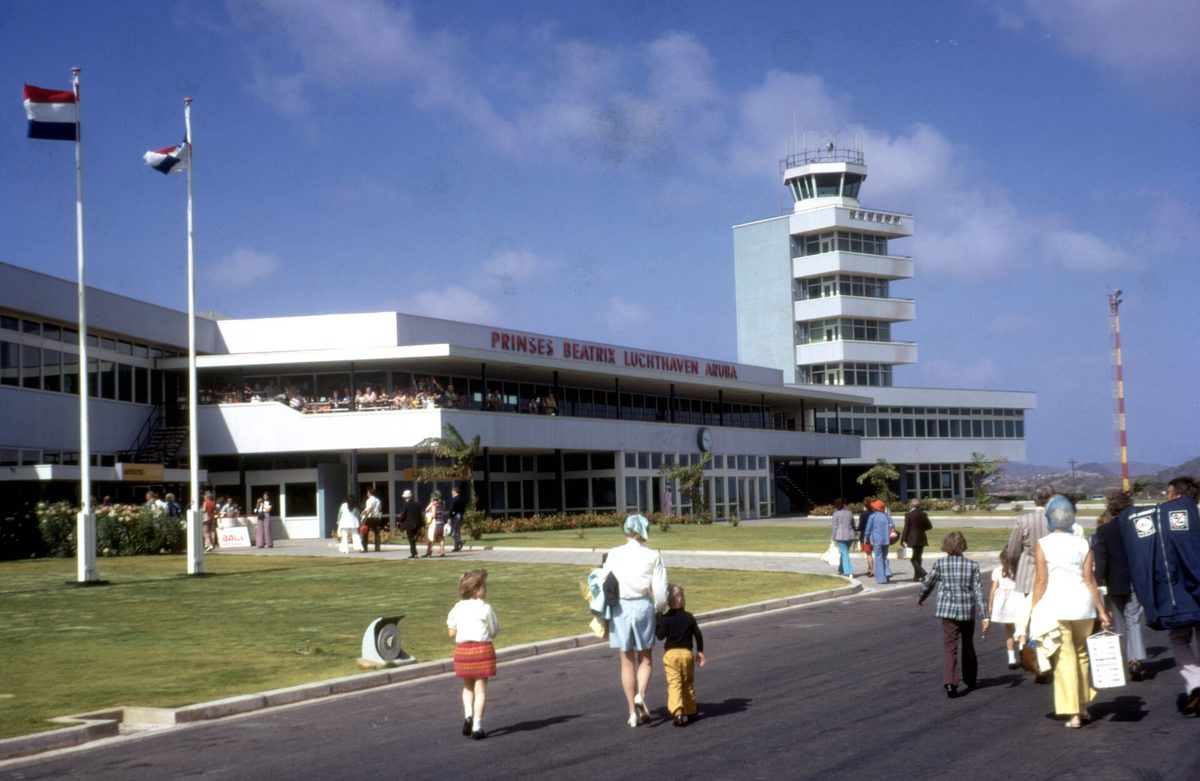
- Queen Beatrix International Airport in Aruba, the arrival point where aruba passport requirements and ED card approval are verified — Photo: Versageek / CC BY 3.0 via Wikimedia Commons.
- Colorful Dutch-Caribbean buildings in Oranjestad, Aruba’s capital — Photo: Choinowski / CC BY-SA 4.0 via Wikimedia Commons.
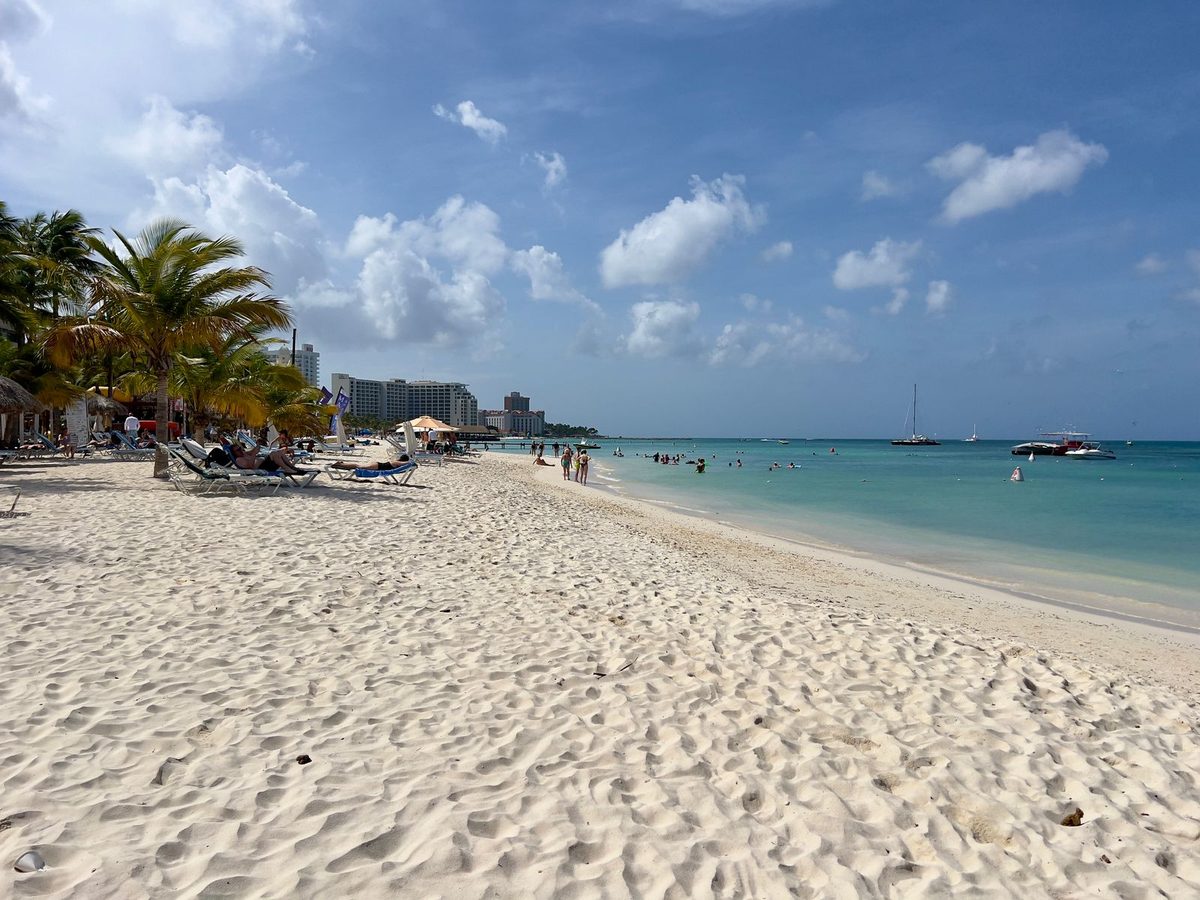
- Palm Beach Aruba lined with high-rise resorts, palm trees and turquoise water — Photo: Kwihi / CC BY 4.0 via Wikimedia Commons.
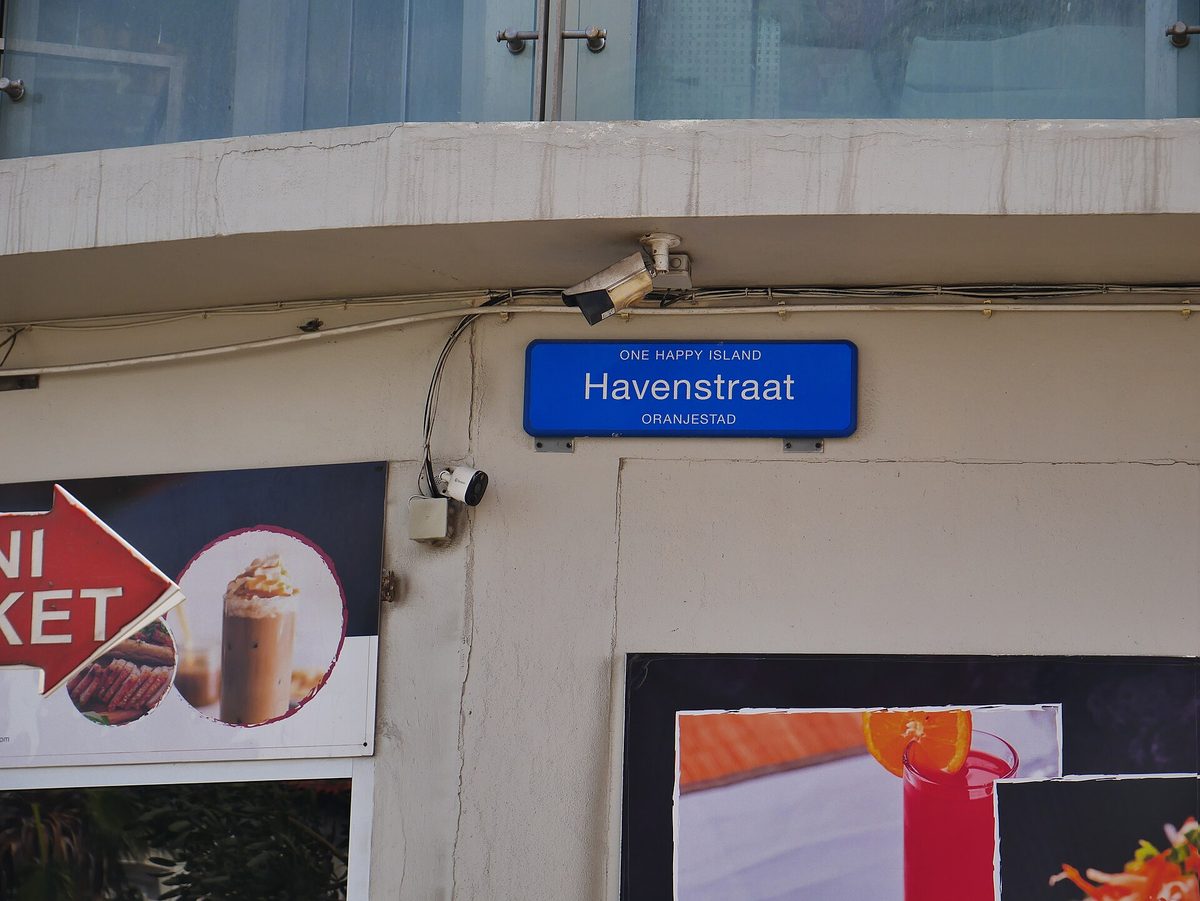
- A Dutch-style street sign in Oranjestad, Aruba reading Havenstraat, One Happy Island — Photo: Ginelly.Q (CC0) via Wikimedia Commons.
- Eagle Beach Aruba with its iconic divi-divi tree and turquoise Caribbean water — Photo: Jason Boldero from UK / CC BY 2.0 via Wikimedia Commons.