Plenty of visitors spend an entire week in Aruba and fly home without ever touching a single florin. They pay for the rum punch, the rental Jeep, the snorkel trip and the airport coffee in plain US dollars, and nobody so much as blinks. That is the quietly unusual reality of money on this island: it has its own proud national currency, yet runs day-to-day on greenbacks the way most of the Caribbean only wishes it could.
So before you stress about exchange counters, here is the headline on aruba currency. The official money is the Aruban florin, abbreviated AWG or written Afl. It is locked to the US dollar at roughly 1.79 florin to US$1, and US dollars are accepted almost everywhere — hotels, restaurants, shops, taxis and tours. You can land with a wallet of American cash and a normal bank card and be perfectly equipped.
Quick answer: Aruba’s official currency is the Aruban florin (AWG / Afl.), pegged at about 1.79 to the US dollar. US dollars are taken island-wide, so most American visitors never need to exchange money. Bring some small US bills for tips and taxis, carry a card with no foreign-transaction fee for bigger purchases, and expect any change to come back in florin.
By the ArubaTourism.org team — Last updated June 2026.
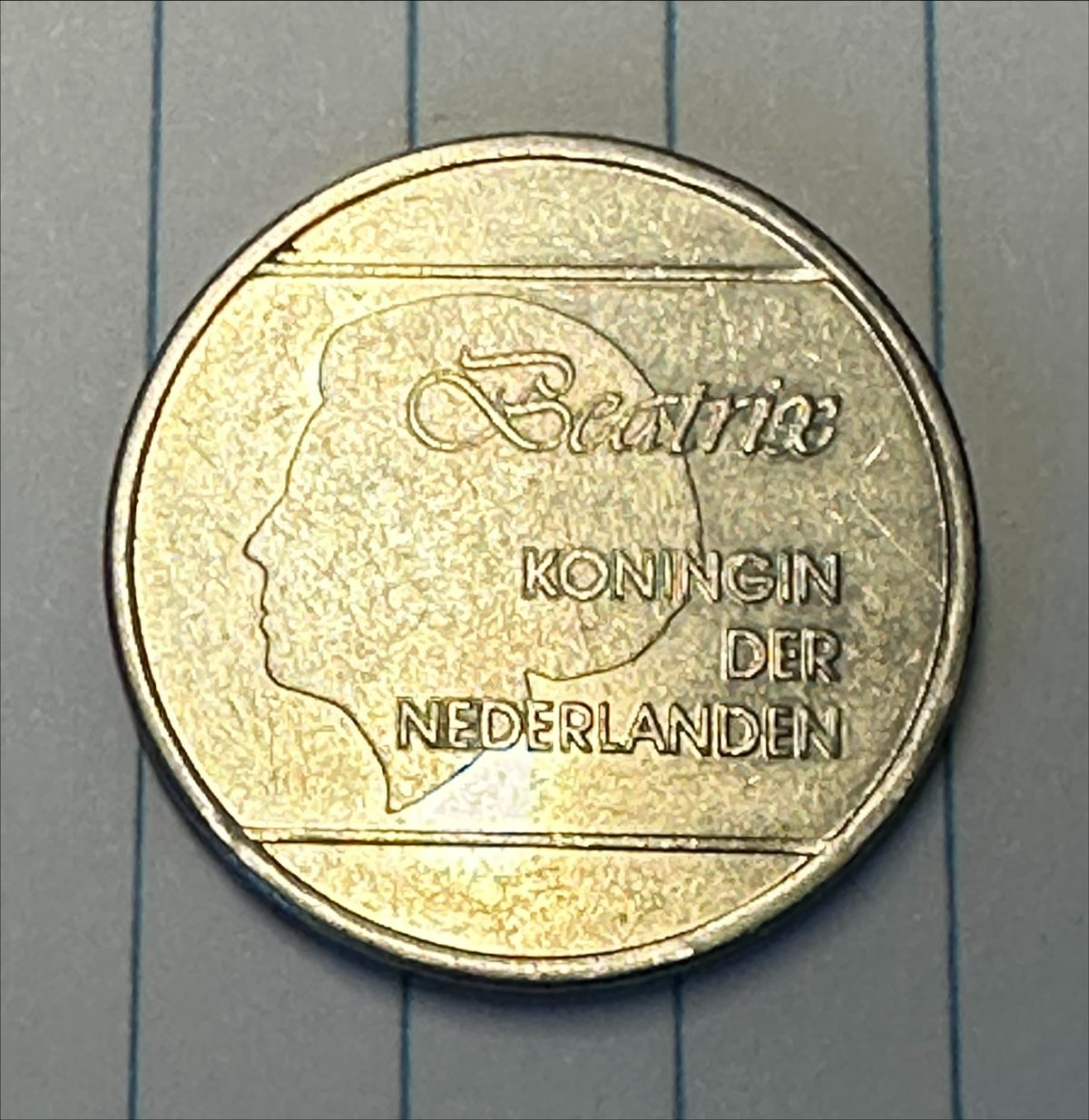
Aruba currency at a glance
If you only read one section, make it this one. The table below is the cheat sheet most travelers actually want — what the money is, how it converts, and where each form of payment shines. Treat every rate here as a 2026 ballpark and check a live converter close to your trip; the peg is fixed, but the small rounding rates shops use drift a little.
| Question | The short answer |
|---|---|
| Official currency | Aruban florin (AWG, written Afl. or ƒ) |
| Pegged to | US dollar, fixed at about 1.79 florin = US$1 |
| Do US dollars work? | Yes — accepted essentially everywhere |
| Typical shop rate for USD | Around Afl. 1.75–1.80 per dollar |
| Change given in | Usually florin (sometimes a mix) |
| Cards accepted? | Visa and Mastercard widely; Amex less so |
| ATMs dispense | Florin, and at some machines US dollars too |
| Service charge | Often 10–15% added to restaurant bills |
| Tipping norm | 15–20% if no service charge; round up if it is |
| Need to exchange money? | Almost never, if you carry US dollars |
A quick florin-to-dollar conversion reference
Because the peg is fixed, the math never moves much. Here is a rough ready-reckoner for converting florin prices back into dollars in your head (figures rounded for ease, based on the ~1.79 peg, accurate as of 2026):
| Aruban florin (Afl.) | Approx. US dollars |
|---|---|
| Afl. 5 | about US$2.80 |
| Afl. 10 | about US$5.60 |
| Afl. 20 | about US$11.20 |
| Afl. 50 | about US$28 |
| Afl. 100 | about US$56 |
| Afl. 180 | about US$100 |
The shortcut locals and regulars use: a florin is worth a touch more than half a dollar, so halve the florin price and add a little and you are within a few cents of the truth.
Meet the Aruban florin (AWG)
The Aruban florin has been the island’s official money since 1986, the year Aruba became a separate, autonomous country within the Kingdom of the Netherlands. It replaced the Netherlands Antillean guilder at par and is issued and managed by the Central Bank of Aruba (Centrale Bank van Aruba) in Oranjestad. You will see it written three ways and they all mean the same thing: the ISO code AWG, the local abbreviation Afl., and the florin symbol ƒ. One florin divides into 100 cents.
In your hand, the cash comes as banknotes of 10, 25, 50, 100, 200 and 500 florin. The current series, introduced by the Central Bank in 2019, is genuinely lovely — bright, modern notes celebrating Aruba’s wildlife, music and landscape, from the burrowing owl (the shoco) to local instruments. Coins run 5, 10, 25 and 50 cents plus 1, 2½ and 5 florin. Two of them are conversation pieces: the chunky 50-cent piece is square, nicknamed the yotin, and the 2½-florin coin is a thick, satisfying disc that visitors love to take home.
You do not need to memorize any of this to spend money here. But knowing the denominations helps you sanity-check change and avoid leaving an accidental large note as a “tip.”
The dollar peg: why the math is so easy
Here is the single most useful fact about money in Aruba. The florin is pegged — formally fixed — to the US dollar. The official rate the Central Bank holds is roughly 1.79 florin to US$1 (you will sometimes see 1.78 or 1.80 quoted for cash transactions). Because it is a peg rather than a floating rate, it does not bounce around day to day the way the euro or pound do against the dollar. That stability is deliberate: Aruba’s economy lives and breathes US tourism, so a predictable dollar rate keeps prices legible for the millions of American visitors who arrive each year.
What it means in practice: a florin is worth a little over half a US dollar, and that barely changes from one year to the next. When you see a menu priced at Afl. 45, you can reliably read it as “about 25 dollars” and move on. No mental gymnastics, no checking the rate every morning. If you want to plan numbers for the whole trip, our companion guide to the real cost of an Aruba vacation breaks down what a day actually adds up to.
One nuance worth knowing: the official peg (1.79) and the rate a shop gives you for cash dollars (often 1.75 to 1.80) are slightly different numbers. That gap is not a scam — it is just rounding and the merchant’s small margin. On a coffee it is invisible. On a big-ticket purchase, paying by card (which converts at the bank rate) can be a hair more favorable than handing over cash dollars and taking florin change.
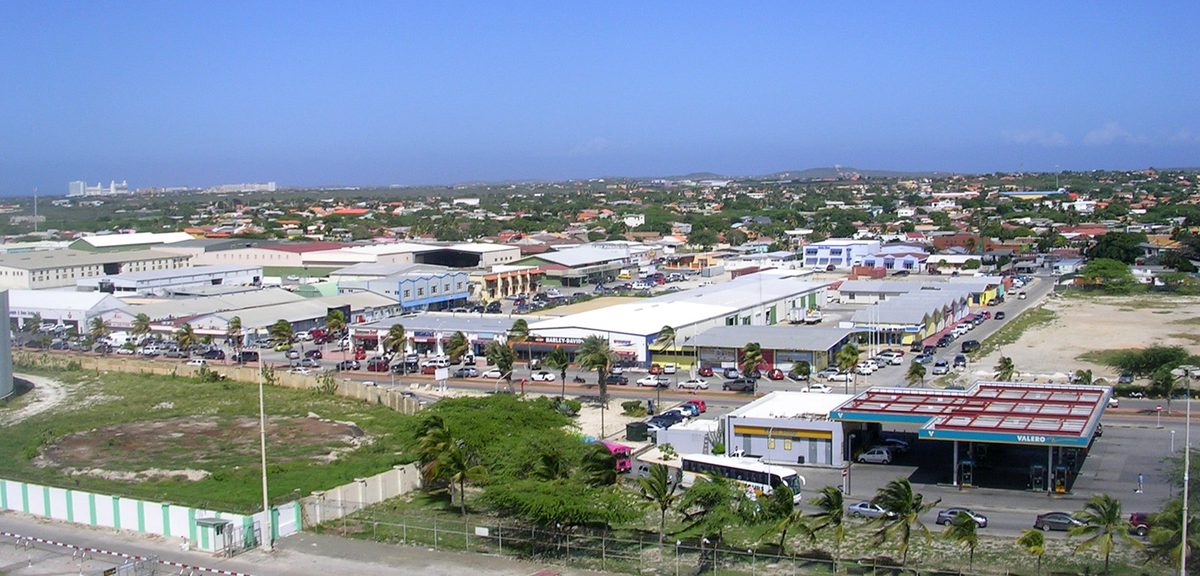
Paying in US dollars: the honest truth
Yes — you can pay for almost everything in Aruba with US dollars, and most American travelers do. Resorts, restaurants, dive shops, supermarkets, taxis, excursion operators and the big stores in Oranjestad all take greenbacks without a second thought. Many businesses even print prices in both florin and dollars, and ATMs, hotel bills and tour invoices are frequently quoted straight in USD. If your home currency is the dollar, Aruba is about as friction-free as international travel gets.
That said, a few real-world rules keep things smooth:
- Carry small bills. Ones, fives, tens and twenties are gold here — ideal for taxis, tips, beach vendors and quick snacks. Breaking a fifty for a US$6 smoothie is awkward for everyone.
- Big bills get scrutiny. Because of global counterfeiting, some shops are wary of US$50 and US$100 notes and may decline them or check carefully. Keep your stash in smaller denominations.
- US coins are useless. Vendors take US paper money but generally will not accept US coins. Any coin change you receive will be in florin cents.
- Your change comes back in florin. Pay with a US$20 for a US$13 item and you will likely get florin coins and notes back. This is normal — see the next section for the smart way to handle it.
ATMs in Aruba: getting cash and withdrawal tips
ATMs are easy to find. There are well over 50 machines across the island, concentrated where tourists are: downtown Oranjestad, the Palm Beach and Eagle Beach hotel strips, the cruise terminal, the airport, and inside or beside the major banks and malls. Most carry the familiar Cirrus, Maestro, Visa and Mastercard networks, and the on-screen prompts switch between English, Dutch, Spanish and Papiamento.
By default, machines dispense Aruban florin. Some — particularly at the airport, bank branches and big resorts — also let you choose US dollars, which is handy if you would rather keep your cash in greenbacks. A few withdrawal habits will save you real money:
- Withdraw larger amounts, less often. You will usually pay two fees on each withdrawal — one from the Aruban bank operating the ATM and one from your home bank. Those flat fees can total around US$5–10 per transaction, so three small withdrawals cost far more than one larger one.
- Always choose to be charged in florin (or USD), not your home currency. If the screen offers to bill you in your home currency “for convenience,” decline. That is dynamic currency conversion, and the built-in exchange markup is consistently worse than letting your own bank do the conversion.
- Use bank-attached machines when you can. ATMs physically at a bank or inside a mall tend to be better maintained and a little safer than standalone units in dim corners.
- Tell your bank you are traveling. A surprise Caribbean withdrawal can trip a fraud freeze. A two-minute travel notice (or a toggle in your banking app) avoids a locked card far from home.
- Know your daily limit. Many machines cap withdrawals per transaction; plan around it if you need a larger sum for, say, a cash-only vendor.
Aruban bank branches are generally open Monday to Friday, roughly 8 a.m. to 4 p.m., with some keeping longer Friday hours. You rarely need to go inside — the ATMs do almost everything a visitor requires.
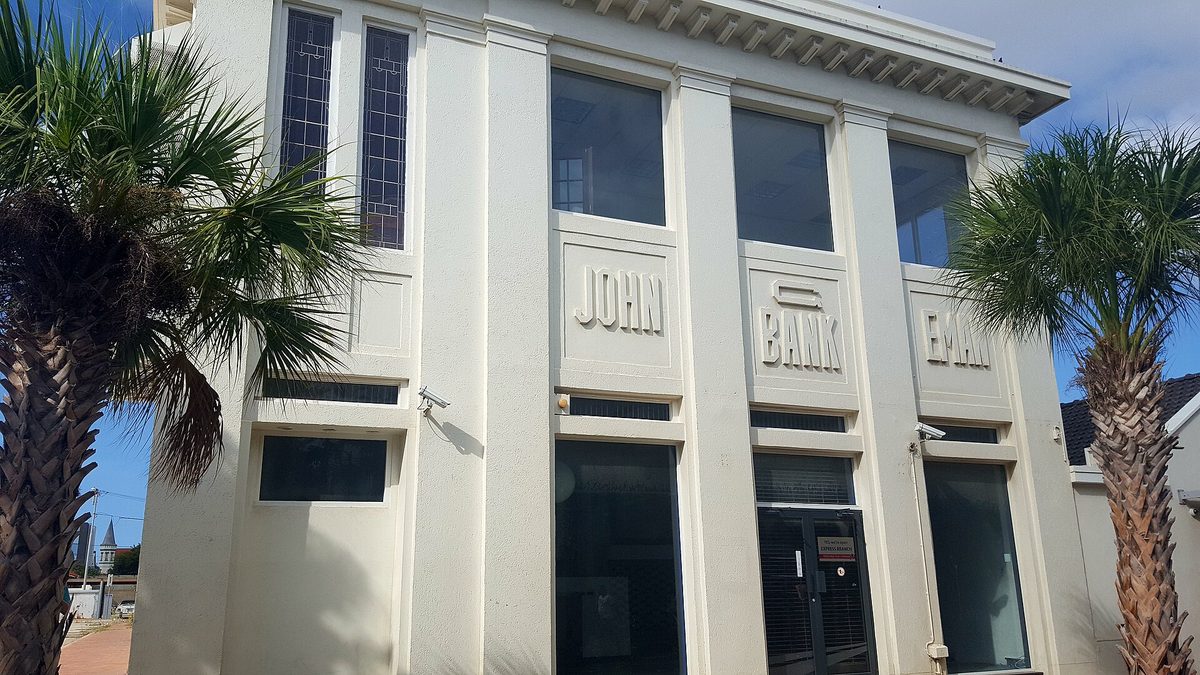
Credit and debit cards (and those foreign-transaction fees)
Cards are widely accepted across Aruba, and for most visitors they are the backbone of how they pay. Visa and Mastercard are taken almost everywhere; American Express and Discover work at many larger hotels and restaurants but are less universal, so do not rely on Amex alone. Contactless and chip-and-PIN are standard at established businesses. Smaller local eateries, food trucks, beach vendors and some taxis are cash-preferred or cash-only, which is the main reason to keep some bills on you.
The catch with cards is not acceptance — it is fees. Two to watch:
- Foreign-transaction fees. Many US cards add roughly 3% to every purchase made outside the country. Over a week of resort dinners and excursions that quietly adds up. A travel-friendly card with no foreign-transaction fee is the single easiest money-saver for an Aruba trip — bring one if you have it.
- Dynamic currency conversion, again. When a card terminal asks whether to charge in US dollars or florin, choose florin (the local currency). Picking dollars hands the conversion to the merchant’s processor at a poorer rate. Let your own card network convert.
A sensible setup most travelers land on: one no-fee card as your everyday spender, a second card stashed separately as a backup, plus a modest float of US cash. That covers the high-end (cards) and the cash-only edges (vendors, tips) without carrying a brick of bills.
How change works — and the smart way to handle it
This trips up first-timers more than anything else, so it is worth a clear explanation. When you pay in US dollars, your change usually comes back in florin (or sometimes a mix of dollars and florin). The merchant applies their dollar rate — commonly somewhere around Afl. 1.75 to 1.80 — to work out what they owe you, and hand it over in local money.
That is completely normal and not a rip-off. But it does mean that if you pay for everything in cash dollars, you will steadily accumulate florin you cannot spend back home. Three ways to stay ahead of it:
- Spend the florin first. Once you have local notes, use them for your next few purchases before reaching for more dollars. Aim to land at the airport on departure day with your florin nearly gone.
- Use florin for the small stuff. Tips, taxis, water, snacks and beach rentals are the perfect place to offload coins and small notes.
- Do not over-withdraw. Leftover florin is only worth re-converting in bulk; in small amounts it is just a souvenir. Take out what you will realistically use.
Coins are the one thing you genuinely cannot convert back at home, so let the loose florin change fund your last beach day rather than ride home in a drawer.
Tipping and the 10–15% service charge
Tipping in Aruba follows broadly American habits, with one twist you must check on every restaurant bill: the service charge. Many restaurants automatically add a charge of around 10% to 15% to your check. That money is shared among the staff, so when it is already on the bill, an additional tip is optional — rounding up or adding a few extra percent for genuinely great service is a kind gesture, not an obligation.
The mistake to avoid is tipping twice without realizing it: glance at the itemized bill for wording like “service charge,” “servicio” or a pre-added gratuity before you add 20% on top out of reflex. If there is no service charge, then the usual 15–20% applies, just as it would at home.
Quick reference for everyday tipping (in either dollars or the florin equivalent):
| Who | Customary tip |
|---|---|
| Restaurant server (no service charge) | 15–20% |
| Restaurant server (service charge added) | Optional; round up or add ~5% |
| Bartender | US$1–2 per drink, or 15% |
| Taxi driver | Round up, or about 10% |
| Housekeeping | US$2–5 per day |
| Tour guide / dive master | 10–20% of the tour price |
| Bellhop / porter | US$1–2 per bag |
Small US bills are the easiest tipping currency because everyone can use them, but florin is equally welcome. For more on dining etiquette and where to eat, see our guide to Aruba restaurants.
Exchanging money: why you usually don’t need to
Here is the section most currency guides bury, so we will say it plainly: most US visitors never need to exchange any money in Aruba. Between dollars being accepted island-wide and ATMs dispensing florin on demand, formal currency exchange is largely redundant for Americans. If you arrive with US cash and a card, you are already set.
There are a few exceptions:
- You are coming from outside the dollar zone. If you hold euros, pounds, Canadian dollars or another currency, you will want either US dollars or florin. Withdrawing florin from an ATM on arrival is typically cheaper and simpler than exchanging cash, thanks to better rates.
- You want a pocket of florin for cash-only spots. An ATM withdrawal handles this in seconds.
If you do exchange, a couple of ground rules apply everywhere: skip the airport and hotel-desk exchange counters — captive locations with little competition consistently offer the worst rates — and never accept dynamic currency conversion that bills you in your home currency. Banks in Oranjestad will exchange money, but for the small amounts a typical traveler needs, an ATM almost always wins on convenience and cost. For broader trip logistics, our overview of getting to and around Aruba covers the airport, taxis and car rental, where a little cash comes in handy.
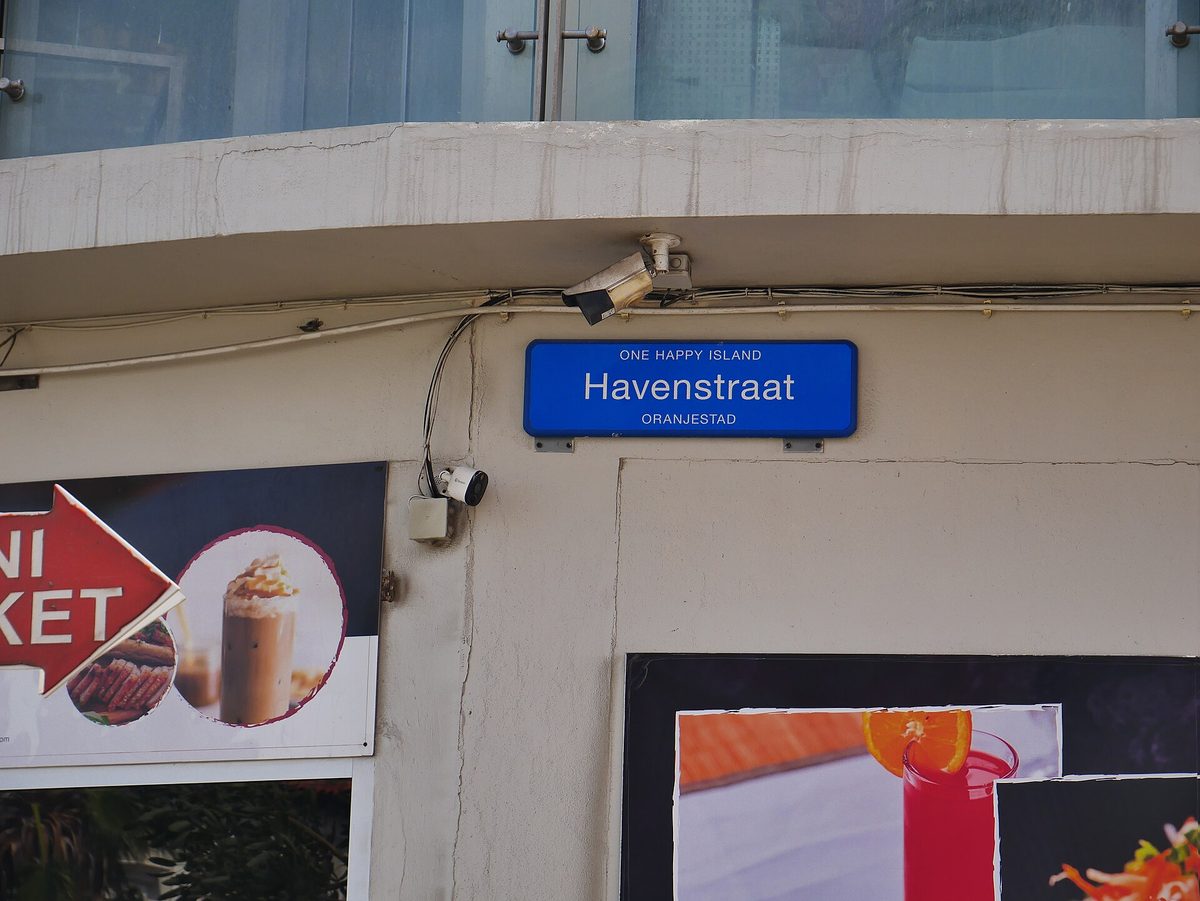
Cash vs card: the strategy that just works
You do not have to choose one or the other — the winning play in Aruba is a deliberate blend. Cards handle the big, secure, trackable spending; cash smooths the small and the local. Here is a simple framework:
| Situation | Best payment | Why |
|---|---|---|
| Hotel, resort, big restaurant | No-fee credit card | Secure, earns rewards, best conversion |
| Excursions & dive shops | Card or USD | Most take both; confirm when booking |
| Taxis | US cash (small bills) | Many are cash-only; fixed-rate fares |
| Tips & housekeeping | Small US bills or florin | Easy, expected, universally usable |
| Beach vendors, food trucks, markets | Cash (USD or florin) | Often no card terminal |
| Supermarkets & pharmacies | Card | Quick, accepted, itemized |
A practical rule of thumb: keep US$100–150 in small bills on you for the cash-only corners of a typical day, lean on a no-fee card for everything else, and top up florin from an ATM only if a specific plan (a remote beach shack, a local market) calls for it. Planning where you will be each day helps you carry the right mix — our Aruba itinerary planner and things to do in Aruba guide are useful for that.
Counterfeits, scams and staying money-safe
Aruba is one of the safest, most relaxed islands in the Caribbean, and money-related crime against tourists is uncommon. The risks that exist are the ordinary, manageable kind:
- Counterfeit awareness cuts both ways. Shops scrutinize large US notes because of global forgery, which is why US$50s and US$100s sometimes get a careful look or a polite refusal. Carrying smaller bills sidesteps the issue entirely.
- Decline dynamic currency conversion. Not a crime, but the most common way travelers quietly overpay. Always choose the local currency (florin) on card terminals and ATMs.
- Use sensible ATM hygiene. Favor machines at banks, malls and busy resort areas; shield the keypad; and give any reader that looks loose, bulky or tampered with a miss.
- Count your change. With dollars in and florin out, an honest mistake is easy on both sides. A quick check protects everyone.
- Split your money. Keep cards and cash in two places, and use the in-room safe for the bulk of your bills and your backup card.
For the full picture on staying secure on the island, see our broader Aruba travel tips and essentials hub.
Budgeting basics: what money actually buys here
Aruba is not a budget Caribbean island — it sits at the comfortable, higher-end of the region, partly because nearly everything is imported. Groceries, for instance, typically run a little higher than US prices. Knowing that going in helps you set expectations and avoid sticker surprise at the resort restaurant.
Rough, hedge-everything ballparks for 2026 (always sanity-check against current menus and listings):
| Item | Typical price (approx.) |
|---|---|
| Bottle of water / soft drink | US$2–4 |
| Casual lunch for one | US$15–25 |
| Sit-down dinner for two (no alcohol) | US$70–120 |
| Cocktail at a beach bar | US$10–15 |
| Taxi, airport to Palm Beach | US$30–40 (fixed fares) |
| Half-day group excursion | US$50–100 per person |
Where you stay shapes your daily cash needs as much as anything. An all-inclusive front-loads food and drink onto your card before you arrive; a condo or villa means more day-to-day spending. Compare the trade-offs in our guides to where to stay in Aruba and Aruba all-inclusive resorts, and time your visit with the best time to visit Aruba. A night out? Our Aruba nightlife guide flags where cards work and where to bring cash, and the island’s famous sands are covered in our Aruba beaches guide.
Aruba currency FAQ
What currency does Aruba use?
Aruba’s official currency is the Aruban florin, abbreviated AWG or written Afl. (symbol ƒ). It has been the national money since 1986 and is issued by the Central Bank of Aruba. In practice, US dollars are also accepted almost everywhere on the island, so most American visitors use a mix of dollars and the florin they receive as change.
Do they take US dollars in Aruba?
Yes. US dollars are accepted essentially island-wide — at hotels, restaurants, shops, taxis and tours. You can comfortably travel using US cash and a card without exchanging anything. Two small caveats: some businesses are cautious with US$50 and US$100 bills, and US coins are generally not accepted, so carry small denominations.
What is the Aruba florin to USD exchange rate?
The florin is pegged to the US dollar at roughly 1.79 florin to US$1, and because it is a fixed peg the rate barely moves over time. Shops often round to about Afl. 1.75–1.80 when you pay in cash dollars. As of 2026 these figures are a reliable guide, but it is always worth a quick check of a live converter before you travel.
Should I exchange money before traveling to Aruba?
If you are coming from the United States, usually no — dollars are accepted everywhere and ATMs dispense florin on demand. If you hold another currency, such as euros or pounds, withdrawing florin from an Aruban ATM on arrival is typically cheaper than exchanging cash. Either way, avoid airport and hotel exchange desks, which offer the poorest rates.
Can I use credit cards everywhere in Aruba?
Visa and Mastercard are accepted at the vast majority of hotels, restaurants and shops, while American Express is more hit-or-miss. Smaller eateries, beach vendors, food trucks and some taxis prefer cash. Bring a card with no foreign-transaction fee, always choose to be charged in florin rather than your home currency, and keep some small bills for the cash-only corners.
What is the best currency to bring to Aruba?
For most visitors, US dollars in small bills plus a no-foreign-fee card is the ideal combination. You will rarely need to buy florin in advance; any you require is easiest to pull from an ATM once you arrive. Keep larger US notes to a minimum, since some merchants scrutinize or decline US$50 and US$100 bills.
Do you tip in Aruba, and is service included?
Many restaurants add a service charge of around 10–15%, which is shared among staff; when it is included, an extra tip is optional. If there is no service charge, 15–20% is customary. For bartenders, taxis, housekeeping and guides, small US bills or florin both work perfectly. Always check the bill so you do not tip twice by accident.
The bottom line on money in Aruba
Aruba makes spending money refreshingly simple. The florin is the official currency and a genuinely beautiful one worth a closer look, but the US dollar does the heavy lifting for most visitors, the peg keeps the math steady, and ATMs and cards fill in the rest. Arrive with a stack of small US bills, a fee-free card, and the knowledge that your change will come back in florin, and you will glide through a week here without a single money headache. For everything else about preparing for the island — safety, packing, getting around and more — start with our Aruba travel tips and essentials guide, the parent hub for this whole series.
Photo credits
- A genuine Aruban florin coin bearing Queen Beatrix, part of the island’s aruba currency — Photo: Mcmennemen (CC0) via Wikimedia Commons.
- Aruba’s bustling commercial district, where shops and supermarkets quote prices in both florin and US dollars — Photo: roger4336 / CC BY-SA 2.0 via Wikimedia Commons.
- A Havenstraat street sign in Oranjestad, the walkable shopping heart of Aruba’s capital — Photo: Ginelly.Q (CC0) via Wikimedia Commons.
- The historic Eman Bank building in Oranjestad; Aruba’s banks run the ATMs that dispense florin island-wide — Photo: Caribiana / CC BY-SA 4.0 via Wikimedia Commons.
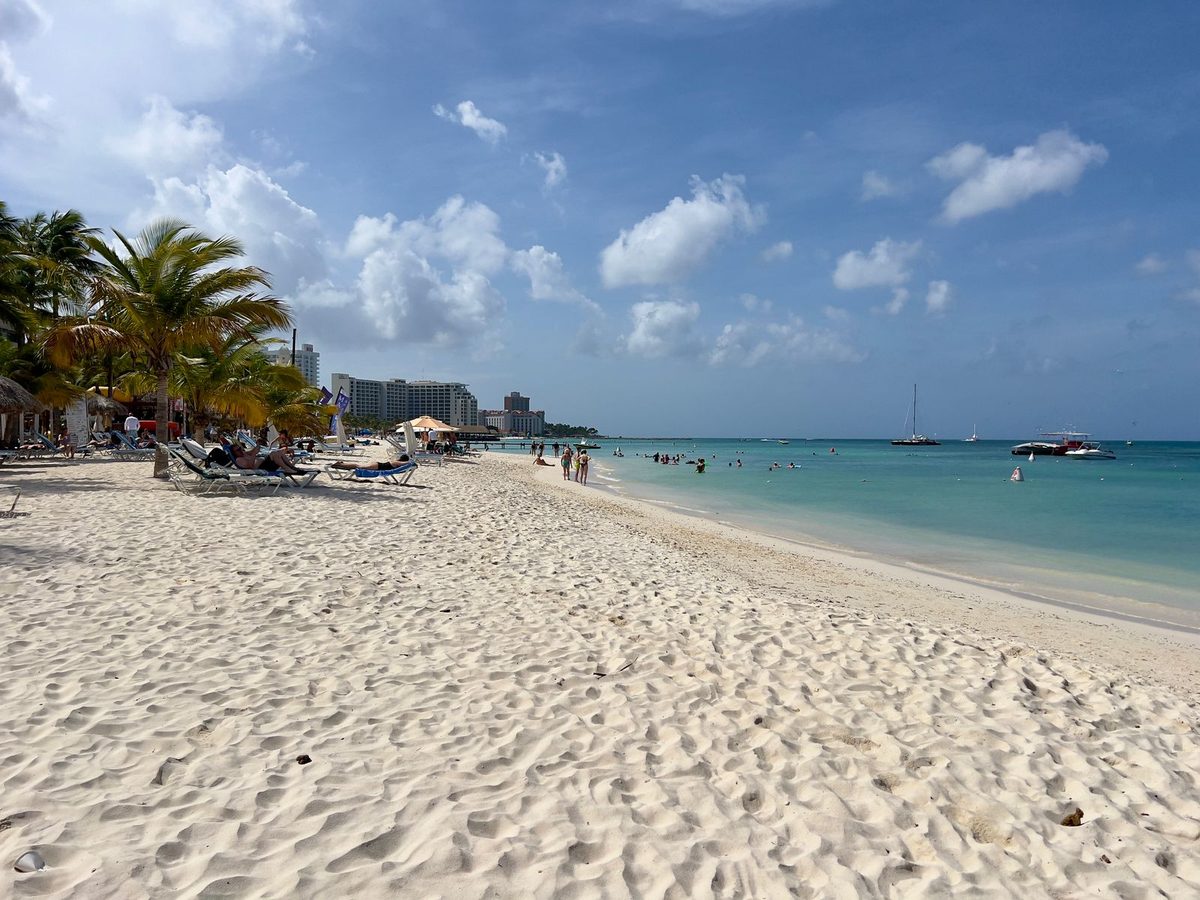
- Palm Beach, Aruba, where a week’s holiday can be paid for almost entirely in US dollars — Photo: Kwihi / CC BY 4.0 via Wikimedia Commons.