The short version: for most leisure travellers, getting into Aruba comes down to four things — a valid passport, a confirmed return or onward ticket, an approved online ED card (with the small sustainability fee paid), and enough money to support yourself while you are on the island. Meet those, arrive from a low-risk country, and you will almost certainly be waved through. Now here is the full picture by nationality, because the fine print on aruba travel requirements changes depending on which passport you hold and how long you intend to stay.
This guide is the broad overview of who can enter, who needs a visa, how long you may stay, and what immigration can ask you to prove at the border. It pairs with our dedicated walkthrough of passport and ED-card document mechanics, so here we keep the passport mechanics brief and spend more time on visas, length of stay, proof of funds, health rules, customs, and travelling with children. Rules are set by the Kingdom of the Netherlands and by Aruba’s own immigration service (often abbreviated DIMAS/IASA), and they do change — so treat everything below as a planning map and confirm the specifics with official Aruba immigration sources close to your departure date.
Aruba travel requirements at a glance
If you read nothing else, read this. To be admitted to Aruba as a tourist you generally need: a passport valid for the whole of your stay and no more than ten years old; proof you can leave again (a return or onward ticket); proof of where you are staying (a hotel booking or an invitation); proof you can pay your way (roughly US$150–200 per person per day for hotel guests); valid travel/medical insurance; and a completed, approved online ED card. Citizens of the United States, Canada, the United Kingdom, Ireland, the Netherlands and the EU/Schengen area do not need a tourist visa for short stays. Everyone else should check the official Dutch Caribbean visa list before booking.
| Requirement | Who it applies to | Quick notes |
|---|---|---|
| Valid passport | All air travellers | Valid for your whole stay; not older than 10 years. |
| Online ED card | Every traveller, incl. infants | Submit within 7 days of arrival; includes a US$20 sustainability fee per visitor. |
| Return / onward ticket | All tourists | Proof you will leave Aruba within the admitted period. |
| Proof of accommodation | All tourists | Hotel reservation, rental booking, or a resident’s invitation. |
| Proof of funds | All tourists | ~US$150–200 pp/day (hotel) or US$100 pp/day (staying with family). |
| Travel / medical insurance | All tourists (required by rule) | Cover of at least US$15,000 including hospital care and repatriation. |
| Tourist visa | Nationals not on the exemption list | Apply via a Dutch embassy/consulate before travel. |
| Yellow fever certificate | Arrivals from listed risk countries only | Required if you have recently been in a yellow-fever risk country. |
| Minor consent form | Children travelling without both parents | Aruba’s “permission to travel with a minor” form, submitted in advance. |
By the ArubaTourism.org team — Last updated June 2026.
Passports: the brief version
Because Aruba is a country within the Kingdom of the Netherlands, every air traveller needs a valid passport — a driver’s licence or birth certificate is not enough, even for US citizens who can use those documents for some other Caribbean trips. Two rules catch people out: your passport must be valid for the entire length of your stay, and it must not be more than ten years old (some countries historically issued passports with longer validity, which Aruba will not accept). Build in a comfortable buffer; many travellers aim for several months of validity beyond their return date to avoid any grey area. We cover renewal timing, name-mismatch issues, and emergency passports in our standalone passport guide, so here we will simply say: check the date inside the cover before you book anything else.
Do you need a visa for Aruba? Visa rules by nationality
This is the single biggest variable in the whole entry process, and the answer depends entirely on your passport. The good news for the majority of arrivals is that Aruba is visa-free for tourism for a long list of nationalities. The list is administered by the Kingdom of the Netherlands, so the authoritative reference is the Dutch government’s “visa for the Caribbean” page rather than any third-party site.
Who is visa-free for tourism
Citizens of the United States, Canada, the United Kingdom, Ireland, the Netherlands, and the EU/Schengen countries do not need a visa for a tourist visit to Aruba. The same visa-free treatment extends to nationals of many other countries on the Dutch Caribbean exemption list (for example, Australia, New Zealand, Japan, and numerous Latin American and Caribbean nations). If you hold one of these passports, you simply present your passport, your return ticket, and the supporting documents described below — no visa sticker, no embassy appointment.
Who needs a visa — and the useful exemptions
Travellers whose nationality is not on the exemption list need a visa before they fly. This is generally the same short-stay “Caribbean visa” handled through Dutch embassies and consulates. However, several practical exemptions can save a trip to the embassy even if your nationality would normally require a visa:
- You hold a valid residence permit (temporary or permanent) from another part of the Kingdom of the Netherlands, the United States, Canada, the Schengen area, the United Kingdom, or Ireland.
- You are a national of certain countries (for example Bolivia, China, Colombia, Cuba, the Dominican Republic, Haiti, India, Jamaica, or Peru) and you hold a valid multiple-entry visa for the US, Canada, the UK, or Ireland.
- You hold a valid multiple-entry Schengen visa.
- You are continuing to a third country within 24 hours, with confirmed onward tickets and all documents for the onward journey.
- You arrive by air to join a cruise ship (or vice versa) in transit for up to 24 hours, or you are a cruise passenger going ashore for the day.
- The child travelling is younger than 12 and is accompanied by a parent or guardian.
Holding a visa — or qualifying for an exemption — is not the same as a guaranteed entry. The final decision always rests with the immigration officer at the airport, who can refuse admission if any requirement is unmet. Because these lists are updated by the Dutch authorities, confirm your own nationality’s status on the official page before you book non-refundable travel.
| Your passport | Tourist visa needed? | Typical short-stay window |
|---|---|---|
| United States | No | Up to 90 days without an extension request |
| Canada | No | Up to 30 days, extendable on request |
| United Kingdom & Ireland | No | Up to 30 days, extendable on request |
| Netherlands / Kingdom nationals | No | Up to 180 consecutive days on request |
| EU / Schengen countries | No | Up to 30 days, extendable on request |
| Australia, NZ, Japan & many others | No (check the list) | Up to 30 days, extendable on request |
| Nationalities not on the exemption list | Yes — apply in advance | As granted on the visa |
This table is a simplified planning aid, not legal advice. Exemption lists and stay limits are set by the Kingdom of the Netherlands and can change without much notice, so always verify the current rules for your specific passport before travel.
The online ED card (and the sustainability fee)
Whatever your nationality, one step is universal: the online Embarkation/Disembarkation card, almost always called the ED card. It is mandatory for every traveller arriving by air, including infants and children, and it replaces the old paper form you used to fill in on the plane. You complete it on the official portal within seven days before your arrival, uploading your passport details and entering your flight, accommodation, and trip information. Once approved, you receive a confirmation you should keep handy (saved to your phone or printed) for check-in and immigration.
Since 1 July 2024, the ED card also collects a US$20 sustainability fee per visitor arriving by air, paid online as part of the ED-card process. It is a small amount, but it is now part of the standard flow, so budget for it and complete payment before you travel rather than scrambling at the airport. Because the ED card is the gatekeeper for boarding, leaving it until the last minute is one of the most common avoidable hiccups — do it as soon as your window opens. We walk through the form screen by screen in the dedicated passport-and-documents guide; here, the headline is simply: no approved ED card, no smooth boarding.

Return ticket, proof of funds, and proof of accommodation
Aruba’s immigration officers are entitled to ask you to demonstrate three things beyond your passport, and while they will not always do so, you should travel ready to show all three. Think of them as the “can you support and conclude your visit” checks.
A return or onward ticket
You should hold a confirmed ticket out of Aruba — either home or onward to a third country — that falls within the period you will be admitted for. This is the proof that you intend to leave. Travellers on flexible or one-way bookings occasionally get extra questions at the border, so a clear return itinerary is the easiest way to avoid friction. If you genuinely have an open-ended trip, be ready to explain your plans and show funds.
Proof you can pay your way
Aruba expects visitors to be able to cover their stay. The published guidance points to roughly US$150–200 per person, per day if you are staying in a hotel, or about US$100 per person, per day if you are staying with family or friends. If someone in Aruba is sponsoring you, that sponsor takes on financial responsibility through a declaration of guarantee. In practice this is rarely scrutinised for a typical week-long resort holiday, but the rule exists and can be enforced, so do not arrive with no apparent means of support. Credit cards, recent bank statements, or a clearly prepaid all-inclusive booking all help demonstrate this.
Proof of where you are staying
You can show a hotel or resort reservation, a vacation-rental confirmation, evidence that you own property on the island, or a written invitation from an Aruban resident. If you are bouncing between accommodations, the first booking plus a rough plan is usually enough. The point is to show immigration that you have somewhere to be and are not arriving with nowhere to go.
Travel and medical insurance
Aruba’s own immigration guidance lists valid medical insurance as a requirement, not merely a recommendation. The cover should be for at least US$15,000 and should include hospital care, emergency treatment, and repatriation (including in the event of death). Even setting the rule aside, the Caribbean is a place where a clinic visit or an evacuation flight can be eye-wateringly expensive, so this is one box you genuinely want ticked. Anyone applying to extend a stay beyond 30 days is explicitly required to carry travel insurance plus sufficient funds for the longer period.
How long can you stay? Length of stay and extensions
Here is where a lot of online advice gets muddled, because different nationalities have different limits. The clean way to remember it: the standard admission for a guest is up to 30 days, and that can be extended on request up to a maximum of 180 days per calendar year. There is one important nationality-specific carve-out worth highlighting.
- US nationals may stay for up to 90 days without filing any extension request. If you are American and planning a long winter escape, you have the most generous default window.
- Nationals of the Kingdom of the Netherlands can request an extension for up to 180 consecutive days.
- Other visa-exempt travellers are admitted for the standard period and can apply to extend — up to 90 days within the initial stay, and potentially up to 180 days in a calendar year if they meet the conditions (for example, owning property on the island such as a house, condo, timeshare, or a pleasure yacht of at least 14 metres moored in Aruba, or providing a guarantor who is an Aruban resident).
Two things matter in practice. First, the day of admission is set by the immigration officer, who can grant less than the maximum if your tickets or plans suggest a shorter trip — so your return flight should match your intended stay. Second, extensions are not automatic: they are applied for through Aruban immigration, you must show insurance and sufficient funds for the extended period, and approval is at the authority’s discretion. If you are dreaming of a multi-month stay, start that conversation with immigration early rather than assuming you can simply remain. And if your goal is to work or study in Aruba, that is a different category entirely and requires the appropriate permit — the tourist entry rules in this guide do not cover it.
Health and vaccination requirements
For the overwhelming majority of visitors arriving from North America and Europe, Aruba has no special vaccination entry requirement — you do not need a yellow fever certificate to fly in from, say, the United States, Canada, or the UK. The one rule to know is the yellow fever requirement that applies based on where you have recently been, not where you are a citizen.
Aruba requires proof of yellow fever vaccination from travellers arriving from (or who have recently transited) countries considered at risk of yellow fever transmission. That list covers much of tropical South America, Central America, and sub-Saharan Africa — including, for example, Bolivia, Peru, Ecuador, Colombia, Brazil, Venezuela, Panama, Guyana, Suriname, and a long list of African nations. Notably, arrivals from Chile and Uruguay are not treated as risk countries. If your itinerary touches any of these regions before Aruba, carry your International Certificate of Vaccination (the “yellow card”). Beyond that, standard travel-health common sense applies: stay current on routine vaccinations, pack any prescription medication in its original packaging with a copy of the prescription, and consider mosquito precautions. Always check the latest health notices, as risk-country lists are periodically revised.
Customs: what you can bring in
Aruba sets duty-free allowances for personal goods, and modest quantities for personal use are generally fine. As a rule of thumb, adult visitors may bring a limited allowance of tobacco and alcohol for personal consumption, plus personal effects and gifts of reasonable value; amounts beyond the personal allowance can attract import duty. There are also restrictions and prohibitions to respect — for instance, certain foods, plants, and animal products are controlled, and weapons and illegal drugs are strictly forbidden. If you are carrying a large sum of cash, be aware that high amounts of currency may need to be declared. When in doubt, declare it: the penalty for an honest declaration is at most a small duty, while failing to declare restricted goods can mean confiscation or fines. For anything unusual — drones, large electronics for resale, professional equipment, or significant quantities of anything — check Aruba Customs guidance before you pack.
Travelling with minors and consent letters
Aruba, like many destinations, has specific rules designed to protect children and to comply with international measures against trafficking and abduction. If a child is travelling without both parents — with one parent only, with a grandparent, with a group, or as an unaccompanied minor — you should prepare a consent letter and, ideally, complete Aruba’s official “permission to travel with a minor” procedure in advance.
The Government of Aruba provides a permission form that can be completed, printed, and submitted (with supporting documents) to the immigration office for verification and stamping. Typical supporting documents include a copy of the absent parent’s or guardian’s passport, a copy of the child’s return ticket, and often the child’s birth certificate to establish the relationship. The consent letter itself is best written in English and notarised; a common wording is that the named adult has the parent’s permission to travel with the child. Because processing takes time in busy periods, the authorities ask that you submit the form and documents several days before departure rather than at the airport. Even if you are confident you will not be asked, carrying a clear, signed consent letter is cheap insurance against an awkward delay at the border.
Cruise visitors versus air arrivals
The entry process differs depending on how you arrive. If you fly in, everything above applies: passport, ED card, sustainability fee, and the supporting documents. If you arrive by cruise ship and simply spend the day ashore as part of the cruise, you are treated as an in-transit visitor for up to 24 hours and do not complete the air-travel ED card — your cruise line handles the immigration formalities, and many nationalities that would otherwise need a visa are exempt for that short shore visit. The practical takeaway: cruise day-trippers have a much lighter paperwork load, but the moment you plan to stay on the island beyond your ship’s schedule, the full air-style requirements come back into play. Always follow your cruise line’s specific instructions, since they coordinate directly with Aruban immigration.
What is new for 2026
A few practical updates are worth flagging for trips in 2026. The US$20 sustainability fee introduced in mid-2024 is now a settled part of the ED-card process, so it is no longer “new” but it is easy to forget — build it into your pre-departure checklist. At Queen Beatrix International Airport, the multi-year Gateway 2030 redevelopment is ongoing, which means temporary changes to terminal layout, shops, and dining, and revised passenger-flow rules. Notably, access to the US check-in terminal has been limited to roughly three hours before departure during construction, so give yourself extra time and check the airport’s current advisories before you fly home. As always, immigration and customs rules can be adjusted between now and your trip, so reconfirm the essentials — visa status, length of stay, ED card, and any health requirements — on official Aruba sources shortly before you travel.
Plan the rest of your Aruba trip
Entry requirements are just the first checkbox. Once you know you can get in, the fun planning begins. This guide sits within our broader Aruba travel tips and essentials hub, which is the best place to start mapping out a smooth, stress-free trip to the One Happy Island.
From there, work through the logistics: figure out getting to and around Aruba, pick the right window with our guide to the best time to visit Aruba, and set a realistic budget using our breakdown of Aruba vacation costs. The proof-of-funds rule above ties directly into that budgeting step.
For where to base yourself, compare neighbourhoods in our guide to where to stay in Aruba or go hassle-free with an all-inclusive resort — a prepaid all-inclusive booking also doubles as tidy proof of accommodation and funds at immigration. Then fill your days using our roundup of the best things to do in Aruba and a ready-made Aruba itinerary.
Travelling as a couple or a family? Our Aruba honeymoon guide and our tips for visiting Aruba with kids will help — and families should pay special attention to the minor-consent section above. Of course, no trip is complete without time on the sand, so save our guide to the best Aruba beaches for last.
Frequently asked questions about Aruba entry rules
Do US citizens need a visa for Aruba?
No. United States citizens do not need a visa for tourism in Aruba. You enter on a valid US passport (not a driver’s licence or birth certificate), complete the online ED card with the sustainability fee, and carry a return ticket plus proof of funds and accommodation. US nationals also get the most generous default window, with stays of up to 90 days permitted without filing any extension request.
How long can I stay in Aruba as a tourist?
The standard admission is up to 30 days, which can be extended on request to a maximum of 180 days within a calendar year. US nationals are an exception and may stay up to 90 days without requesting an extension. The exact number of days is granted by the immigration officer on arrival, so make sure your return ticket matches the length of trip you are requesting.
Do I need a return ticket to enter Aruba?
Yes, you should be ready to show a confirmed return or onward ticket that falls within your admitted stay. It proves to immigration that you intend to leave Aruba. Travellers arriving on one-way or open-ended itineraries can face extra questions, so a clear return booking is the simplest way to keep your arrival smooth. Have it saved or printed alongside your ED-card confirmation.
Do I need a passport to go to Aruba, or will an ID do?
Air travellers need a valid passport — an ID card or birth certificate is not accepted, including for US citizens who can use those documents on some other Caribbean routes. Your passport must be valid for your whole stay and no more than ten years old. Build in a buffer beyond your return date. For renewal timing and document edge cases, see our dedicated Aruba passport guide.
Is there a tourist fee or tax to enter Aruba?
Yes. Since July 2024, Aruba charges a US$20 sustainability fee per visitor arriving by air, collected online as part of the ED-card process. It is separate from any taxes built into your airfare or hotel bill. Pay it when you complete your ED card within seven days of arrival so that your card is approved and you are cleared to board your flight.
Do I need any vaccinations to travel to Aruba?
For most visitors arriving from North America or Europe, no special vaccination is required to enter Aruba. The exception is yellow fever: if you are arriving from, or have recently visited, a country considered at risk for yellow fever (much of tropical South America, Central America, and sub-Saharan Africa), you must show an International Certificate of Vaccination. Check the current risk-country list before you travel, as it is revised periodically.
What proof of funds does Aruba immigration require?
Aruba expects you to be able to support your stay, with published guidance pointing to roughly US$150–200 per person per day for hotel guests, or about US$100 per person per day if you are staying with family. A sponsor in Aruba can take on that responsibility via a declaration of guarantee. You will rarely be grilled on a standard resort holiday, but carry a credit card and be ready to show means of support.
The bottom line on Aruba’s entry rules
For the vast majority of holidaymakers — Americans, Canadians, Britons, Europeans, and many others — getting into Aruba is refreshingly straightforward: a valid passport, a return ticket, an approved ED card with the sustainability fee paid, proof you can support yourself, and valid insurance. Visa requirements only kick in for nationalities outside the long exemption list, length-of-stay limits hinge on your passport, and a handful of situational rules (yellow fever from risk countries, consent letters for minors) apply only to some travellers. Because the Kingdom of the Netherlands and Aruban immigration can revise these rules, use this guide to plan and then confirm the current details on official Aruba immigration sources before you book and again before you fly.
Photo credits
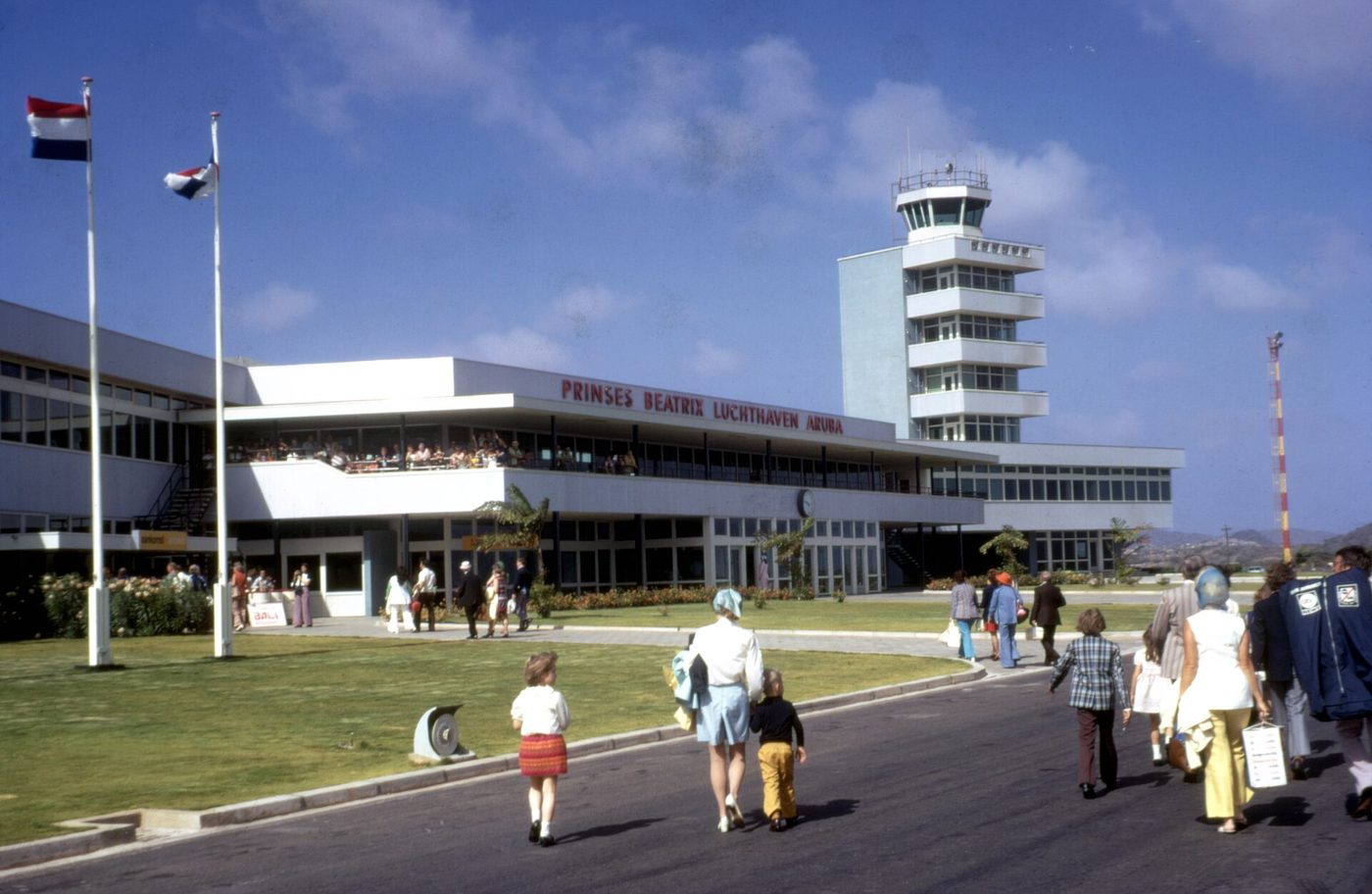
- The terminal building at Aruba’s Princess Beatrix International Airport, where aruba travel requirements such as passports and the ED card are checked on arrival — Photo: Versageek / CC BY 3.0 via Wikimedia Commons.
- Colorful Dutch colonial buildings in Oranjestad, the capital of Aruba — Photo: Choinowski / CC BY-SA 4.0 via Wikimedia Commons.
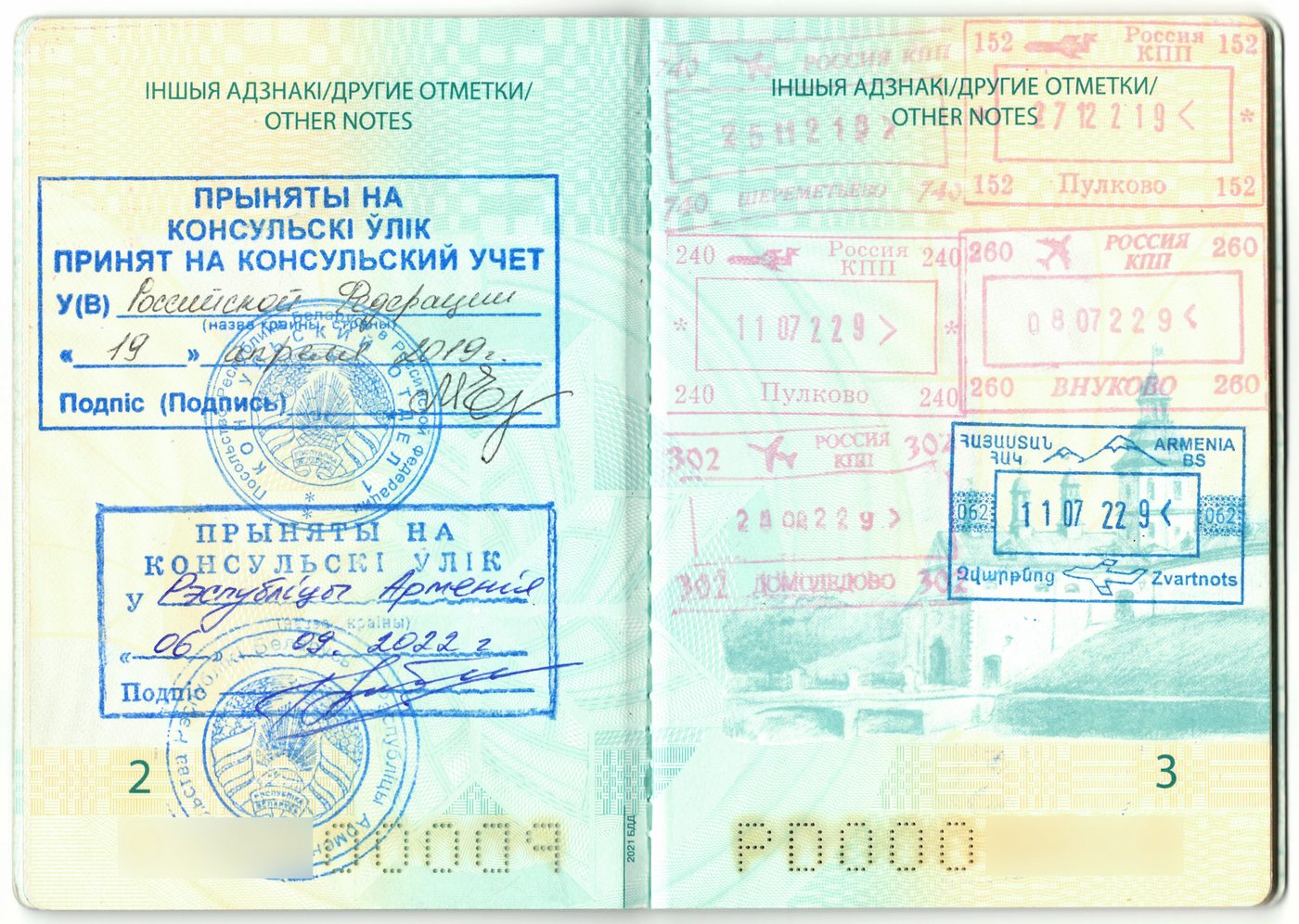
- A passport open to a page of immigration entry stamps, illustrating Aruba entry rules and document checks — Photo: dunkaist (CC0) via Wikimedia Commons.
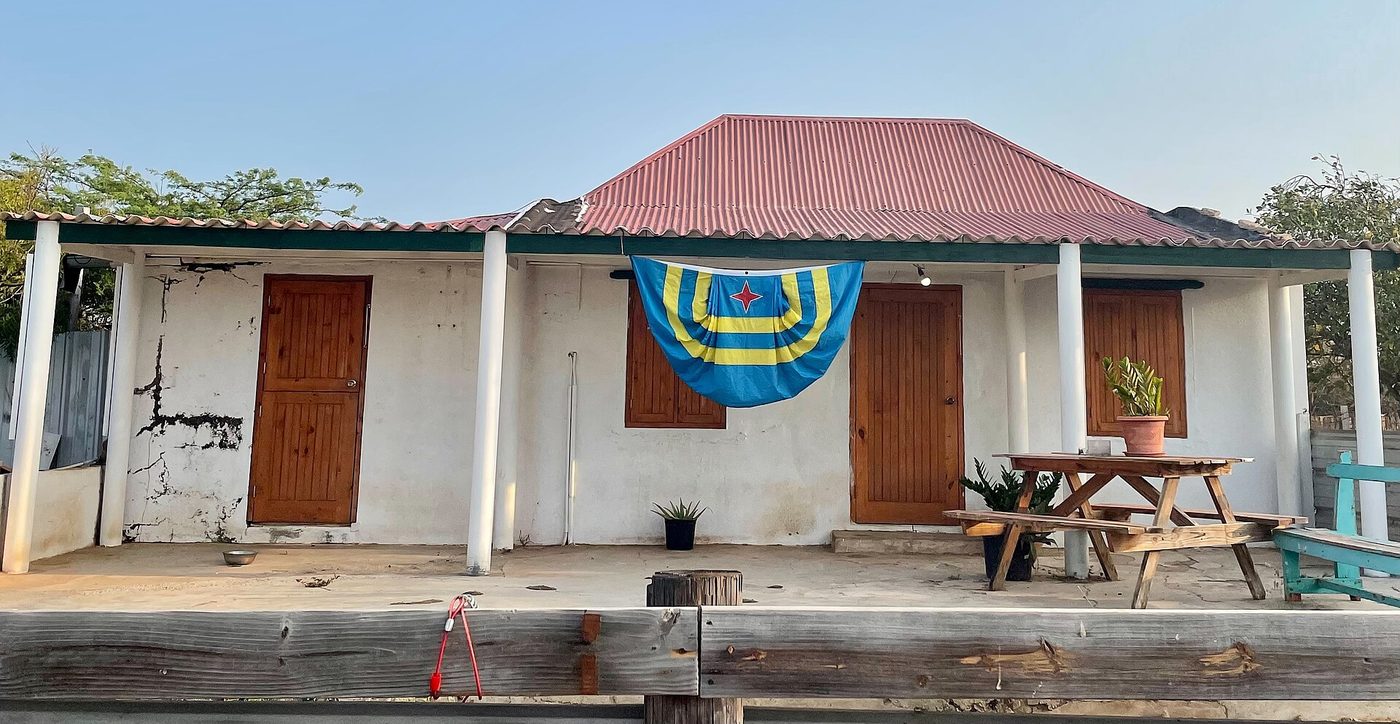
- The national flag of Aruba displayed on a traditional Aruban house — Photo: Caribiana / CC BY-SA 4.0 via Wikimedia Commons.
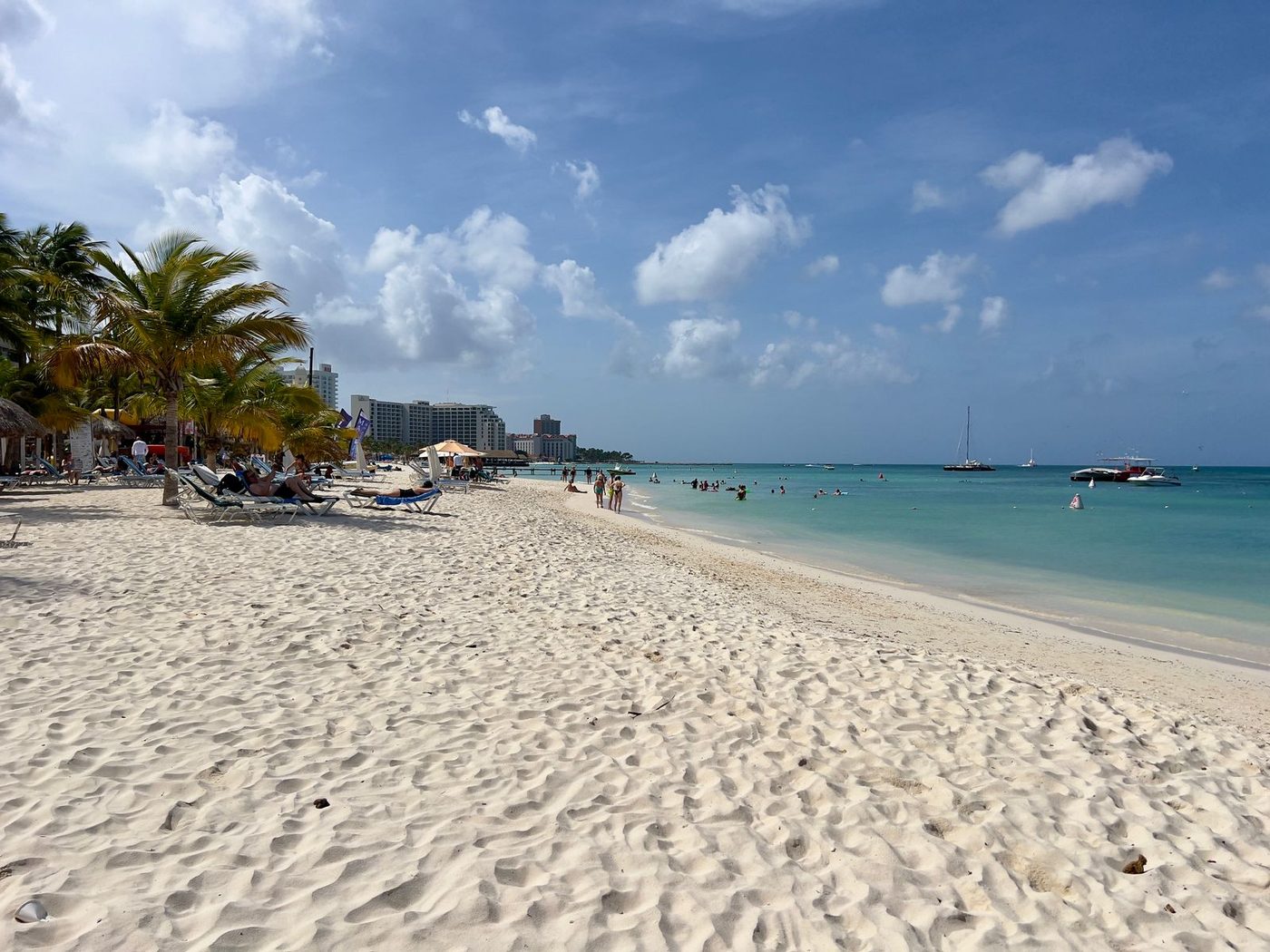
- Palm Beach in Aruba with turquoise Caribbean water and resorts, a top reason visitors come to the island — Photo: Kwihi / CC BY 4.0 via Wikimedia Commons.