You climb into the back seat outside arrivals, suitcase wedged beside you, and instinctively look for the meter. There isn’t one. The driver catches your eye in the mirror, smiles, and instead of flipping a flag, he taps a laminated card clipped to the visor: a grid of zones and dollar amounts set by the government. That’s your first lesson about taking an Aruba taxi — nobody’s watching a fare tick upward. “Palm Beach? Forty-one dollars,” he says before you’ve even pulled away from the curb. No surge pricing, no creative routing to pad the bill, no meter at all. The price is the price, printed in black and white, and it’s the same whether you ride alone or four deep.
That little jolt — the missing meter — is the thing that surprises almost every first-time visitor. Once you understand how an Aruba taxi actually works, though, it becomes one of the easiest, most stress-free ways to get around the island. There’s no haggling, no app to download, no guessing. You just need to know the zones, know roughly what each ride should cost, and confirm the number before you shut the door. This guide walks you through all of it: the fixed-fare system, current sample rates, the surcharges that catch people out, how to actually flag a cab, and when a taxi beats the bus or a rental car.
A quick, honest heads-up before we go further: in May 2026 Aruba rolled out its first official taxi pricelist since 2018, and fares jumped meaningfully across the board. The numbers below reflect that update, but rates can change and zones can be read differently, so treat every figure here as “around” and always confirm the total with your driver before you set off. For anything point-to-point, the government’s official site, taxi.aw, is the final word — every licensed cab now displays a QR code that links straight to it.
The short answer: how much is a taxi in Aruba?
An Aruba taxi has no meter — fares are fixed by zone, set by the government, and charged per car for up to four passengers, not per person. From the airport, expect roughly $26 to Oranjestad, about $37 to the Eagle Beach low-rise area, and around $41 to the Palm Beach high-rise hotels. A $10 minimum applies to any ride, with surcharges at night, on Sundays, and on holidays.
That’s the whole system in a nutshell, and it’s genuinely simpler than the metered chaos of most cities. The catch is that “fixed” doesn’t mean “one flat price for everything” — it means a published rate for each pair of zones, plus a short list of add-ons. Get familiar with the common routes and you’ll never be caught off guard.
| Route (per car, up to 4 passengers) | Approx. fixed fare |
|---|---|
| Airport (AUA) → Oranjestad / Renaissance area | ~$26 |
| Airport → Eagle Beach (low-rise hotels) | ~$37 |
| Airport → Palm Beach (high-rise hotels) | ~$40–41 |
| Airport → Noord | ~$34 |
| Airport → cruise terminal | ~$39 |
| Airport → San Nicolas | ~$45 |
| Airport → Baby Beach | ~$60 |
| Oranjestad → Eagle Beach | ~$16 |
| Oranjestad → Palm Beach | ~$22 |
| Palm Beach ↔ Eagle Beach | ~$16 |
| Palm Beach → cruise port | ~$33 |
| Noord → Palm Beach | ~$11 |
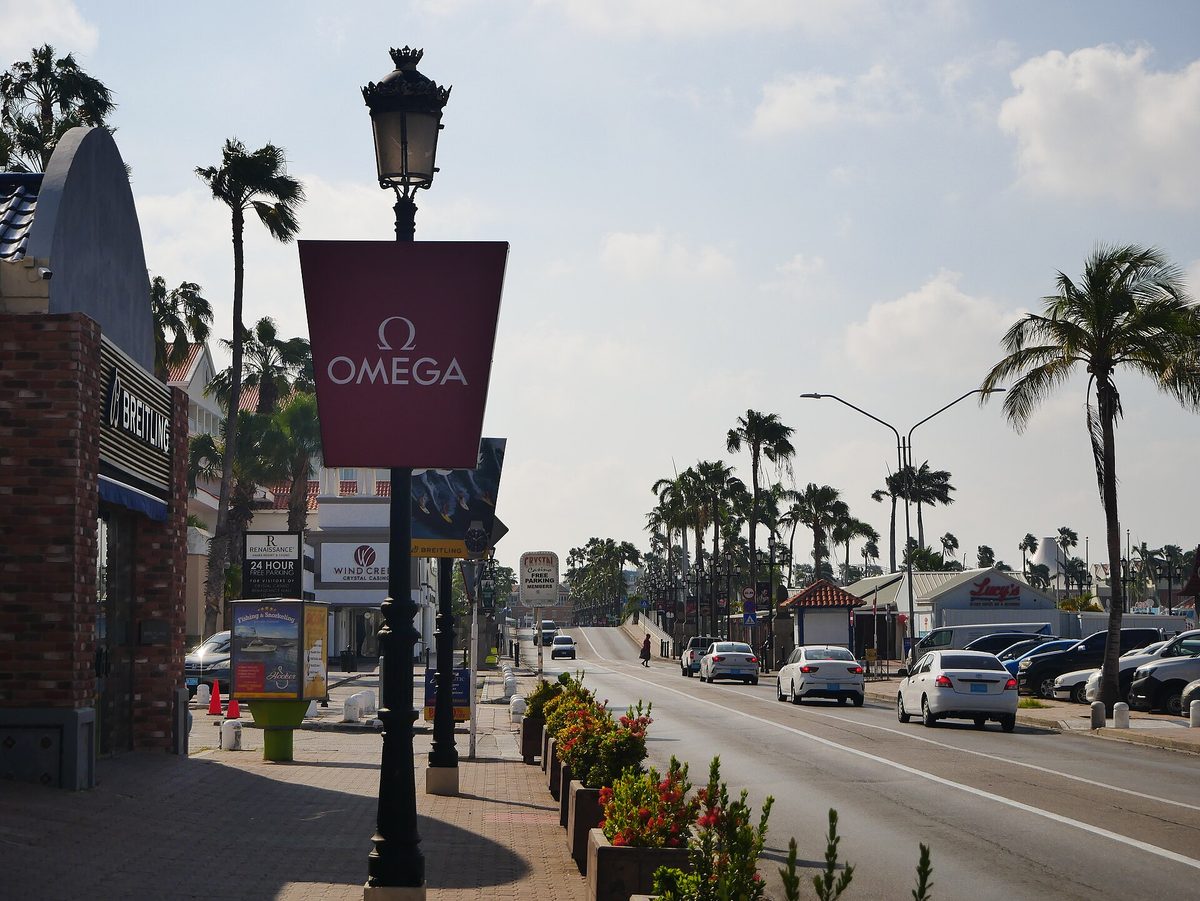
How taxis in Aruba actually work: no meter, fixed zones
Here’s the mental model that makes everything click: Aruba doesn’t price taxis by distance or time the way a metered city does. Instead, the island is carved into zones, and the government publishes a fixed price for traveling between any two of them. Your fare depends entirely on where you get in and where you get out — not on the route the driver chooses, not on how long you sit in traffic, and absolutely not on whether it’s your first day or your fifth.
That has some lovely consequences. If your driver takes the scenic coastal road instead of the direct route, you pay the same. If you hit a snarl of cruise-day traffic on L.G. Smith Boulevard, the number doesn’t budge. There is no surge pricing on a busy Saturday night, no “airport fee” hidden in the fine print beyond the published rate. Once you’ve agreed the fare, that’s the number, full stop.
A few mechanics worth knowing before you ride:
- No meters, ever. If a car has a meter running, it isn’t an official Aruba taxi. Real ones quote from the printed zone card.
- Look for the “TX” plate. Every licensed taxi carries a license plate with “TX” on it. That’s your single best signal that you’re in a legitimate, regulated cab rather than an unofficial ride.
- The QR code is your friend. Since the 2026 update, drivers must display a QR code inside the car that links to the official fare site, taxi.aw. Scan it if you ever want to double-check a route yourself.
- Drivers must show you the rates. The rules require drivers to make the official pricelist available on request. A reputable driver will happily walk you through the card; if one won’t, that’s your cue to choose another cab.
- Available 24/7. Taxis run around the clock, so whether you’re heading to the beach at sunrise or back from a casino at 2 a.m., you can get a ride (late-night surcharges apply — more on that below).
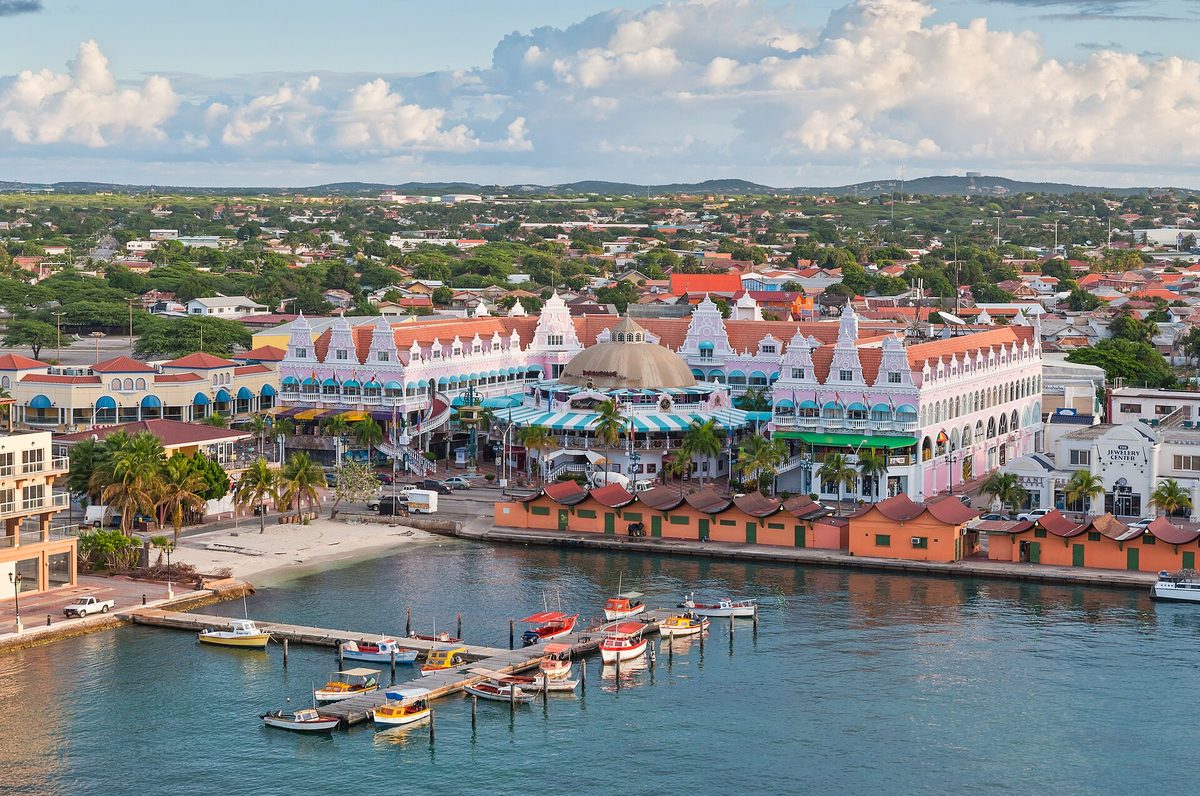
If you’re mapping out how all the pieces of island transport fit together — taxis, the bus, rental cars, airport pickups — our overview of getting to and around Aruba pulls the whole picture together.
Sample Aruba taxi rates from the airport and around the island
Most people’s first ride is the airport run, so let’s start there. Queen Beatrix International Airport (AUA) sits at the south end of the island, a tidy 10 to 30 minutes from the main tourist zones. As you walk out of arrivals, you’ll find a marshaled taxi stand with an attendant directing the queue — you don’t hunt for a cab, you join the line and the next available car is yours.
Airport to the hotels
The big three destinations and their approximate 2026 fares: Oranjestad and the Renaissance area run about $26; the Eagle Beach low-rise hotel strip is around $37; and the Palm Beach high-rise hotels — the Marriott, Hilton, Ritz-Carlton, Hyatt and their neighbors — land at roughly $40 to $41. Noord, the area just inland of the high-rises, is about $34, and if you’re cruising in, the airport-to-cruise-terminal hop is around $39. Heading down-island to San Nicolas is closer to $45, and the long haul to Baby Beach at the very southern tip runs about $60.
Remember those are per-car prices for up to four people. A family of four splitting a $41 ride to Palm Beach is paying barely over $10 a head — which is part of why taxis remain a sensible choice for groups even after the fare increase. Where to base yourself shapes that math, so if you’re still deciding, our guide to where to stay in Aruba breaks down the high-rise, low-rise and downtown neighborhoods and what each ride to and from them tends to cost.
Hotel to Oranjestad and between beaches
Once you’re settled in, the rides get shorter and cheaper. From the Palm Beach high-rises into Oranjestad for shopping or dinner is about $22; from Eagle Beach it’s closer to $16. Hopping between Palm Beach and Eagle Beach — a common move if you’re beach-hopping or chasing a particular sunset spot — runs around $16. From Noord into Palm Beach is one of the cheapest rides on the island at roughly $11, which still bumps up to the $10 minimum on the very shortest hops.
Those short downtown-and-beach rides are where the 2026 increase stings most in percentage terms — a quick trip that used to be $10 can now be $16 to $18 — so if you’re planning to bounce around a lot, it’s worth reading our piece on how much an Aruba vacation costs to see where transport fits in the bigger budget picture. For an evening out, pairing a taxi with our roundups of the best Aruba restaurants and the island’s nightlife, bars and casinos means you can have that second cocktail without worrying about driving back.
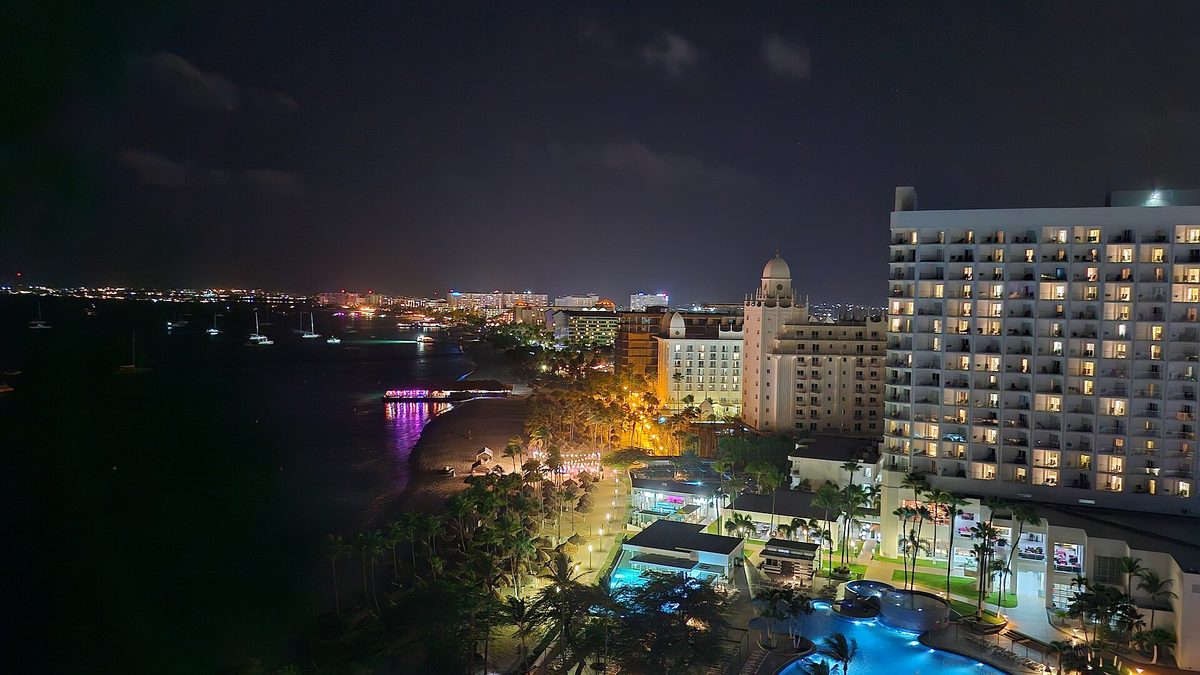
Surcharges: nights, Sundays, holidays and extra passengers
This is the part that trips people up, because the headline zone fare isn’t always the final number. Aruba’s taxi rules add a short, predictable list of surcharges, and knowing them ahead of time turns a “wait, why is it more?” moment into a non-event.
- The $5 flat surcharge. A single $5 surcharge (about 9 florin) is added once per trip if you ride on a Sunday, on an official public holiday, during the Dec 24–Jan 1 holiday block, or any night between roughly 11 p.m. and 7 a.m. It’s charged once, not per zone — so a late dinner ride home picks up one $5 bump, not several.
- Extra passengers (5 to 7). The base fare covers up to four people. If you’re a group of five to seven, expect about $3 per extra passenger on top, and you’ll want to ask for a van rather than a sedan. Taxis are legally capped at seven passengers.
- Luggage. On airport and hotel transfers, each passenger gets one suitcase plus a backpack or handbag free. Extra bags are around $3 each. Laptops, purses, and medical or mobility equipment (wheelchairs, strollers) are never charged.
- Using the trunk on non-airport trips. On a regular around-town ride that isn’t an airport or hotel transfer, putting bags in the trunk can add a one-time fee of about $3. If you’ve only got a couple of grocery bags, keep them in the back seat with you and skip the charge.
- Waiting time. If you ask the driver to wait — while you run into a supermarket or pop into a shop — the meter-free clock runs at roughly $1 per minute. Confirm the waiting rate and when it starts before the driver settles in.
None of these are huge on their own, but they stack. A Sunday-night airport run for five with extra bags can quietly climb $15 to $20 above the base zone fare. The fix is simple and it’s the golden rule of taxis here: ask for the all-in total before you get in, surcharges included. A good driver will give you the real number without blinking.
Per car, not per person: why groups win
It bears repeating because it changes the whole calculus: in Aruba the fare is for the vehicle, not for each seat. Whether one person rides or four, that $41 airport-to-Palm-Beach trip costs $41. Split four ways, it’s a shade over $10 each — cheaper per head than many other ways of covering the same ground.
This is exactly why I tell couples and families not to overthink transport. If there are three or four of you and you’re mostly doing the airport, a few beach trips, and the occasional dinner downtown, taxis can be both the easiest and the most economical option — no parking, no gas, no insurance, no navigating roundabouts on day one. Solo travelers and pairs taking lots of short rides feel the per-car pricing differently, since you’re shouldering the whole fare alone; that’s where the bus or a rental starts to make more sense, which we’ll get to.
How to get a taxi in Aruba (and why there’s no Uber)
Let’s clear up the question every traveler asks first: there is no Uber or Lyft in Aruba. Rideshare apps simply don’t operate here, so don’t waste time refreshing the app on arrival. The flip side is that you don’t need one — the taxi network is well organized, regulated, and easy to tap into once you know the three normal ways to get a car.
- Taxi stands. The airport, the cruise terminal, the big Palm Beach resorts, and downtown Oranjestad all have stands where cabs queue. At a high-rise hotel you can often just walk out front and step into a waiting taxi, or wait five to ten minutes for the next one. This is the default and usually the fastest.
- Ask your hotel or restaurant to call one. At smaller low-rise hotels, timeshares, or a restaurant after dinner, the front desk or host will phone dispatch for you. In high season (roughly December through April) that call-out wait can stretch to 30–40 minutes at quieter properties, so build in a buffer if you’ve got a dinner reservation or a tour pickup.
- Phone or WhatsApp dispatch. You can ring a dispatcher directly, and many individual drivers and dispatch services also take bookings by WhatsApp — handy for arranging a pickup time in advance or holding onto a driver you liked. There’s also an official Aruba taxi app for card payments and bookings, though most visitors still rely on stands and hotel calls. If you ever have an issue with a fare, the island’s Department of Public Transportation (DTP) handles complaints at +297 594 8660; jot down the TX plate number just in case.
One quirk worth knowing: taxis don’t really cruise for fares the way they do in big cities, so standing on a random residential street waving your arm probably won’t work. Head to a stand, a hotel, or call. And from remote spots like Baby Beach or the far reaches of Arikok National Park, there are no taxis idling nearby at all — arrange your return ride before you go, or you may be waiting a long while in the sun.
If you’re weighing taxis against everything else for getting around, our master guide to getting around Aruba lays out the full menu, and our Aruba travel tips cover the small practicalities — currency, tipping, what to pack — that make rides like these go smoothly.
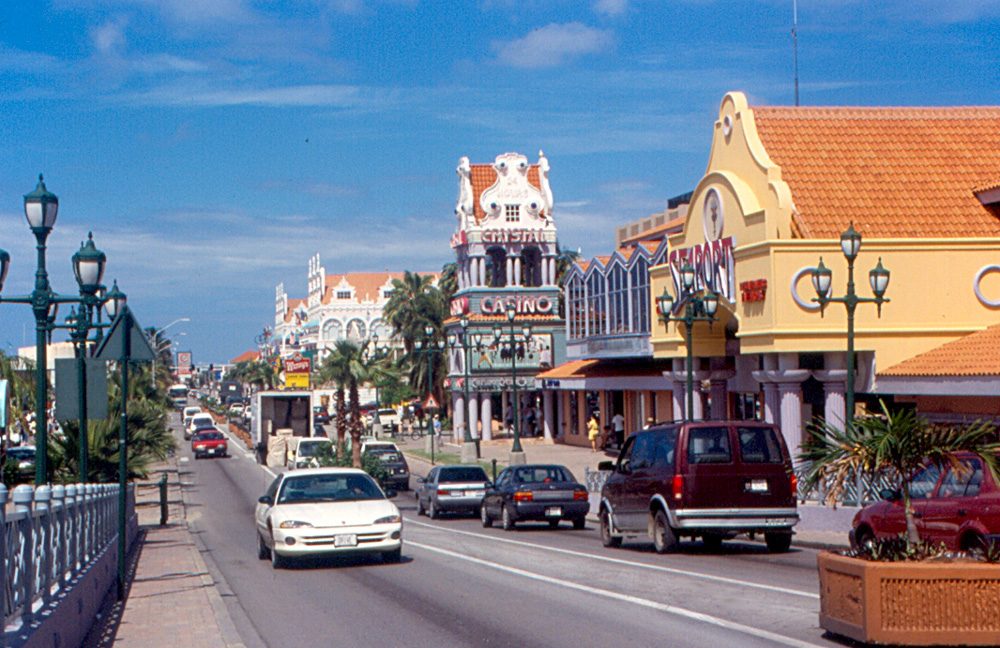
Taxi island tours by the hour
Here’s a use for taxis that a lot of visitors overlook: hiring one by the hour as a private guide. Many drivers are happy to take you on a custom island tour, and because so many of them have lived here their whole lives, you get running commentary — where the best snorkeling cove is, which bakery does the real pastechi, the story behind a roadside chapel — that no guidebook quite captures.
The going rate is roughly $60 per hour for up to four people, typically with a two-hour minimum. For a half-day you might negotiate a flat rate, but confirm it (and exactly what’s included) up front. It’s a genuinely good deal for a group: split four ways, a couple of hours of door-to-door, air-conditioned sightseeing with a local who knows every shortcut is hard to beat.
This works especially well for cruise passengers with a single day in port, or anyone who wants to see the windward coast, the California Lighthouse, and a few beaches without renting a car. If you’d rather have a fuller plan, our things to do in Aruba roundup and our day-by-day Aruba itinerary pair perfectly with a hired driver — hand them the list and let them string it together.
Tipping and payment: cash is king
Two practical things to sort before your first ride: how to pay, and whether to tip.
Paying for your ride
Cash is the standard, and US dollars are accepted everywhere alongside the local florin. The exchange rate is fixed at 1.80 florin to the US dollar, so the math is consistent no matter which currency you hand over — you may simply get change back in florins. Carry small bills: ones, fives, tens, and twenties. Many drivers can’t break a fifty or a hundred, and some will wave off large bills altogether, so don’t rely on that crisp $100 from the ATM.
Cards are a different story. Most Aruba taxis still don’t take credit cards, debit, Apple Pay, or contactless — a handful do, usually those booked through the official app, but you should never assume it. If card payment matters to you, confirm it with the driver before the ride starts, and have cash as a backup regardless. Receipts aren’t standard either; if you need one for expenses, ask at the start of the trip so the driver is ready.
Should you tip?
Tipping is appreciated but not required. Because fares are government-set and the driver keeps the full posted rate, there’s nothing extra owed for a routine A-to-B ride. That said, rounding up or adding around 10% is a kind gesture, and it’s genuinely warranted when a driver helps wrestle heavy luggage, waits patiently, offers great local tips, or gets you somewhere in a downpour.
Taxi vs bus vs rental car: when a taxi makes sense
No single mode wins for everyone, so here’s how I’d actually decide, based on how you travel.

Take a taxi when…
You’re a group of three or four, you’re staying on the hotel strip, and your plans are mostly the airport plus a handful of beach and dinner trips. The per-car pricing makes you efficient, you skip parking and gas entirely, and you never worry about a couple of drinks with dinner. Taxis are also the right call for that very first airport arrival when you’re tired and just want to get to the room — and for late-night returns when you don’t want to drive.
Take the bus when…
You’re solo or a couple, you’re budget-minded, and your trips line up with the main Oranjestad–Palm Beach corridor. Arubus fares run about $2.60 per person each way, which beats a taxi handily for one or two people on a route the bus actually serves. The trade-offs are fixed schedules, limited evening service, and no big-luggage allowance — fine for a daytime beach or shopping run, less so for a night out or a trip to a far-flung beach.
Rent a car when…
You want to explore on your own clock — Arikok’s rugged interior, hidden coves, the windward coast, sunrise at a quiet beach — or you’re taking enough short rides that fixed taxi fares add up. After the 2026 increase, the cost gap between a week of taxis and a rental car (from roughly $40 a day before gas and insurance) has narrowed considerably, so for active, independent travelers a rental often makes more sense than it used to. The flip side is parking, driving on unfamiliar roads, and a car sitting idle on beach days. Our guide on things to do in Aruba can help you gauge how much independent exploring you’re really planning — that’s usually the deciding factor.
The honest summary: for a relaxed, resort-based trip with a group, taxis are wonderfully low-friction and still good value. For solo budget travel on the main strip, the bus wins. For independent explorers, a rental earns its keep. Plenty of visitors mix all three — a taxi from the airport, the bus for a beach day, a one-day rental for an island loop — and that’s often the smartest play of all. If you’re traveling as a family, our Aruba with kids guide weighs these options through a parent’s lens (car seats, nap-time logistics, and all).
A few real-world tips that make taxi rides smoother
Small things I’ve learned that aren’t in the official rules but genuinely help:
- Confirm three things before you shut the door: your destination, the total fare, and whether any surcharges apply. Ten seconds of clarity prevents nearly every dispute.
- Don’t climb in wet or sandy. Drivers are allowed to refuse damp or sandy passengers to protect their seats, and it’s just good manners. Dry off and shake out the sand after a beach day before you flag a ride.
- Most drivers speak excellent English. Arubans are famously multilingual — Papiamento, Dutch, English, and often Spanish — so communication is almost never a problem. A friendly “bon dia” (good morning) in Papiamento goes a long way.
- The roof light is an unreliable signal. Locals say a light that’s off often means available and on means taken, but it isn’t official or consistent — don’t rely on it. Just ask the driver if they’re free.
- Snap a photo of the TX plate on longer rides or if you’re carrying valuables. It makes recovering a forgotten item far easier, and it’s a quiet bit of insurance.
Frequently asked questions
Do taxis in Aruba use meters?
No. Aruba taxis have no meters at all. Fares are fixed by zone and set by the government, so the price depends only on your pickup and drop-off points — not on distance, time, or traffic. Drivers quote from an official pricelist (and a QR code linking to taxi.aw), so you know the cost before you ride.
How much is a taxi from the airport to Palm Beach?
Roughly $40 to $41 per car for up to four passengers, before any surcharges. Eagle Beach and the low-rise area run about $37, and Oranjestad is around $26. These are 2026 rates following the island’s fare update; add about $5 at night, on Sundays, or on holidays, and always confirm the total with your driver first.
Is the Aruba taxi fare per person or per car?
Per car. The published fare covers up to four passengers in one vehicle, so it costs the same whether you ride alone or with three others. Groups of five to seven pay about $3 per extra person and should request a van. This per-car pricing is why taxis stay good value for families and groups.
Is there Uber or Lyft in Aruba?
No. Rideshare apps like Uber and Lyft do not operate in Aruba. Instead you use the island’s regulated taxis — found at airport and hotel stands, the cruise terminal, and downtown, or booked by phone, WhatsApp, or the official Aruba taxi app. There’s no need for a rideshare; the taxi network covers the same ground.
Do Aruba taxis take credit cards?
Mostly no. Cash is the standard, and US dollars are accepted everywhere alongside Aruban florins. A small number of drivers take cards — usually those booked through the official app — but never assume it. Carry small bills ($1, $5, $10, $20), as many drivers can’t break large notes, and confirm card acceptance before the ride if you need it.
Should I tip my Aruba taxi driver?
Tipping is appreciated but not required. Since fares are government-set and the driver keeps the full posted rate, there’s no obligation on a routine ride. Rounding up or adding around 10% is a nice gesture, and it’s especially warranted when a driver handles heavy bags, waits for you, or shares great local tips. A few dollars on a longer ride is normal.
Are taxis expensive in Aruba?
They’re moderate — comparable to fares in major cities — and rose significantly with the 2026 update, by anywhere from 30% to 80% on some routes. For groups splitting a per-car fare they’re still good value, but solo travelers taking many short rides will feel it. If you’re moving around constantly, compare costs against the bus or a rental car before committing.
How do I get a taxi back from the beach or a restaurant?
At Palm Beach and Eagle Beach taxis are usually nearby, but they may not wait right at the sand — walk to the nearest hotel stand. After dinner, ask the restaurant to call one for you. From remote spots like Baby Beach there are no taxis waiting, so arrange your return pickup in advance by phone, or you could wait 30 minutes to an hour.
Final thoughts
The missing meter throws people for a second, but it’s actually the best thing about getting around Aruba by cab. No surge pricing, no padded routes, no surprises — just a published number for each zone and a friendly, multilingual driver who’s probably got a restaurant recommendation for you. Learn the handful of common fares, remember the surcharges for nights and Sundays, keep small bills handy, and confirm the total before you pull away, and you’ll glide around the island without a second thought.
My parting advice: match the mode to your trip. Taxis are brilliant for groups, airport runs, and nights out; the bus is unbeatable for budget travel on the main strip; and a rental car earns its keep if you’re chasing sunrises and hidden coves. Whatever you choose, the island makes it easy — and once you’ve slid into that back seat, glanced at the printed card, and nodded at the fare, you’ll feel like a local in no time. For everything else about moving around the One Happy Island, start with our hub on getting to and around Aruba, and let the planning take care of itself.
Photo credits
- L.G. Smith Boulevard, Oranjestad — Photo: Ginelly.Q (CC0) via Wikimedia Commons.
- Downtown Oranjestad main street — Photo: Roger W / CC BY-SA 2.0 via Wikimedia Commons.
- Colorful buildings, Oranjestad waterfront — Photo: Navigator334 / CC BY-SA 4.0 via Wikimedia Commons.
- Palm Beach high-rise hotels at night — Photo: Rarends297 (CC0) via Wikimedia Commons.
- Fofoti tree at Eagle Beach — Photo: Serge Melki / CC BY 2.0 via Wikimedia Commons.