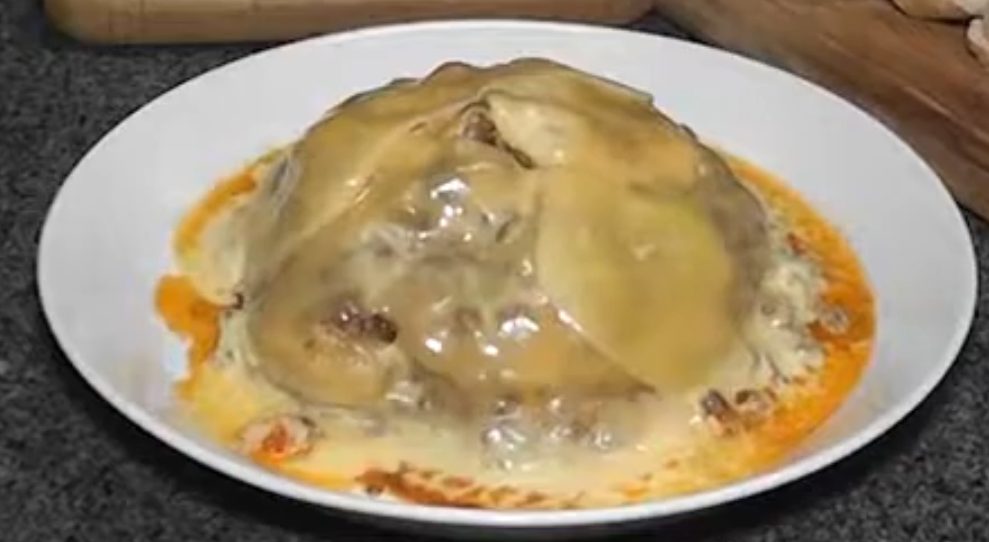
Crack a spoon through the blistered, golden dome of a fresh keshi yena and the whole thing sighs open: a landslide of melted Gouda, then shredded chicken tangled with raisins, olives, and capers in a sauce that is somehow sweet, salty, and savory at once. A neighboring table glances over with the knowing look of people who ordered the same thing.
If you came for the beaches and assumed you would survive on resort burgers, prepare to be ambushed. Aruban food is the island’s best surprise, a genuine melting pot built from Indigenous Caquetio roots, Dutch colonial pantry staples, Spanish and Latin American technique, African resourcefulness, and a deep Indonesian streak carried over through the Netherlands. Nearly 90 nationalities live on these 70-odd square miles, and you taste every one of them.
This guide is for the traveler who wants more than a photo of a cocktail. I will walk you through the must-try dishes, the snacks worth pulling the car over for, what to drink, and exactly where to find the real thing once you leave the hotel strip. Hedge on prices and hours, always double-check current info, and come hungry.
What is Aruban food, in one bite?
Aruban food is a Dutch-Caribbean cuisine that blends Indigenous, African, Spanish, Latin American, and Indonesian influences. Expect fresh-caught fish, hearty beef and goat stews (stoba), cornmeal sides like funchi and pan bati, fried pastechi snacks, and the national dish keshi yena, baked inside a cheese rind. Dutch and Indonesian touches, from bitterballen to satay, round out the table.
Aruban food at a glance: must-try dishes
Short on time? Start here. This is the shortlist I hand friends before their first trip, with what each dish actually is and where you have the best odds of finding a good one.
| Dish | What it is | Where to try it |
|---|---|---|
| Keshi yena | The national dish: spiced chicken or beef with olives, raisins and capers baked inside a Gouda or Edam cheese shell | Sit-down local spots in Noord like Gasparito or The Old Cunucu House |
| Pastechi | Deep-fried, crescent-shaped pastry stuffed with cheese, beef, chicken, or tuna; the national snack | Bakeries and snèks island-wide, early morning |
| Stoba | Slow-cooked stew, usually goat (cabrito) or beef, in a tomato gravy | Kamini’s Kitchen in San Nicolas; local-cuisine cafes |
| Pan bati & funchi | Cornmeal staples: a soft beaten flatbread and a polenta-like side for mopping up sauce | Anywhere serving local food; Zeerover with fried fish |
| Pisca hasa | Simply fried fresh fish, catch of the day, often with creole sauce | Zeerover in Savaneta, on the pier |
| Sopi | Hearty soups: fish (pisca), tripe (mondongo), pumpkin (pampuna), or okra (yambo) | Local diners and weekend food trucks |
| Balashi beer | Aruba’s only homegrown lager, brewed with desalinated island water | Every bar; the Balashi Brewery beer garden |
The roots: why Aruban food tastes the way it does
To understand the plate, you have to understand the island’s improbable history. Aruba sits about 18 miles off Venezuela, far enough south to dodge the hurricane belt and dry enough that early settlers leaned on what kept and what the sea provided. The first cooks here were the Indigenous Caquetio people, an Arawak group whose corn, fish, and one-pot cooking still anchor the cuisine. That cornmeal heritage is why funchi and pan bati turn up beside almost everything.
The Dutch arrived in 1636 and never really left, and their pantry left fingerprints everywhere. Wheels of Gouda and Edam, smoked and cured meats, split-pea soup, deep-fried bar snacks, and a sweet tooth for pancakes and chocolate are all Dutch imports that became local habits. The single most famous example, keshi yena, was reportedly born of thrift: enslaved and working-class Arubans salvaged the hollow cheese rinds the Dutch discarded, packed them with whatever meat and scraps were on hand, and baked them into something far greater than the sum of its parts. A symbol of survival turned into the national dish.
Then layer on the rest of the Caribbean basin. Spanish and Venezuelan cooking brought stews, sofrito-style seasoning bases, and the holiday ayaca. Enslaved Africans contributed okra (the slippery, wonderful yambo soup), one-pot stewing, and a genius for stretching humble ingredients. And because Aruba was Dutch, it inherited the Netherlands’ long love affair with Indonesian food, so satay with peanut sauce and bami (fried noodles) feel completely at home here. The local language, Papiamento, is itself a creole mash-up, and the food follows the same logic: borrow, blend, and make it dushi (sweet, or in food terms, delicious).
Signature dishes: the traditional Aruban dishes to prioritize
These are the plates that define the island. If you only have a handful of meals, spend them here.
Keshi yena, the national dish
I led with keshi yena for a reason: it is the dish that tells Aruba’s whole story on one plate. The modern version is a casserole rather than a literal stuffed rind, a generous layer of melted Gouda or Edam draped over spiced shredded chicken (sometimes beef) studded with green olives, raisins, capers, and a little sweetness from the sauce. It sounds like a strange combination and tastes like comfort food from another planet, in the best way. Seafood and vegetarian versions exist too, which is a relief if you do not eat meat. For the real thing, skip the buffet and head inland to Noord, where places like Gasparito (an art gallery that doubles as a restaurant) and The Old Cunucu House serve heritage recipes. Expect to pay around 22 to 35 USD for a main portion at a sit-down spot.
Stoba, the everyday stew
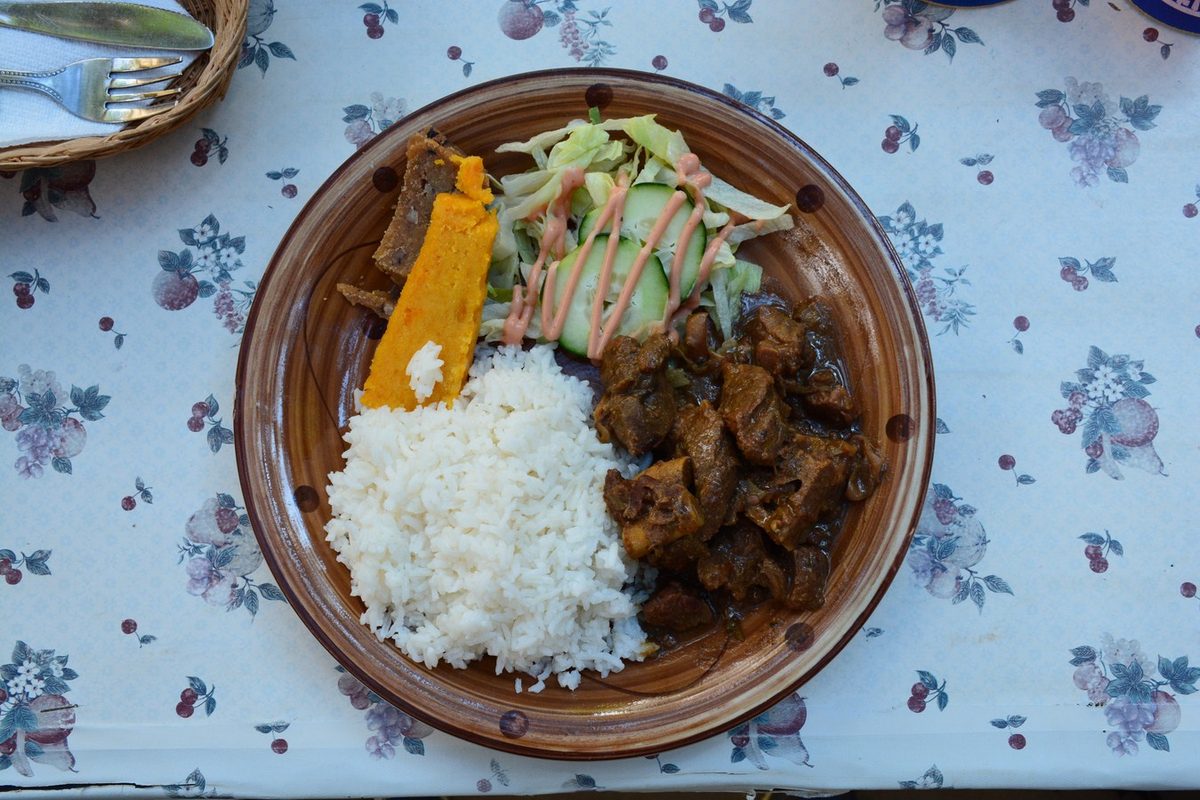
Despite the relentless sunshine, Arubans are devoted to stew. Stoba is slow-cooked comfort, most classically cabrito stoba (goat) or carni stoba (beef), simmered until the meat surrenders in a tomato-based gravy loaded with onion, garlic, and a whisper of chili. Seafood lovers should hunt down calco stoba, conch stewed soft in a savory broth. It always arrives with rice, funchi, or pan bati to soak up the gravy, and the whole point is to leave nothing behind. Kamini’s Kitchen in San Nicolas is a beloved spot for goat stew with real home-cooked character, and you will find stoba on the menu at most cominda krioyo (local cuisine) restaurants. Budget around 18 to 28 USD.
Pisca hasa and the daily catch
Being an island, Aruba eats extremely well from the sea, and the traditional approach is refreshingly unfussy. Pisca hasa simply means fried fish, usually whatever came off the boats that morning, so the species rotates: red snapper, grouper, mahi-mahi, wahoo, even barracuda. The fillet or whole fish is fried or grilled, then often finished with a creole sauce of onion, tomato, bell pepper, and garlic, brightened with the island’s pungent local basil. The pilgrimage spot is Zeerover in the fishing village of Savaneta, a no-frills pier shack where you pick your fish by weight, watch it go straight from the dock to the fryer, and eat it at a picnic table over the water with sides of funchi, pan bati, and plantain. It is one of the most authentic meals on the island, and it stays cheap.
Sopi, the soup obsession
Do not skip the soups. Arubans take sopi seriously, and the variety is genuinely impressive. Sopi di pisca (fish soup) leans on the daily catch and can carry real heat from a Madame Jeanette pepper. Sopi di mondongo is a slow-cooked tripe soup for the adventurous. Sopi di pampuna is a creamy pumpkin soup, often deepened in color with annatto and sometimes salted beef, and it is delicious enough that you should grab it the moment you spot it on a menu. There is also yambo, the Antillean okra gumbo whose slippery texture earned it the nickname “slimy soup,” which tastes far better than it sounds. Local diners and weekend food trucks rotate these daily, so ask what is on.
Keri keri and other local catches
For something most visitors never find, ask about keri keri, a humble dish of flaked stewed fish (traditionally shark, now any firm whitefish) sauteed with annatto, basil, onion, celery, tomato, and green pepper until it turns a warm orange. It is usually served simply with rice. Caribbean rock lobster and jumbo local shrimp also turn up, almost always grilled rather than drowned in butter; the legendary Charlie’s Bar in San Nicolas is a classic for big steamed shrimp at lunch.
Snacks and street food: the best of cheap, fast, and local
Some of my favorite eating in Aruba has happened standing up, out of a paper bag, for a few dollars. This is the food of daily life, and it is where you really taste the place.
Pastechi, the national snack
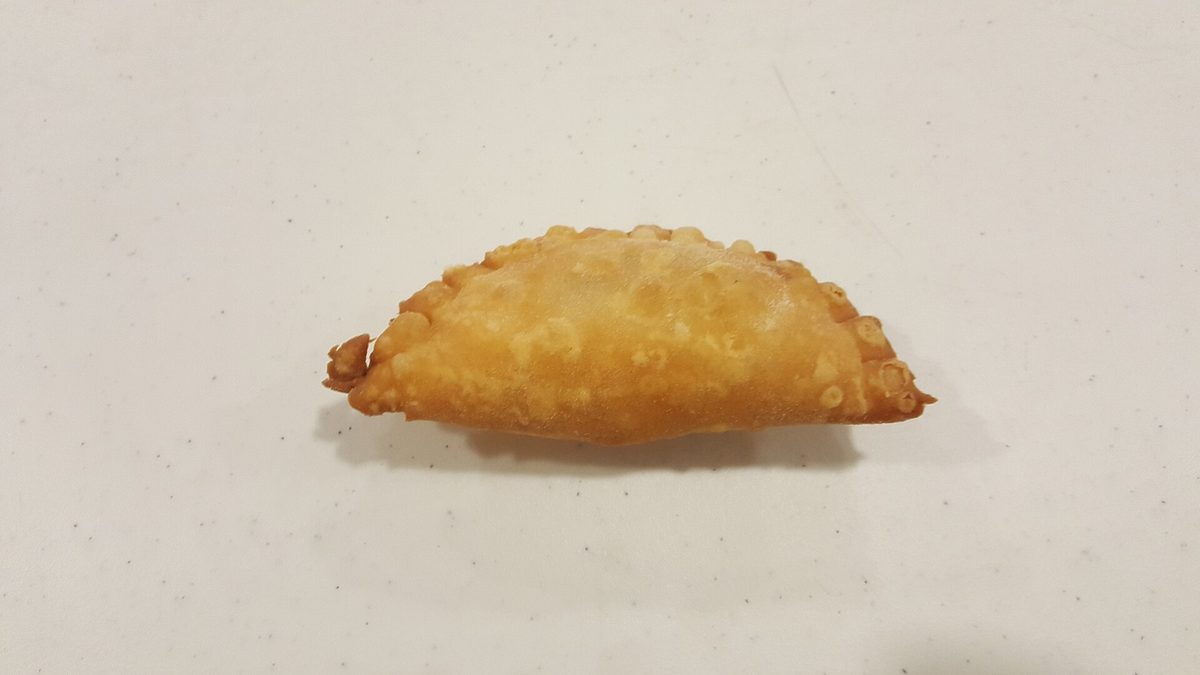
If keshi yena is the national dish, pastechi is the national snack. These crescent-shaped, deep-fried pastry pockets are Aruba’s take on the empanada, with a slightly sweet, flaky shell wrapped around cheese, beef, chicken, tuna, ham, or even Indonesian-style chop suey. Locals queue for them before work, and you should too: a fresh pastechi straight from the fryer is breakfast perfection. Bakeries island-wide sell them for around 2 to 4 USD each. Grab a couple on your way to the beach or before a long day in Arikok National Park, where there is nowhere to buy lunch inside the gates.
Funchi, pan bati, and the cornmeal sides
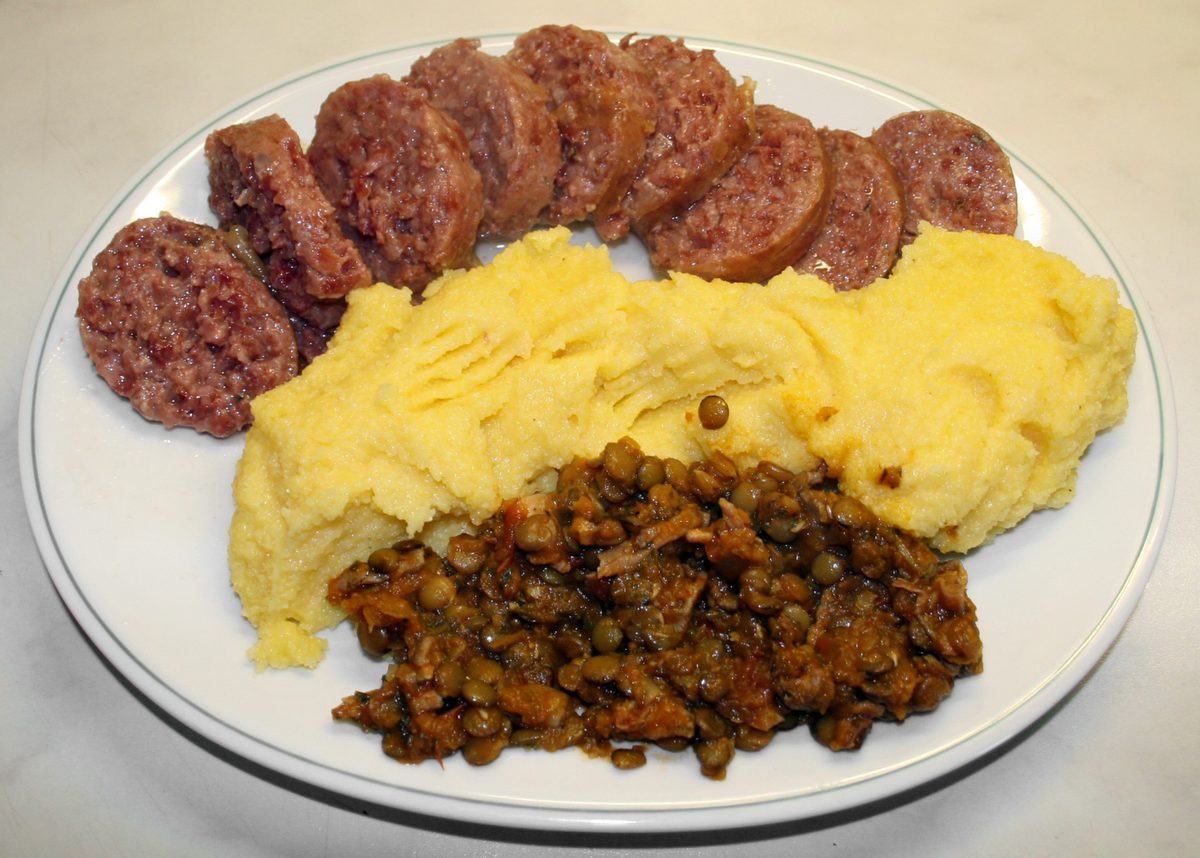
The cornmeal twins are everywhere for good reason. Funchi is Aruba’s polenta, served creamy, grilled, or sliced and fried; the fried version, funchi fries, comes dusted with sea salt and sometimes melted cheese and is dangerously snackable. Pan bati translates literally as “beaten bread” (pan means bread, bati means beaten), a soft, slightly sweet cornmeal flatbread cooked in a clay cazuela that lands somewhere between a pancake and a flatbread. Both exist to mop up stoba and sopi, and both are usually vegetarian. Other staple sides you will see include bananas hasa (fried plantains) and arroz moro (rice and red beans).
Snèk and food-truck favorites
Look for the snèk, the little neighborhood snack bar, and the truk’di pan (food trucks) that park up in San Nicolas and around the island, some staying open until the small hours for the after-party crowd. Order balchi di pisca (fried fish balls), bolita di keshi (gooey fried cheese balls), and cala (black-eyed pea fritters). Out in San Nicolas, the legendary Saco di Felipe has been handing over big brown bags of ribs, chicken, pork chops, fries, and johnny cakes for decades, no utensils included. For the full street-food deep dive, our Aruba food trucks guide goes further, but honestly, just follow the smell.
The Dutch and Indonesian bar-snack crossover
Aruba’s Dutch DNA shows up hardest at happy hour. Order bitterballen (crispy breaded balls of beef ragout), kroket, frikandel, or a mixed snack platter and you could be in Amsterdam, except you are watching the sun drop into the Caribbean with a cold Balashi in hand. The same colonial thread brought Indonesian satay with peanut sauce, which you will find on menus across the island. Sweet-toothed travelers should chase Dutch poffertjes (puffy mini-pancakes dusted with powdered sugar) and full Dutch pannenkoeken, the dinner-plate-sized thin pancakes locals eat morning, noon, and night, stuffed with everything from apple and bacon to cheese and ham. The Dutch Pancakehouse in Oranjestad and Linda’s in Palm Beach are the go-to spots.
Sweets and desserts worth saving room for
Arubans love their dushi (sweets). The simplest and most addictive is cocada, a fudgy coconut candy made with grated coconut, brown sugar, and lime, often sold on a piece of coconut shell at markets and corner stores. Quesillo (also called kesio) is the island’s flan, a silky caramel custard you will spot on nearly every dessert menu. For celebrations, Arubans bake towering bolos (layer cakes) in flavors like pistachio, cashew, and ponche crema, plus the boozy, fruit-packed bolo preto (black cake) soaked in port, cognac, and cherry liqueur. Bright Bakery in Paradera, family-run since 1949, is the pilgrimage for an authentic whole cake.
What to drink: Balashi, Aruba Ariba, and local spirits
You cannot understand local food without the local pour. These are the drinks that belong on your table.
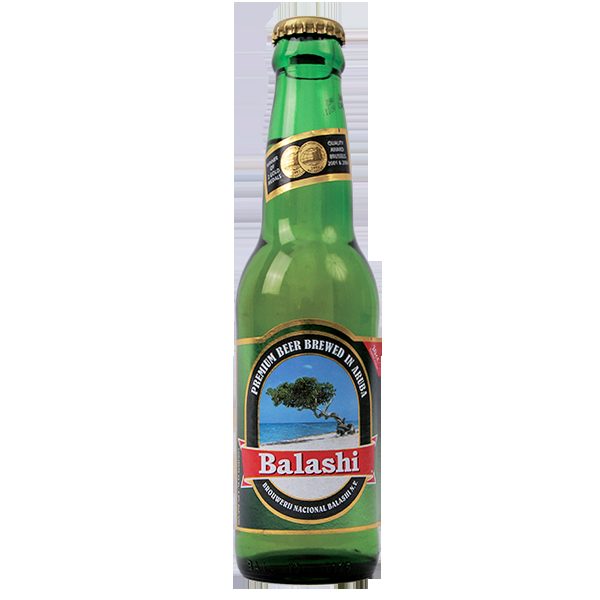
Balashi, the homegrown beer
Balashi is the island’s only beer brewed on Aruba, first poured in 1999 and made with desalinated island water, Scottish malt, and German hops. It is a clean, well-balanced pilsner that goes down perfectly after a day in the sun, and the brewery now also makes Chill and the fruity Magic Mango. The Balashi Brewery beer garden is a genuinely fun stop and an easy add to any Aruba itinerary; tours run on weekdays and end, sensibly, with a cold one.
The Aruba Ariba and local spirits
The Aruba Ariba is the island’s signature cocktail, invented in 1963, a fruity tangle of vodka, rum, creme de banana, and pineapple, orange, and cranberry juices with a splash of grenadine. The secret ingredient in the original is coecoei, a bright-red liqueur made from the agave plant with Indigenous roots that is not exported, so this is genuinely a taste you can only get here. Around the holidays, look for ponche crema, Aruba’s creamy, rum-spiked answer to eggnog. And if you like aloe (Aruba grows a lot of it), you will even find it turning up in drinks and local products. Pace yourself: these are sweeter and stronger than they taste.
Where to actually eat local in Aruba
Here is the honest truth: the high-rise hotel zone on Palm Beach is convenient but it is not where you find the soul of the island’s cooking. The best local food rewards a short drive. Here is how I think about it by area.
Inland: Noord, Paradera, and Santa Cruz
The interior is the heartland of cominda krioyo. Noord, just behind the Palm Beach resorts, is home to heritage keshi yena at Gasparito and The Old Cunucu House. Drive a little further to Paradera for Bright Bakery’s cakes, or to the Santa Rosa farmers market in Piedra Plat (first Sunday of the month) to taste local products at the source. If you are weighing where to stay in Aruba, picking a base with a kitchen near these neighborhoods lets you cook with island ingredients too.
The fishing villages: Savaneta and San Nicolas
For the freshest fish, point the car south. Savaneta is home to Zeerover, the pier shack that is reason enough for the drive. Keep going to San Nicolas, the island’s gritty, colorful second city, for Kamini’s Kitchen, Charlie’s Bar, and the food trucks and sacos that locals swear by. This stretch pairs naturally with a day exploring beyond the resorts; see the broader things to do in Aruba for how to build it into a route.
Oranjestad and the resort strip
The capital, Oranjestad, mixes tourist-facing spots with genuinely good local eating, from the Dutch Pancakehouse to waterfront grills like The West Deck. The Palm Beach and Aruba beaches area is where you will find the beach bars, happy hours, and the Aruba Ariba in its natural habitat. It is not the most authentic food on the island, but a sunset plate of bitterballen with your toes in the sand has its own kind of magic, especially on a honeymoon or a slow first evening.
Festivals and food experiences
Time your trip right and the island hands you a feast. The annual Aruba Food Truck Festival each spring gathers the island’s best mobile kitchens with live music and craft beer. Hotel “local food nights” (several resorts run a weekly Aruban menu) are a low-effort way to sample classics. And guided food walks through Oranjestad will get you a pan bati cooking demo and tastes you might otherwise miss. Plan around the best time to visit Aruba if a specific festival is on your list.
Dietary notes: vegetarian, allergies, and budgeting
Vegetarians do fine here with a little planning. Funchi, pan bati, fried plantains, arroz moro, and many soups are naturally meat-free, several restaurants now make a vegetarian keshi yena, and the island has a small but growing crop of fully vegan and veggie-friendly kitchens. Pescatarians are spoiled, given the daily catch. If you have allergies, note that nuts (cashews especially), raisins, and olives turn up in unexpected places like keshi yena and ayaca, and that pica, the island’s fiery Madame Jeanette hot sauce, lives on most tables, so taste before you pour.
On cost: like most of the Caribbean, Aruba is not a cheap food destination, and imported ingredients carry a premium. You can eat very well for very little at snèks, bakeries, and food trucks (a few dollars for a pastechi or a loaded plate), while sit-down local restaurants run roughly 18 to 40 USD for a main, and resort fine dining climbs from there. For a fuller breakdown, see the Aruba vacation cost guide, and remember a rental car (covered in getting to and around Aruba) pays for itself fast if you plan to chase food across the island. Traveling with little ones? The Aruba with kids guide has tips on kid-friendly spots, and most pastechi and pancake places are an easy win.
Frequently asked questions about Aruban food
What food is Aruba known for?
Aruba is best known for keshi yena, its national dish of spiced meat baked in a cheese shell, and for pastechi, the fried pastry snack locals eat daily. The island is also known for ultra-fresh seafood (snapper, grouper, mahi-mahi), hearty stews called stoba, cornmeal sides like funchi and pan bati, and Dutch-influenced treats from pancakes to bitterballen.
What is the national dish of Aruba?
The national dish of Aruba is keshi yena, which translates roughly to “stuffed cheese.” It is spiced chicken or beef mixed with olives, raisins, and capers, baked inside a hollowed-out Gouda or Edam cheese rind (now often a casserole layered with cheese). The dish dates to the colonial era, when locals filled discarded Dutch cheese rinds with leftovers.
Is the food in Aruba spicy?
Most Aruban food is well-seasoned but not aggressively spicy by default. The heat comes on the side: pica, a local hot sauce made from blistering Madame Jeanette peppers and papaya, sits on nearly every table so you can add as much or as little as you like. Some soups and stews carry a gentle kick from fresh peppers, but you control the burn.
What should vegetarians eat in Aruba?
Vegetarians can enjoy funchi, pan bati, fried plantains, arroz moro (rice and beans), pumpkin soup, and the increasingly common vegetarian version of keshi yena. Dutch pancakes with sweet or cheese fillings, poffertjes, and cocada cover snacks and dessert. A handful of dedicated vegan and vegetarian restaurants round things out, and most kitchens will adapt a side-heavy plate on request.
How much does food cost in Aruba?
Expect to pay around 2 to 4 USD for a pastechi, under 15 USD for a hearty plate from a food truck or snèk, and roughly 18 to 40 USD for a main at a sit-down local restaurant. Resort and fine-dining prices run higher. Aruba imports most ingredients, so food is pricier than mainland averages, but street food and bakeries keep it very affordable.
Final thoughts
The mistake is treating Aruba as a beach with a buffet attached. The island’s real flavor lives in a paper bag of pastechi at dawn, a basket of fried fish over the water in Savaneta, and that first molten spoonful of keshi yena that makes the whole improbable history of the place suddenly make sense. Rent a car, drive inland and south, order the thing you cannot pronounce, and reach for the pica. For more on planning the trip around all of it, start with the pillar guide to Aruba restaurants and where to eat, then build the rest of your days from there. Eat dushi.
By the ArubaTourism.org team — Last updated June 2026
Photo credits
- Keshi yena — Photo: La Cocina de Caputto (Ricardo Caputto) / CC BY 3.0 via Openverse.
- Pastechi — Photo: DanielleJWiki / CC BY-SA 4.0 via Wikimedia Commons.
- Stoba (goat stew with rice and funchi) — Photo: Paul Arps / CC BY 2.0 via Wikimedia Commons.
- Funchi — Photo: J.P.Lon / CC BY-SA 3.0 via Wikimedia Commons.
- Balashi beer — Photo: Minasaralar / CC BY-SA 4.0 via Wikimedia Commons.