
By the ArubaTourism.org team · Last updated June 2026
I have a confession that will sound like heresy for someone who writes about Aruba: I almost skipped Eagle Beach on my first trip. I’d seen the photos so many times that I assumed they were the usual travel-brochure exaggeration, the sand secretly grey, the water secretly murky, the whole thing secretly disappointing. Then I walked over the little dune, and the color of the water actually stopped me mid-sentence.
That’s the thing about Aruba beaches: they earn the hype. But here’s what the postcards don’t tell you. Aruba has more than a dozen beaches worth your time, and they are wildly different from one another. One is a shallow lagoon so calm a toddler can wade out fifty feet. Another is a reef cove where green turtles cruise past your mask two minutes after you wade in. A couple are so wild and wind-battered you wouldn’t dream of swimming, and you should absolutely still go see them.
This is the complete, honest guide to every beach on the island that’s worth knowing: which one is right for your kind of beach day, what each is genuinely great for, where each falls short, and the practical stuff (parking, palapas, public-access rights, turtle season) that makes the difference between a good day and a great one. I’ll give you my opinions freely. Let’s find your beach.
Aruba beaches in 30 seconds
If you only read one paragraph: Aruba’s calm, swimmable, postcard beaches all sit on the sheltered west and southwest coast, where the resorts are. Eagle Beach is the wide, beautiful, slightly quieter star; Palm Beach is the lively resort strip with all the water sports. The northwest tip hides small reef-fringed coves that are the island’s best shore snorkeling. The south has shallow, kid-friendly lagoons like Baby Beach. The windward east coast is dramatic and dangerous, for photos and kite surfers, not swimming. Every public beach is free to use.
First, understand Aruba’s four coastlines
Aruba is a small, arid island, only about 20 miles long, and the trade winds blow across it almost constantly from the east. That single fact organizes the entire beach map, so let me save you the day it took me to figure out where to go and when.
- The west & southwest coast is the leeward, sheltered side. This is where you’ll find the famous white-sand beaches, calm clear water, and nearly every resort. If you want a classic Caribbean beach day, you’ll spend it here.
- The northwest tip (around Malmok and Arashi, near the California Lighthouse) trades wide sand for rocky little coves with reef close to shore. Less lounging, more snorkeling.
- The south coast near San Nicolas has protected, shallow lagoons, the calmest water on the island, and far fewer tourists because it’s a 30-to-40-minute drive from the hotels.
- The east (windward) coast takes the full force of the Atlantic and the trade winds. It’s raw, beautiful, and genuinely hazardous for swimming. Come for the scenery and the wind sports.
The practical upshot: plan your swimming and lounging days on the west and south, and treat the east coast as sightseeing. If you want the full picture of how the island fits together, our guide to things to do in Aruba maps out every region, and getting around Aruba covers whether you’ll want a rental car to reach the quieter beaches (short answer: for anything past Palm Beach, yes).
Three things to know before you set foot on the sand
A few island-wide rules and quirks shape every beach day here, and knowing them upfront makes you a smarter beachgoer than most first-timers.
Every beach in Aruba is public, including the sand in front of the big resorts. You have the right to walk, sit, and swim on any stretch of coastline. What you can’t use are a resort’s own branded lounge chairs, umbrellas, and palapas. Bring or rent your own beach chair and you’re entitled to set up almost anywhere. The only two exceptions are Renaissance Island and De Palm Island, both privately owned and gated behind a day pass; more on those below.
Use reef-safe sunscreen. Aruba has been tightening protection of its marine park, and regular chemical sunscreens damage the coral and the very reef fish you came to snorkel with. Buy mineral (zinc/titanium) reef-safe sunscreen before you go or on-island, and apply it well before you get in the water.
Eagle Beach is a sea-turtle nesting site. From roughly March through October, leatherback, loggerhead, and green turtles come ashore at night to nest on several west-coast beaches, Eagle especially. If you see a roped-off area or a marked nest, give it a wide berth and never shine a light on a nesting turtle or hatchlings. If you’re lucky enough to be there during a hatching, it’s one of the best things you’ll ever see on a beach.
Aruba beaches at a glance
Here’s the cheat sheet. Skim it to shortlist, then read the full write-ups below for the detail that actually matters on the day.
| Beach | Area | Best for | Swimming | Snorkeling | Facilities |
|---|---|---|---|---|---|
| Eagle Beach | West (low-rise) | The iconic beach day | Excellent | Fair | Palapas, rentals, parking |
| Palm Beach | West (high-rise) | Water sports, buzz | Excellent | Good (by piers) | Everything |
| Manchebo | West | Quiet, couples | Very good | Fair | Limited |
| Druif (Divi) | West | Sunset drinks | Very good | Fair | Beach bar, rentals |
| Arashi | Northwest | Calm + snorkel | Very good | Very good | Beach bar, palapas |
| Boca Catalina / Malmok | Northwest | Shore snorkeling | Good | Excellent | None |
| Mangel Halto | Southeast | Reef snorkeling | Fair (rocky) | Excellent | None |
| Baby Beach | South | Young kids | Excellent (shallow) | Good | Bar, rentals |
| Rodgers Beach | South | Quiet, local | Very good | Good | None |
| Flamingo Beach | Private island | Flamingos | Good | Fair | Full resort |
| Boca Grandi | East | Kitesurfing, photos | No (dangerous) | No | None |
The west-coast classics (where most beach days happen)
If this is your first trip and you want the quintessential Aruba beach experience, you’ll spend most of your time on this sheltered ribbon of coast. These four beaches run more or less continuously from Oranjestad north, and you genuinely can’t go wrong with any of them.
Eagle Beach: the world-famous one (and it’s worth it)
Eagle Beach lands on “best beaches in the world” lists year after year, and after my first visit I stopped rolling my eyes about it. The sand is wide, blindingly white, and powder-soft, and because it fronts the low-rise resort zone rather than the high-rise towers, it feels open and uncrowded even in high season. You can almost always find space to plant a chair without sitting in someone’s lap.
This is the home of those two gnarled fofoti trees (everyone calls them divi-divi), permanently bent southwest by the trade winds and photographed approximately ten million times. Get there at sunrise for the cliché shot before the wind and the crowds arrive, and you’ll see why it’s a cliché. Beyond the scenery, the swimming is genuinely excellent: a gentle, gradual entry, minimal current along the shore, and remarkable clarity on most days.
My honest take: Eagle is the best all-around beach on the island, and it’s the one I’d send a first-timer to without hesitation. Its one real drawback is that there are no restaurants directly on the sand, so bring snacks or be ready for a short walk. Good for: couples, photography, calm swimming, turtle season. Drawback: no on-beach dining, busier on weekend afternoons. Facilities: public palapas, chair and umbrella rentals, parking. About 8 minutes from Oranjestad.
Palm Beach: the hub (know what you’re signing up for)
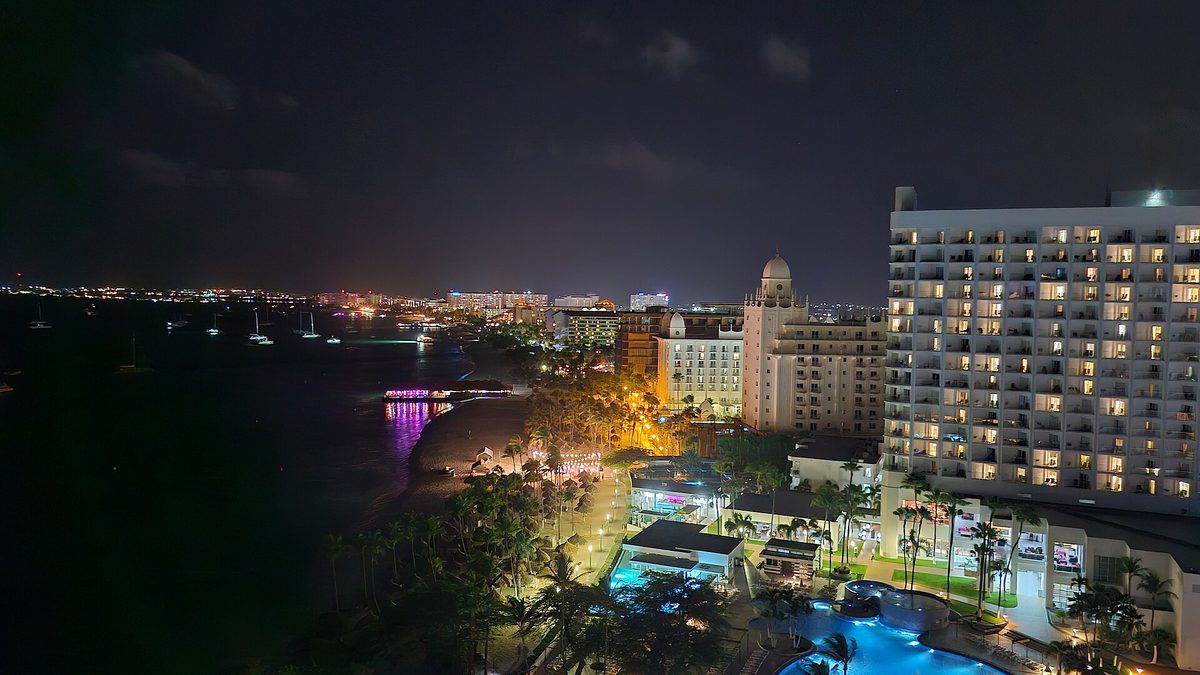
A few minutes north, Palm Beach is the social and commercial heart of Aruba’s beach scene: a mile of glossy white sand backed by high-rise hotels, beach bars that run from breakfast to last call, water-sports kiosks, two long piers, and a current of energy that never quite stops. The same beautiful water as Eagle is here, with the added theater of parasailers overhead, jet skis buzzing between catamarans, and a dozen sound systems competing politely.
Some people find this exhilarating; others find it exhausting. Both are correct. If you want everything, restaurants, a casino, water sports, and your hotel, within a short barefoot walk, Palm is unbeatable and ideal for first-timers who don’t want to plan. If you want peace, this isn’t it. My tip: walk to the quieter south end near the Manchebo side, where the chair density and boat traffic drop and the water is just as good. Palm Beach is also the launch point for most of the island’s catamaran and snorkel trips, which I cover in the Aruba water sports guide, and it’s surrounded by the island’s biggest resorts (see where to stay in Aruba and all-inclusive resorts). When the sun drops, it’s also the center of Aruba’s nightlife.
Good for: families, water sports, convenience, people-watching, evening beach bars. Drawback: crowded and loud; the most tourist-dense sand on the island. Facilities: all of them. About 10 minutes north of Oranjestad.

Manchebo & Druif: the underrated middle
Just south of Eagle, the coastline continues as Manchebo Beach and then Druif (Divi) Beach, and plenty of people who know Aruba well quietly consider this stretch their favorite. The sand and water are identical to Eagle’s, but because these beaches front smaller boutique resorts rather than the main corridor, the crowds thin dramatically. Manchebo is the widest, quietest, and breeziest of the west-coast beaches; the wind hits it a touch harder, which beach readers love and sandcastle-builders don’t.
Druif, a little further toward Oranjestad, has a lovely palm-lined promenade and one of the island’s better sunset beach bars right on the sand. For couples, solo travelers, or anyone whose ideal beach day is a quiet one, this is the move. If you’re planning a romantic trip, I fold these into the Aruba honeymoon guide. Good for: couples, quiet days, sunsets, the Eagle Beach experience with fewer people. Drawback: few on-beach restaurants, stronger wind at Manchebo. Facilities: limited public palapas, a sunset bar at Druif, resort rentals nearby.
The northwest tip: Aruba’s best shore snorkeling
Drive north past the Palm Beach high-rises toward the California Lighthouse and the coastline changes character. The wide sand gives way to a string of small, rocky coves where the reef starts just a few fin-kicks from shore. You trade lounging comfort for the chance to be eye-to-eye with a sea turtle within minutes of getting wet. Bring your own mask and fins; facilities out here range from minimal to none.
Arashi Beach: the best of both worlds
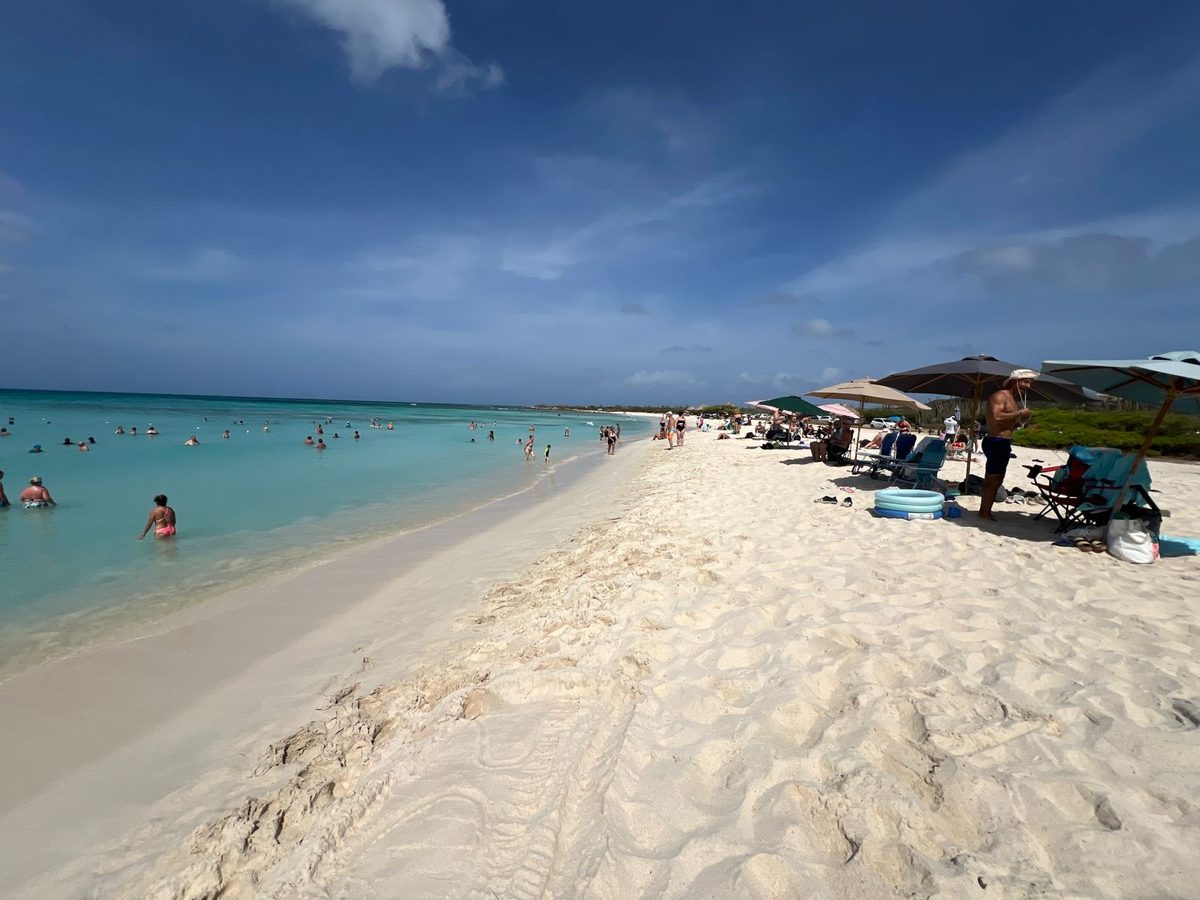
Arashi is my favorite compromise beach on the island. It’s far enough north to shed the resort crowds (about 15 minutes by car from Palm Beach) but still has actual sand, calm water, palapas for shade, and a little beach bar for cold drinks and snacks. The reef just offshore makes for genuinely good beginner snorkeling, and you can rent gear on-site for a few dollars. On a weekday morning, with local families starting to trickle in, Arashi feels like the version of Aruba that doesn’t make it onto the brochures.
Insider tip: walk past the main palapas toward the lighthouse end. The crowd thins to almost nothing, the reef continues, and the snorkeling improves the further you go. Good for: snorkeling, calm swimming, sunsets, families with a rental car. Drawback: needs a car; limited parking on busy weekends. Facilities: palapas, beach bar, snorkel rental, restrooms.

Boca Catalina, Malmok & Tres Trapi: the snorkel trifecta
These three little spots cluster together on the northwest coast and, strung together, make the best shore-snorkeling morning in Aruba. Boca Catalina is a tiny crescent of sand where the reef begins within two minutes of wading in; the catamaran tours stop here for a reason, and if you arrive early on a weekday you may have it nearly to yourself. Malmok is the rockier stretch just south, fronting a few villas, with excellent visibility and the Antilla shipwreck snorkel offshore. Tres Trapi (“three steps” in Papiamento) isn’t a beach at all but a set of limestone steps cut into the rock where you climb straight down into turquoise shallows; it’s one of the most reliable free turtle-spotting spots on the island, with green turtles grazing the seagrass just offshore. Look for the cushion starfish on the sandy bottom, and never lift them out of the water.
None of these has facilities, restrooms, or much parking, so come self-sufficient: water, snacks, reef-safe sunscreen, and your own gear. For the full snorkeling picture, including boat trips to the wrecks, see the Aruba water sports and snorkeling guide. Good for: shore snorkeling, turtles, early risers. Drawback: rocky entry, no facilities, tiny parking. Facilities: none, bring everything.

Mangel Halto: the snorkeler’s secret
Mangel Halto, tucked into the mangroves on the southeast coast about 20 minutes from the hotels, doesn’t look like much from the parking area, a modest, rocky little beach with wooden steps into the water. First impressions are entirely beside the point. Put your face in the water and it becomes one of the best shore dives and snorkels in the southern Caribbean. A sheltered lagoon gives way to a channel and a dramatic reef wall, with parrotfish, angelfish, trumpetfish, the occasional moray eel, and green turtles in real numbers.
A serious word of caution: the currents beyond the lagoon are real, and the famous “Hole in the Wall” passage is for confident swimmers and divers only. Stay inside the lagoon if you’re not a strong swimmer, keep fins on, and never snorkel the outer reef alone. This is not a spot for young children. But for experienced snorkelers and shore divers, Mangel Halto is the answer to “where do the locals go.” Good for: experienced snorkeling, shore diving, turtles, kayaking the mangroves. Drawback: rocky entry, real currents, no facilities. Facilities: none.
The calm south: shallow water and far fewer crowds
Down past San Nicolas, a 30-to-40-minute drive from the resort strip, the south coast hides the calmest, shallowest water on the island and a fraction of the tourists. It’s a longer haul, but pair it with the street art of San Nicolas (see things to do in Aruba) and it’s an easy, rewarding day trip.
Baby Beach: the family champion
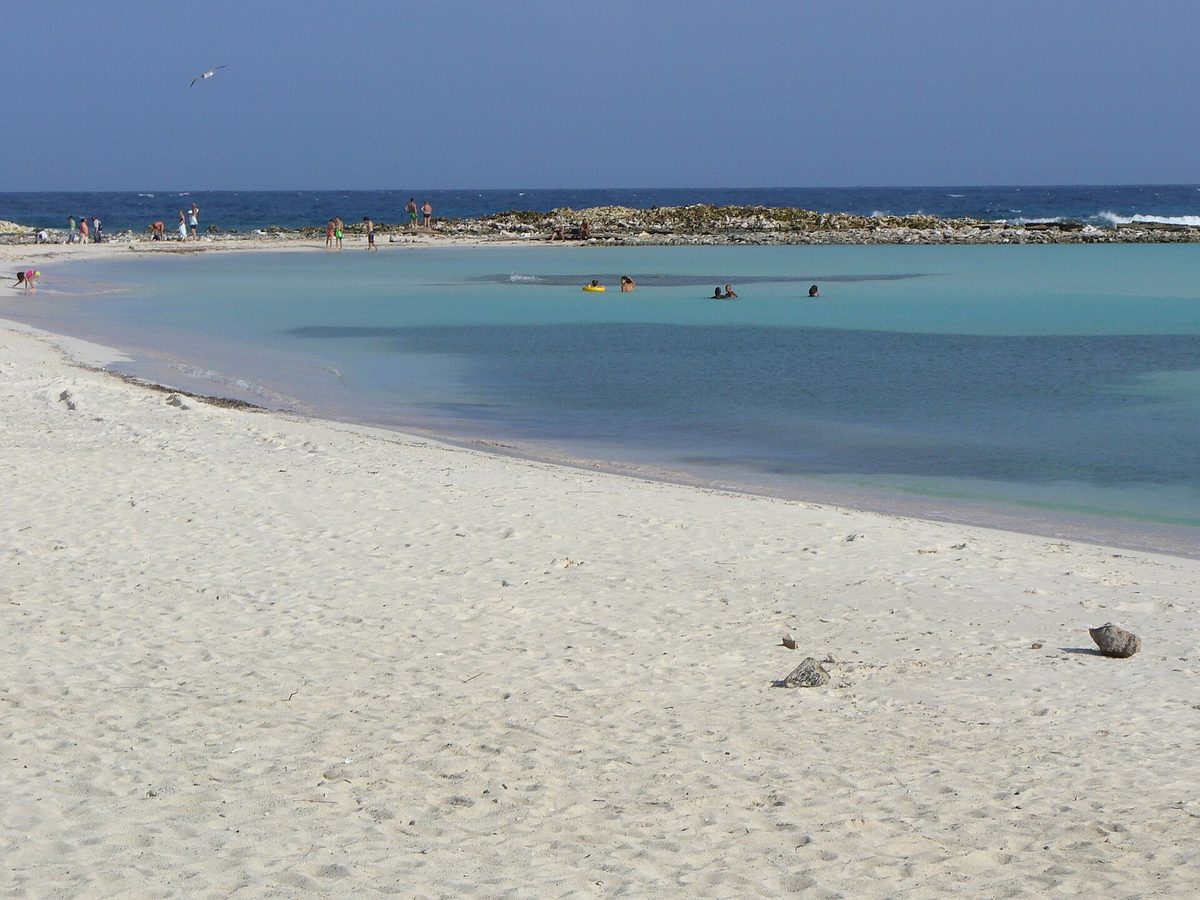
If you’re traveling with little kids, Baby Beach alone can justify a rental car. It’s a wide, almost fully enclosed lagoon where the water stays warm, clear, and shallow for a very long way out, essentially a natural swimming pool the size of a real beach. Toddlers can splash safely, nervous swimmers can relax, and there’s decent snorkeling around the rocky barrier on the left side, with parrotfish and angelfish along the reef edge. Local families have been coming here for generations, and the vibe is unhurried and friendly.
Two honest notes. First, there’s an oil refinery visible in the distance; some people find it a real distraction, most stop noticing it the moment they’re in that water, and with kids splashing happily it tends not to register at all. Second, food options on-site are limited, so bring supplies for the day given the long drive back. Our full Aruba with kids guide has more on family beaches and logistics. Good for: young children, nervous swimmers, calm swimming, beginner snorkeling. Drawback: long drive, refinery in the background, limited food. Facilities: snack bar, restrooms, chair rentals, parking.
Rodgers Beach & Surfside: the quiet and the convenient
Right around the headland from Baby Beach, Rodgers Beach is a calm, locally loved cove with colorful fishing boats, a photogenic pier, and reef fish around the rocky edges. It shares the same distant-refinery backdrop, which somehow works, and on weekdays it’s blissfully quiet. At the other end of the island, Surfside Beach is Oranjestad’s convenient city beach: wide, calm, and shallow, right under the flight path into Queen Beatrix Airport (plane-spotters love it) and along the Linear Park walking and cycling path. It’s not the island’s most beautiful beach, but for cruise passengers and anyone staying downtown, it’s genuinely useful. Good for: quiet local atmosphere (Rodgers); cruise visitors and convenience (Surfside). Facilities: none at Rodgers; rentals and restaurants near Surfside.
The private islands: flamingos and all-inclusive day passes
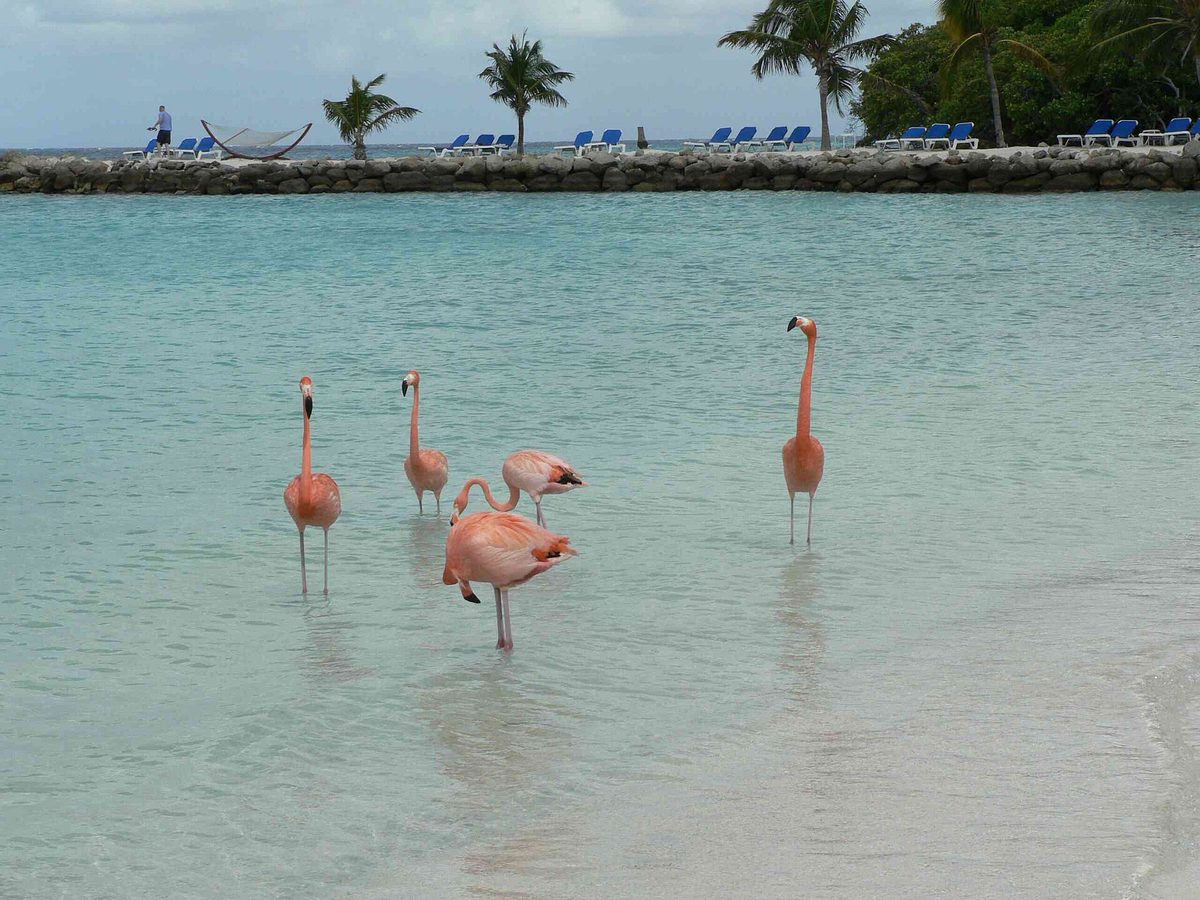
Two of Aruba’s most famous beach experiences aren’t on the main island at all. Flamingo Beach, on privately owned Renaissance Island, is the source of that iconic photo of pink flamingos wading among sunbathers. The adults-only Flamingo Beach side is where the birds roam (there’s a separate family-friendly Iguana Beach for guests with kids). Access is the catch: you’re in automatically if you stay at the Renaissance resort, and non-guests can sometimes buy a limited day pass, but availability changes seasonally and sells out, so confirm directly with the resort before you build a day around it. It’s a splurge, and for many travelers it’s a worth-it, bucket-list one.
De Palm Island is the other private option: a short ferry ride to an all-inclusive day resort with a small flamingo population, a water park, snorkeling with parrotfish, and unlimited food and drink. It’s a fuss-free, everything-handled family day out, and a good rainy-plans backup. Both day passes factor into the Aruba vacation cost breakdown if you’re budgeting. Good for: flamingo photos and adults (Renaissance); families wanting an all-in-one day (De Palm). Drawback: paid access, advance planning required.
The wild east coast: look, photograph, do not swim
Cross to the windward side of the island and the friendly turquoise turns fierce. Aruba’s east coast is pounded by Atlantic swell and trade winds, and the beaches here are dramatic, deserted, and genuinely dangerous to swim. They’re absolutely still worth visiting, just keep your feet on the sand.
Boca Grandi is the kite-surfing and windsurfing hot spot, where you can watch experts work conditions that would terrify a casual swimmer; it’s also a rewarding beachcombing spot, where Venezuelan sea beans (djucu, considered good luck) wash ashore. Inside and around Arikok National Park, a cluster of rugged beaches, Andicuri, Dos Playa, and Daimari, show off the island’s untamed side, with limestone cliffs, crashing surf, and almost no one around. Dos Playa, reached on foot inside the park, rewards the effort most. You’ll want a 4×4 (or a guided UTV tour) and a respect for the water. Good for: photography, kite surfing, adventure, understanding the “other” Aruba. Drawback: no swimming, rough access, no facilities.
A few more beaches worth knowing
Hadicurari (Fisherman’s Huts): the windsurf beach
Between Palm Beach and the Marriott sits Hadicurari, better known as Fisherman’s Huts, and it’s the reason you’ll see dozens of sails skimming the water north of the high-rises. The combination of steady cross-shore trade winds and shallow, flat water makes it one of the best windsurfing and kiteboarding beaches in the Caribbean, good enough to host the international Hi-Winds competition each summer. It’s not really a lounging beach, the wind that makes it great also blows sand and sails everywhere, but it’s a fantastic place to watch the pros, take a lesson, or feel the athletic side of the island. Beginners get gentle, waist-deep water to learn in; experts get the speed runs. I cover lessons and operators in the water sports guide.
And if your idea of a good beach day involves seeing almost nobody, I have a separate guide to Aruba’s hidden beaches — the coves and stretches that never make the postcards.
The north-shore wild spots
Beyond Arashi, the north coast turns rugged again at beaches like Wariruri and Black Stone Beach, where Atlantic swell rolls in and the scenery turns moody and dramatic. These are body-surfing-on-the-right-day, photograph-on-any-day spots rather than swimming beaches. If you’re already driving the northern loop to the California Lighthouse, they make a worthwhile, windswept detour.
Getting to Aruba’s beaches: cars, buses, and gear
How you’ll reach the sand depends on how far you’re going. The west-coast beaches (Eagle, Palm, Manchebo, Druif) are walkable from many resorts or a quick, cheap ride on the Arubus L10 line, which runs along the hotel strip between Oranjestad and the high-rises. For everything else, the snorkel coves, Arashi, Baby Beach, the east coast, you’ll want your own wheels. A rental car (ideally a small SUV for the rougher access roads) turns the whole island’s coastline into your playground; our getting around Aruba guide breaks down rentals, buses, and taxis with current fare ranges.
Parking is generally easy and free: Eagle Beach and Baby Beach have proper lots, while the northwest coves rely on small roadside pull-offs that fill by mid-morning on weekends, so arrive early. Taxis in Aruba use fixed zone fares rather than meters, which is handy for a one-way trip to a far beach, just agree the price first.
On gear: most west-coast beaches rent chairs and umbrellas, and several companies will deliver beach chairs, umbrellas, coolers, and snorkel sets straight to your hotel for the week, which beats hauling your own. For the wild and snorkel beaches that have nothing, pack water shoes (the entries are rocky), your own mask and fins, plenty of water, reef-safe sunscreen, and some cash. If you’re tallying it all up, chair rentals, gear, and day passes are itemized in the Aruba vacation cost guide.
Sea turtles, reefs, and beach etiquette
Part of what keeps Aruba’s water so clear and full of life is that the island takes care of it, and a few small habits on your part keep it that way. Between roughly March and October, sea turtles nest on the west-coast beaches, with Eagle Beach a particular hotspot. The local conservation group marks and monitors nests; if you see a roped-off area or a marked nest, keep your distance, don’t drive or set chairs over the dunes, and never use flash photography or flashlights near the beach at night, the lights disorient nesting females and hatchlings. The best time to visit guide notes when nesting and hatching season overlaps with your trip.
In the water, the rules are simple: don’t touch, stand on, or kick the coral (it’s a living animal and slow to recover), don’t chase or grab the turtles, and never lift the cushion starfish out of the water at spots like Tres Trapi, even a few seconds in the air can kill them. Wear mineral reef-safe sunscreen, take every scrap of trash home with you, and resist feeding the fish. None of this costs you anything, and it’s the difference between a reef your kids could snorkel one day and one that’s already gone. Aruba’s beaches have stayed spectacular because generations of visitors treated them gently. Be one of them.
Which Aruba beach is right for you?
Cut through the options with this quick reference, then read the relevant write-up above.
- Best overall beach: Eagle Beach, for sand, water, space, and that scenery.
- Best for young kids: Baby Beach, hands down, for the shallow, calm lagoon.
- Best shore snorkeling: Mangel Halto for experienced swimmers; Boca Catalina, Tres Trapi, or Arashi for casual snorkelers.
- Best for water sports and convenience: Palm Beach, where everything is steps away.
- Best for peace and quiet: Manchebo or Rodgers on a weekday, or any northwest cove early.
- Best sunset: Druif Beach’s beach bar, or the northwest tip near the lighthouse.
- Best for couples: Manchebo and Eagle, for the romance without the chaos.
- Best for flamingos: Flamingo Beach on Renaissance Island (plan ahead).
- Best for adventure and photos: Boca Grandi and Dos Playa on the wild east coast.
Working out how many beach days to build into your trip? Our Aruba itinerary guide slots them between excursions, and the best time to visit Aruba covers how weather, wind, and turtle season shift through the year.
Practical beach tips for Aruba
The little things that make a beach day here run smoothly:
- Rent a car for at least a couple of days. The west-coast beaches are walkable or a quick bus from the resorts, but Arashi, Baby Beach, the snorkel coves, and the east coast really need wheels. A small SUV handles the rougher beach access roads.
- Go early. Mornings bring calmer water, easier parking, gentler wind, and the best snorkeling visibility and turtle activity. By mid-afternoon the trade winds and crowds are both up.
- Bring your own everything for the wild beaches. Boca Catalina, Mangel Halto, Tres Trapi, and the east coast have no facilities, no shade, and no water. Pack reef-safe sunscreen, water, snacks, water shoes, and a mask.
- Watch the flags and the wind. The west and south are calm and safe; the north can pick up current on windy days, and the east coast is off-limits for swimming. Keep kids within arm’s reach in any open water.
- Respect the turtles. In nesting season (about March to October), steer clear of marked nests and never use flash or flashlights near the beach at night.
- You don’t need a resort chair. Every beach is public, so bring or rent a chair and set up on the open sand anywhere except the private islands.
Frequently asked questions
What is the most famous beach in Aruba?
Eagle Beach is the most famous, repeatedly ranked among the best beaches in the world for its wide white sand, calm clear water, and the iconic wind-bent fofoti trees. Palm Beach is a close second and the liveliest. Most visitors split their time between the two.
Eagle Beach vs Palm Beach: which is better?
It depends on your style. Eagle Beach is wider, calmer, more scenic, and more relaxed. Palm Beach is livelier, with water sports, beach bars, restaurants, and nightlife within walking distance. If you have a week, do both; if you have one beach day, choose Eagle Beach.
Which beach is best for families with young children?
Baby Beach on the south coast, for its shallow, protected lagoon where the water stays calm and waist-deep far from shore. Palm Beach is the runner-up for families who want water sports and amenities close at hand.
Where is the best shore snorkeling in Aruba?
Mangel Halto has the richest reef for confident swimmers, while Boca Catalina, Tres Trapi, and Arashi offer easy, turtle-friendly snorkeling close to shore. All are free public spots with no facilities, so bring your own gear.
Can anyone visit Flamingo Beach?
Flamingo Beach is on private Renaissance Island. Renaissance resort guests get access included; non-guests can sometimes buy a limited day pass, but availability is seasonal and sells out. Confirm directly with the resort before planning your day around it.
Are Aruba’s beaches safe for swimming?
The west and south coast beaches are calm and generally very safe. The north coast can have stronger current on windy days, and the east (windward) coast is dangerous and not for swimming at all. Watch for flags, don’t swim alone at unfamiliar spots, and keep children close.
What is the most beautiful beach in Aruba?
Eagle Beach gets the nod for most beautiful, thanks to its width, sand quality, water clarity, and the fofoti trees. For dramatic, rugged beauty, the east coast beaches inside Arikok National Park are stunning, just not swimmable.
Does Aruba have a pink sand beach?
No, Aruba doesn’t have a true pink-sand beach; its beaches are classic white sand. The “pink” association comes from the pink flamingos at Flamingo Beach on Renaissance Island, not the sand itself. Pink-sand beaches are found on other Caribbean islands like Barbuda and Bonaire’s Pink Beach.
Are Aruba’s beaches public and free?
Yes. Every beach in Aruba is public and free to access, including the sand in front of resorts. You can sit and swim anywhere; you just can’t use a resort’s private chairs or palapas. The only paid exceptions are Renaissance Island and De Palm Island.
Which Aruba beach has the best sunset?
The whole west coast faces the sunset, but Druif Beach’s beach bar and the northwest tip near the California Lighthouse are local favorites. Eagle and Manchebo are also superb, and a sunset catamaran cruise off Palm Beach is the on-the-water option.
How many beaches does Aruba have?
Aruba has around 20 named beaches along its roughly 20-mile coastline, from the famous west-coast strands to tiny northwest snorkel coves and wild east-coast bays. A dozen or so are worth planning a visit around, and they’re varied enough that you could spend a week beach-hopping without repeating the same kind of day.
Can you walk between Eagle Beach and Palm Beach?
Not directly along the sand, the two are separated by a rocky point and the low-rise Manchebo stretch, so it’s a long trek. They’re only about a five-minute drive or a short bus ride apart, though, and many visitors split a day between them: Eagle in the morning for space and scenery, Palm in the afternoon for water sports and beach bars.
Are there waves at Aruba’s beaches?
On the sheltered west and south coasts, almost none, the water is famously calm and flat, which is exactly what makes it so good for swimming and families. If you want surf, you’ll only find it on the windward east coast, where it’s powerful and suited to experienced kite surfers and bodyboarders rather than swimmers.
Final thoughts: build your beach week
Here’s how I’d actually do it. Anchor your trip with a couple of classic west-coast days at Eagle and Palm. Set one alarm early for a snorkel morning at Arashi and the northwest coves. Give the south a full day for Baby Beach and San Nicolas. Splurge once on the flamingos. And drive out to the wild east coast for an hour just to see how big and untamed this tiny island can feel. Do that, and you’ll have seen the full range of what makes Aruba beaches special, not just the postcard.
The real secret, though, is the one I learned on that first trip when the water stopped me mid-sentence: the best beach in Aruba is the one where you finally stop checking your phone. Almost every beach on this list qualifies. For everything beyond the sand, our complete guide to things to do in Aruba will help you fill the rest of your days. Now go find your stretch of turquoise.
Photo credits
All beach images via Wikimedia Commons. Photo: Jason Boldero from UK / CC BY 2.0 via Wikimedia Commons; Photo: Rarends297 (CC0) via Wikimedia Commons; Photo: No machine-readable author provided. Dje9537459 assumed (based on copyright clai (CC0) via Wikimedia Commons; Photo: David Stanley from Nanaimo, Canada / CC BY 2.0 via Wikimedia Commons; Photo: Kwihi / CC BY 4.0 via Wikimedia Commons; Photo: EgorovaSvetlana / CC BY-SA 4.0 via Wikimedia Commons; Photo: Ginelly.Q (CC0) via Wikimedia Commons; Photo: Set1536 / CC BY-SA 3.0 via Wikimedia Commons.